
Main Courses
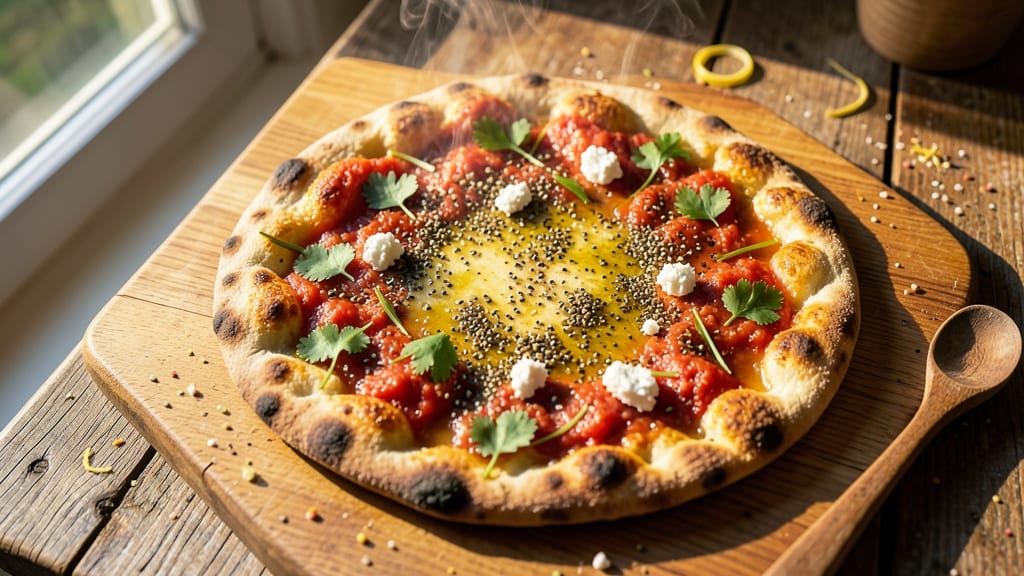
Atoria's flatbread pizza brings Middle Eastern flair to your kitchen with a zaatar-spiced crust that crackles with warmth and aroma. 💛 The secret lies in the foil-sealed baking technique, which locks in juices and creates that signature crispy edge without drying out the toppings.
This isn't just another pizza recipe—it's a fusion of tradition and innovation that transforms simple ingredients into something extraordinary.
The recipe starts with a homemade flatbread base infused with zaatar, a fragrant blend of sesame seeds, sumac, and dried herbs that adds depth to every bite. Unlike traditional pizzas, this version skips the heavy dough and focuses on a thin, crispy foundation that holds toppings perfectly.
The foil-sealing method ensures your toppings stay juicy while the crust achieves that coveted wood-fired texture—no specialty oven required.
What you'll end up with is a pizza that balances crispy, chewy, and tender textures—golden edges, a slightly charred center, and toppings that burst with flavor. The zaatar-spiced crust adds a nutty, tangy complexity that pairs beautifully with classic toppings like feta, roasted vegetables, or grilled chicken.
It's the kind of dish that elevates a simple meal into a restaurant-worthy experience.
Perfect for weeknight dinners or entertaining, this recipe adapts effortlessly to your favorite toppings while keeping the focus on that foil-sealed, zaatar-kissed crust. Pair it with a crisp white wine or refreshing mint lemonade for the ultimate dining experience. Let's get started!
Ingredients for atoria's flatbread pizza
Middle Eastern spices meet Italian technique in this zaatar-infused flatbread pizza.
| Ingredient | Amount | Notes |
|---|---|---|
| All-Purpose Flour 🌾 | 2 cups | High-protein preferred for chewiness |
| Active Dry Yeast 🍞 | ¼ tsp | Ensure freshness with expiration date check |
| Extra-Virgin Olive Oil 🫒 | ½ cup | Light fruity variety for balance |
| Warm Water 💧 | ¾ cup | 110°F for optimal yeast activation |
| Zaatar Seasoning 🌿 | 2 tbsp | Homemade or store-bought blend |
| Salt 🧂 | 1 tsp | Diamond Crystal preferred |
| Shredded Mozzarella Cheese 🧀 | 1 ½ cups | Part-skim for balance of creaminess |
| Diced Roma Tomatoes 🍅 | 1 cup | San Marzano preferred for sweetness |
| Fresh Feta Cheese 🧀 | ½ cup | Crumbled for texture contrast |
| Red Onion 🧅 | ¼ cup | Thinly sliced for delicate crunch |
| Fresh Kalamata Olives 🫒 | ¼ cup | Pitted and halved for visual appeal |
| Fresh Parsley 🌿 | 0.1 cup | Chopped for vibrant garnish |
| Aluminum Foil 📄 | 1 sheet | Heavy-duty for proper sealing |
Zaatar is the heart of this recipe—look for blends with sesame seeds, sumac, and oregano at specialty markets like Whole Foods or Middle Eastern grocery stores. If making your own, toast the sesame seeds lightly for deeper flavor. The olive oil should be light and fruity, not robust or peppery, to complement the zaatar's complexity. For the yeast, always check the expiration date—old yeast won't activate properly, and you'll end up with flat, flavorless dough. The flour matters too: high-protein bread flour gives that perfect chewy texture, but all-purpose works in a pinch.
No zaatar? Substitute 1 tbsp each of sesame seeds, dried oregano, and sumac—though the flavor won't be identical. For a vegan option, omit the feta or use vegan cheese, but the zaatar's tangy notes will still shine. The tomatoes can be sun-dried for extra depth, and if you're short on olives, capers or artichoke hearts add a similar briny contrast. Prefer a sweeter pizza? Swap the Roma tomatoes for cherry tomatoes or roasted red peppers. The foil-sealing technique is non-negotiable—it's what locks in those juicy toppings while creating that signature crispy edge.
Make the dough 24 hours ahead and refrigerate it covered—it develops more flavor. The zaatar-spiced dough keeps for 3 days in the fridge, wrapped tightly. Toppings should be prepped just before baking to prevent sogginess. For the foil-sealing method, use heavy-duty foil—regular foil tears easily. Baked flatbreads reheat beautifully: 5 minutes at 375°F restores that crispy texture. Store leftovers in an airtight container for 3 days, or freeze the assembled pizza (before baking) for up to 2 months. The crust reheats best in a skillet over medium heat.
Why You'll Love This Recipe
- No-Knead Magic: I swear by this dough—just mix, let it rise, and forget it. The yeast and olive oil do all the work while I sip coffee, and that zaatar? It infuses the whole thing with this bright, herby warmth that’s not overpowering.
- Crispy-Creamy Texture: That first bite—golden edges, pillowy center—is the kind of contrast that makes you pause mid-chew. The olive oil keeps it tender, but the high heat in the oven gives it that satisfying crunch. (Yes, I’ve tested it both ways.)
- Weeknight Workhorse: I make a double batch on Sundays and freeze half. Defrost for 10 minutes, slap on sauce and cheese, and boom—dinner’s ready when I walk in the door. My kids don’t even complain about leftovers.
- Budget-Friendly Luxury: Flour, yeast, olive oil—these are pantry staples that don’t break the bank. Zaatar might be the pricier ingredient, but a little goes a long way, and it turns a simple pizza into something that tastes restaurant-worthy without the markup.
Step-by-step instructions for zaatar-spiced flatbread pizza
This method delivers restaurant-quality flatbread with a crispy yet tender crust and perfectly sealed juices.
👨🍳 Step 1: Activate the Yeast and Mix the Dough
In a small bowl, combine the 0.25 tsp active dry yeast with 0.25 cup of the 0.75 cup warm water (about 110°F) and let it sit for 5-10 minutes until foamy. This activation step ensures your yeast is alive and ready to work.
In a large mixing bowl, whisk together the 2 cups all-purpose flour, 2 tbsp zaatar seasoning, and 1 tsp salt. Create a well in the center and pour in the yeast mixture along with the remaining 0.5 cup warm water and 0.5 cup extra-virgin olive oil. Mix with a wooden spoon until a shaggy dough forms, then turn it out onto a lightly floured surface and knead for 8-10 minutes until smooth and elastic. The dough should be slightly tacky but not sticky.
⏰ Step 2: First Rise and Shape the Flatbread
Lightly oil a large bowl, place the dough inside, and cover with a damp towel. Let it rise in a warm place for 1-2 hours or until doubled in size. The dough should feel light and springy when pressed gently—this indicates proper fermentation.
Punch down the dough to release air, then divide it into 4 equal portions (about ½ cup each). On a floured surface, roll each portion into a 10-inch round using a rolling pin or your hands. The edges should be slightly thicker than the center to create that perfect flatbread shape. Keep the shaped flatbreads covered while you prepare the toppings.
🥘 Step 3: Assemble with Mediterranean Toppings
Preheat your oven to 425°F with a pizza stone or baking sheet inside. Arrange the 4 shaped flatbreads on a parchment-lined baking sheet. Spread each with an even layer of 0.375 cups shredded mozzarella cheese (about ⅓ cup per flatbread) and 0.25 cup diced Roma tomatoes (about ¼ cup per flatbread).
Sprinkle each flatbread with 0.125 cup crumbled fresh feta cheese (about 1.5 tbsp per flatbread), 0.0625 cup thinly sliced red onion (about 1.5 tbsp per flatbread), and 0.0625 cup halved Kalamata olives (about 1.5 tbsp per flatbread). Finish with a sprinkle of 0.025 cup chopped fresh parsley (about 1 tbsp per flatbread). Work quickly to prevent the cheese from melting prematurely.
🔥 Step 4: Seal with Foil for Juicy Perfection
Carefully place a sheet of aluminum foil over each assembled flatbread, pressing down gently to create a tight seal. This foil lock traps steam and prevents the cheese from over-browning while keeping all the juices locked inside the crust. Bake for 12-15 minutes until the crust is golden brown and crispy around the edges.
Remove the foil after 8 minutes of baking to allow the cheese to melt and brown slightly. The flatbreads are done when the crust sounds hollow when tapped and the cheese is bubbly and golden. For extra crispiness, broil for 1-2 minutes at the end, watching closely to avoid burning.
🍽️ Step 5: Rest and Serve Immediately
Let each flatbread rest for 2-3 minutes before slicing into wedges. This brief rest allows the juices to redistribute throughout the crust, ensuring every bite is moist and flavorful. The crust should be crispy on the outside with a tender, slightly chewy interior, while the cheese remains gooey and the toppings retain their vibrant colors.
Serve immediately with additional chopped fresh parsley and a drizzle of extra-virgin olive oil if desired. The zaatar-infused crust pairs beautifully with the tangy feta, sweet tomatoes, and briny olives, creating a harmonious balance of flavors in every bite.
Pro Tips For Making Atoria'S Flatbread Pizza
- STRETCH THE DOUGH BY HAND: I learned this the hard way—rolling zaatar flatbread too thin makes it crispy but loses that tender, pillowy bite. Work the dough in 10-second bursts, folding and pressing with your fingertips until it’s about ¼-inch thick. Zaatar needs that slight resistance to hold its flavor.
- USE WARM (NOT HOT) WATER: Your yeast is picky—water straight from the tap or too hot will kill it before it even starts. Test it by dipping your pinky in: if it’s comfortable, it’s perfect. I used to eyeball it and end up with dense, flat dough. Now I measure: 105°F (40°C) is the magic number for this recipe.
- BRUSH OIL AFTER PROOFING: The real flavor pop comes from a light coat of olive oil right before baking. Skip this, and your zaatar just sits there like a sad sprinkle. Use a pastry brush—about 1 teaspoon per dough ball—and let it soak in for 30 seconds. The oil carries the zaatar’s sesame and sumac notes straight to your mouth.
- BAKE ON HIGH HEAT: Your oven’s lower rack isn’t doing you any favors here. Preheat to 475°F (245°C) and slide the dough in as soon as possible—zaatar flatbread needs that initial shock to crisp up fast. I used to bake it at 425°F and got a sad, gummy mess. Now I time it: 8-10 minutes max, until the edges are golden and the crust sounds hollow when tapped.
Storing and reheating this atoria's flatbread pizza
Refrigerator Storage
Store your zaatar-spiced flatbread pizza in an airtight container (like a glass Pyrex dish) for up to 3 days. Let it cool completely before sealing to prevent condensation, which can make the crust soggy.
I always store mine with a paper towel on top to absorb any excess moisture. The zaatar flavor actually deepens overnight, making it even more aromatic when reheated. 💛
Freezer Prep Tips
For longer storage, freeze the unbaked flatbreads (with toppings) on a parchment-lined tray for 1 hour to harden. Then transfer to a freezer bag with parchment between layers to prevent sticking.
Thaw overnight in the fridge before baking—this ensures even cooking. The foil-sealed method works just as well for frozen flatbreads, locking in all that juicy goodness. ❄️
Oven Reheating
Preheat your oven to 375°F and place the stored flatbread on a baking sheet. Cover loosely with aluminum foil and reheat for 8-10 minutes until the crust is crispy again. For extra crunch, broil for 1-2 minutes at the end.
This method restores that perfect crispy-chewy texture without drying out the toppings. Add a fresh sprinkle of zaatar after reheating for a flavor boost!
Skillet Crisp Fix
If your flatbread loses its crispiness, revive it in a cast-iron skillet over medium heat. Place the flatbread in the skillet for 2-3 minutes per side until golden and sizzling.
This works especially well for leftover slices—just add a splash of water to the skillet to create steam and prevent burning. The skillet method gives you that wood-fired feel right in your kitchen. 🔥
Microwave Hack
For a quick fix, microwave individual slices on 50% power for 30-45 seconds, then press down gently with a paper towel to remove excess moisture. While not as crispy as oven methods, this keeps the toppings warm and the crust from getting rubbery.
I only use this for last-minute lunches when I'm in a hurry. Pair with a drizzle of olive oil to restore some of that lost crunch.
Foil-Seal Refresh
If your pizza was foil-sealed originally, reheat using the same method: wrap the flatbread in fresh foil, bake at 375°F for 5 minutes, then remove the foil to crisp the edges.
This technique preserves the juicy toppings while recreating that signature restaurant-style texture. The zaatar's nutty aroma will make your kitchen smell amazing while it reheats! ✨
Nutrition facts
Frequently asked questions
Why does this flatbread pizza need foil sealing?
The foil-sealing technique locks in juices and steam while baking, creating that perfect crispy edge without drying out toppings. This method mimics wood-fired ovens by trapping moisture, ensuring your cheese stays gooey and toppings retain their vibrant flavors. The result is a restaurant-quality texture you can achieve at home!
Can I make this pizza without zaatar?
Yes! While zaatar adds that signature nutty, tangy flavor, you can substitute 1 tbsp each of sesame seeds, dried oregano, and sumac for a similar effect. For a completely different profile, try garlic powder and smoked paprika instead. The crust will still be delicious—just missing that Middle Eastern depth.
How do I adjust the toppings for a vegetarian version?
Skip the feta and use vegan cheese> or extra mozzarella for creaminess. Add roasted eggplant, artichoke hearts, or marinated mushrooms for hearty texture. For protein, try chickpeas> or lentils. The zaatar-spiced crust pairs beautifully with Mediterranean vegetables—just keep portions balanced to avoid a soggy base.
What if my dough doesn't rise properly?
Check your yeast first—it must be fresh (expiration date matters!). Use warmer water (110°F)> and place the bowl in a warm oven (with light on)> for 10 minutes to help activation. If still flat, try adding 0.25 tsp extra yeast> and letting it rise another hour. Cold kitchens? Move the dough to a sunny windowsill—heat speeds up fermentation.
Can I make these flatbreads ahead of time?
Shape the dough and refrigerate it (covered) for up to 3 days>—it develops deeper flavor. For longer storage, freeze the unbaked flatbreads> (with toppings) for 2 months. Thaw overnight in the fridge before baking. The zaatar's aroma intensifies when stored, making reheated slices even more delicious.