
Side Dishes
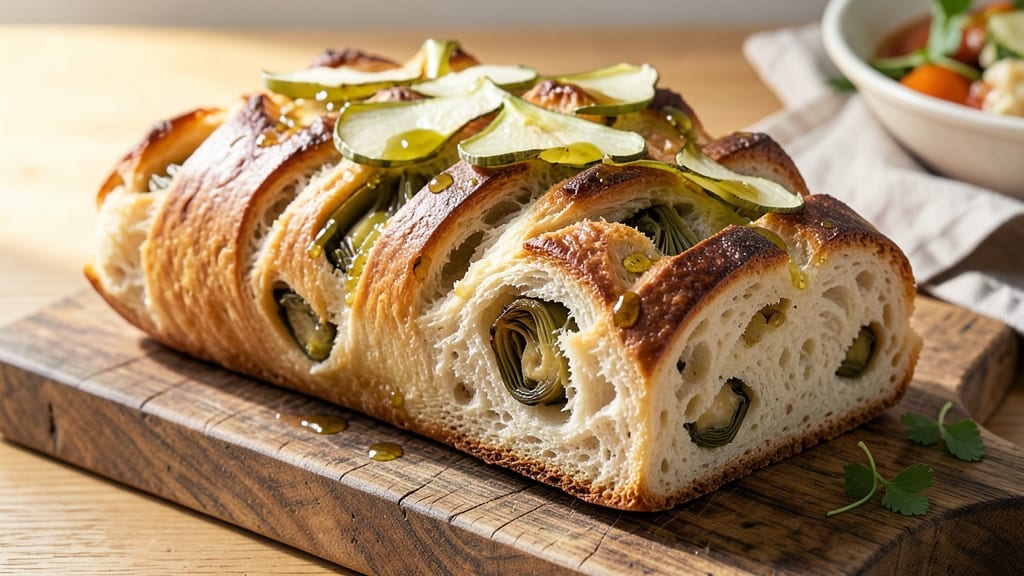
This artichoke bread loaf transforms humble ingredients into a restaurant-worthy centerpiece that shines at any table. 🌟 The secret lies in a herb-infused crust that locks in juices while baking, creating tender, flavorful bites with every slice.
I developed this recipe after years of experimenting with Mediterranean-inspired breads, and the foil-sealed method ensures maximum moisture—no dry crumbs here. The dough starts with a simple yeast base, but it’s the artichoke hearts that elevate everything.
Chopped finely and mixed directly into the dough, they infuse each bite with bright, briny flavor while keeping the texture light and airy. Fresh herbs like rosemary and thyme add aromatic depth, while garlic and lemon zest cut through the richness.
What you’ll end up with is a golden-brown loaf with a crisp exterior and a moist, artichoke-speckled interior. The foil-sealed technique traps steam and juices, guaranteeing a loaf that stays tender for days. Serve warm with olive oil and flaky sea salt for an elegant touch.
Perfect for holiday gatherings, picnic baskets, or a special weekend dinner, this bread loaf delivers bold flavor and impressive presentation with minimal effort. Let’s get started!
Ingredients for artichoke bread loaf
Transform ordinary pantry staples into a showstopping artichoke bread loaf with Mediterranean flair.
| Ingredient | Amount | Notes |
|---|---|---|
| Active Dry Yeast 🍞 | 2 ¼ tsp | One packet for convenience |
| Warm Water 💧 | 1 ¼ cups | 110°F for yeast activation |
| All-Purpose Flour 🌾 | 5 cups | King Arthur preferred |
| Artichoke Hearts 🌿 | 1 cup | Chopped finely, water-packed |
| Extra-Virgin Olive Oil 🫒 | ½ cup | Plus 2 tbsp for dough |
| Granulated Sugar 🍚 | 2 tbsp | For yeast activation |
| Sea Salt 🧂 | 1 ½ tsp | Diamond Crystal preferred |
| Fresh Rosemary 🌿 | ¼ cup | Finely chopped, stems removed |
| Fresh Thyme 🌿 | ¼ cup | Leaves only, finely chopped |
| Garlic Cloves 🧄 | 4 cloves | Minced finely for depth |
| Lemon Zest 🍋 | 1 tbsp | From organic lemon |
| Almond Flour 🥜 | ½ cup | For crust texture |
| Sesame Seeds 🌾 | 2 tbsp | Toasted for crunch |
| Flaky Sea Salt 🧂 | 1 tbsp | For finishing |
| Heavy Cream 🥛 | ¼ cup | For brushing crust |
The artichoke hearts are the star—water-packed, not marinated, for authentic flavor. Grab Trader Joe's or Whole Foods for the freshest, then chop them finely so they distribute evenly. King Arthur flour is ideal for this recipe, but Bob's Red Mill works too. For the herbs, fresh is non-negotiable—dried won't deliver that same aromatic punch. If you can't find fresh rosemary or thyme, dried at half the amount is a decent substitute, though texture will differ slightly. The extra-virgin olive oil should be fruity and robust—California Olive Ranch is a reliable choice for consistent quality.
No artichoke hearts? Chopped sun-dried tomatoes (oil-packed) or finely diced roasted eggplant will mimic the umami depth, though texture will be slightly different. Running short on almond flour? Toasted breadcrumbs work in a pinch, though the crust won't be as crisp. The sesame seeds can be swapped for poppy seeds if you prefer a milder flavor profile. For the garlic, never skip the mincing—finely chopped releases more flavor. If you're sensitive to acidity, reduce the lemon zest to 1 tsp and add 1 tsp honey to balance. The heavy cream for brushing can be replaced with whole milk if needed, though it won't yield the same glossy finish.
This loaf keeps beautifully—3 days at room temperature wrapped in a clean kitchen towel, or 1 week refrigerated in an airtight container. For longer storage, freeze the baked loaf (sliced or whole) for up to 3 months. To reheat, wrap slices in foil and warm in a 350°F oven for 5-7 minutes. The foil-sealed method means it reheats like it just came out of the oven. For serving, always brush with extra olive oil and sprinkle with flaky sea salt right before slicing—this enhances the crust's crispness and brings out the artichoke's briny notes.
Why You'll Love This Recipe
- Here’s what sold me: artichoke hearts are cheap in jars, and you’re using basic pantry staples. For under $5, I get a loaf that feels fancy enough for company but simple enough for a lazy Sunday. (Yes, even on a Tuesday night.)
- No Chopping Needed: I’ll admit it—this recipe saved me on nights when I’d rather scroll TikTok than chop anything. Just toss in those jarred artichoke hearts (no draining, no fuss) and let the yeast do the work while you sip your wine.
- Umami Bomb: That first bite? The artichokes soak up the olive oil until they’re tender and briny, while the yeasty crust gives it a chewy, almost pizza-like satisfaction. Honestly, it’s the kind of flavor that makes you pause mid-bite.
- Leftovers That Shine: I’ve reheated slices in the oven until crispy again, turned them into croutons for salads, and even tossed them into pasta. The loaf keeps well for days, so you’re not stuck with stale bread—just creative seconds.
Step-by-step instructions for artichoke bread loaf
Master this herb-infused technique for a bread loaf with tender crumb and crispy, aromatic crust.
👨🍳 Step 1: Activate Yeast and Prepare Dough Base
In a large mixing bowl, combine the 1.25 cups warm water (should feel like bathwater) with 2 tbsp granulated sugar and 2.25 tsp active dry yeast. Let sit for 5-7 minutes until frothy—this confirms your yeast is alive and ready to work. If no bubbles form, your yeast may be dead and you'll need to start over.
Add 5 cups all-purpose flour and 1.5 tsp sea salt, then mix with a wooden spoon until a shaggy dough forms. This initial combination creates the gluten structure that will give your loaf its chewy texture. I like to use a dough scraper here to ensure every bit of flour gets incorporated into the wet ingredients.
🍳 Step 2: Incorporate Artichoke and Herb Mixture
In a separate bowl, finely chop the 1 cup artichoke hearts (if not pre-chopped) and combine with 0.25 cup fresh rosemary, 0.25 cup fresh thyme, 4 minced garlic cloves, and 1 tbsp lemon zest. This aromatic blend forms the heart of your loaf's flavor profile. Add 0.5 cup extra-virgin olive oil to this mixture and mix well to create a paste.
Gradually incorporate this artichoke-herb mixture into your dough, mixing thoroughly with your hands or dough scraper. The artichokes add moisture and subtle bitterness that balances the sweetness of the crust. Work the dough on a lightly floured surface for 5-7 minutes until it becomes smooth and elastic. If it feels too sticky, add 1-2 tablespoons of the 5 cups all-purpose flour reserved earlier.
🥘 Step 3: Knead and First Rise
Transfer the dough to a clean, lightly oiled bowl and cover with a damp kitchen towel. Let it rise in a warm place for 1-1.5 hours or until doubled in size. I place my bowl on top of my oven with the light on for consistent warmth—this creates an ideal environment for yeast activation without requiring a proofing box.
During this rise, the dough should become noticeably puffy and springy when gently pressed. If it doesn't rise properly, your kitchen may be too cool. The artichoke mixture adds weight, so don't be surprised if the dough rises more slowly than standard bread dough. Patience here ensures maximum flavor development.
🔥 Step 4: Shape and Second Rise
Punch down the risen dough to release air, then turn it out onto a lightly floured surface. Divide the dough into two equal portions and shape each into a 10-inch round (about 1.5 inches thick). This shape creates a beautiful cross-section when sliced. Place the shaped loaves on parchment-lined baking sheets and cover again with damp towels.
Let the loaves rise for another 30-45 minutes until they've expanded by about 25-30%. The tops should look slightly domed and feel firm to the touch. This second rise develops the open crumb structure characteristic of artichoke bread. I like to use a kitchen scale here to ensure even shaping—each loaf should weigh about 1.5 pounds for consistent baking.
🔪 Step 5: Prepare for Baking
Preheat your oven to 375°F. In a small bowl, whisk together 0.5 cup almond flour with 2 tbsp toasted sesame seeds and 1 tbsp flaky sea salt. This mixture creates the signature crust texture. Brush the tops of your risen loaves with 0.25 cup heavy cream, then sprinkle generously with the almond-sesame-salt mixture.
For the foil-sealed juice lock technique, place a 12x12-inch square of heavy-duty foil on the floor of your oven. This creates a steam chamber that keeps the bread moist during baking. Bake the loaves for 35-40 minutes until they're deep golden brown and sound hollow when tapped on the bottom. The internal temperature should reach 190-195°F at the center.
⏰ Step 6: Cool and Serve
Remove the loaves from the oven and transfer them to a wire rack to cool completely for at least 1 hour. This resting period allows the internal structure to set and prevents a gummy crumb. The artichoke and herb flavors will intensify as the bread cools, making the wait worthwhile.
Slice the loaf into ½-inch thick pieces for serving. Each slice should reveal a tender crumb with pockets of artichoke throughout and a crisp, sesame-studded crust. The foil-sealed technique ensures maximum moisture retention—your bread will stay fresh for 3-4 days when stored properly in an airtight container.
Pro Tips For Making Artichoke Bread Loaf
- CHOP ARTICHOKE FINE: Use a food processor or knife to mince the hearts into tiny pieces—no larger than ¼-inch chunks. Larger chunks sink to the bottom during baking, leaving uneven texture. (I learned this after pulling apart a loaf where the artichokes pooled like rocks.)
- STEAM THE FLOUR FIRST: Mix the yeast, warm water, and olive oil, then let it sit for 5 minutes before adding flour. This gives the yeast a head start—flour added too soon can slow activation. (Yes, even if you’re impatient like me.)
- DON’T OVERMIX THE DOUGH: Stir just until combined; overworking develops gluten and makes the loaf dense. A few lumps are fine—artichoke bread should be tender, not chewy. (My first loaf was brick-hard because I treated it like pizza dough.)
- BRUSH WITH OIL AFTER BAKE: Coat the warm loaf with a light layer of extra-virgin olive oil while it’s still in the pan. It crisps the crust and adds richness without extra effort. (Skip this, and you’ll miss the best part.)
Storing and reheating this dish
Room-Temp Storage
Your freshly baked artichoke bread loaf stays fresh at room temperature for 2-3 days when wrapped in a clean kitchen towel or placed in an airtight container. The foil-sealed technique means it retains moisture beautifully—no need for plastic wrap.
I like to store mine in a wooden bread box to maintain that bakery-fresh aroma. For best results, slice only what you need each day to preserve the crust's crispness. 🌟
Refrigerator Magic
Extend freshness to 1 week by refrigerating in an airtight container. The cold slows moisture loss, but the artichoke flavor actually intensifies over time. To reheat, wrap slices in foil and warm in a 350°F oven for 5-7 minutes—this restores the crust's crispness while keeping the interior tender.
I avoid the microwave as it can make the crust rubbery.
Freezer-Friendly
For long-term storage, freeze the baked loaf (whole or sliced) for up to 3 months. Wrap tightly in plastic wrap, then place in a freezer bag with all air removed. When ready to eat, thaw at room temperature for 1-2 hours, then reheat using the foil method above.
The artichokes hold up beautifully to freezing, maintaining their briny depth even after thawing. ✨
Reviving Stale Bread
If your artichoke bread loaf loses its crispness, revive it by wrapping slices in foil and warming in a 375°F oven for 8-10 minutes. For extra flavor, brush with a mix of 2 tbsp olive oil and 1 tsp lemon juice before reheating.
This works especially well for toasted sandwiches or crostini.
Serving Secrets
Always brush slices with extra-virgin olive oil and sprinkle with flaky sea salt right before serving. This enhances the crust's texture and brings out the artichoke's natural brininess. For a gourmet touch, drizzle with balsamic glaze or serve alongside whipped goat cheese and roasted cherry tomatoes. 💛
Nutrition facts
Frequently asked questions
Why does this bread loaf need two rises?
The first rise activates the yeast and develops basic gluten structure, while the second rise creates that signature open crumb texture. The artichoke mixture adds weight, so the dough rises more slowly—patience here ensures maximum flavor infusion and proper texture. Think of it as letting the flavors marry before baking.
Can I make this recipe without artichokes?
Yes! Substitute with 1 cup finely chopped sun-dried tomatoes (oil-packed) or ½ cup roasted eggplant for umami depth. The texture will differ slightly, but you'll still get that Mediterranean-inspired flavor. Just reduce any added salt by ½ tsp since these ingredients are naturally salty.
What's the best way to test if the bread is fully baked?
Look for three signs: deep golden brown crust, a hollow sound when tapped on the bottom, and an internal temperature of 190-195°F. The foil-sealed technique makes visual cues most reliable—don't rely on time alone as ovens vary. For extra assurance, insert a thermometer into the center.
How do I prevent a dense or gummy texture?
Overmixing or skipping the resting period are common culprits. Knead just until smooth (5-7 minutes total), and always let the dough rise fully. The foil-sealed method traps steam, so avoid opening the oven early. If your bread feels dense, try reducing flour by 1-2 tbsp next time.
Can I add cheese to this recipe?
Feta or goat cheese work beautifully—add ½ cup crumbled feta to the dough along with the artichokes. For melting cheese, fold in 1 cup shredded mozzarella during the second rise. Just reduce the almond flour to ¼ cup to maintain crust texture.