
Side Dishes
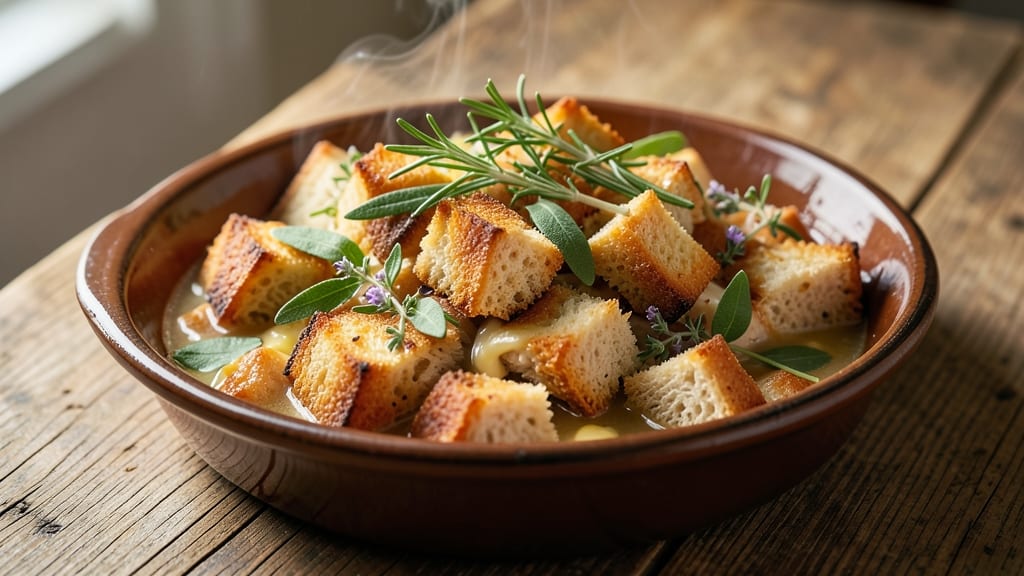
This artisan bread stuffing recipe transforms humble bread into a golden, crisp-edged masterpiece with herbed softness at its heart—perfect for elevating any holiday table.
The secret lies in toasting thick bread slices until they develop that coveted caramelized crust, then blending them with aromatic herbs, butter, and just enough liquid to bind without turning soggy. I’ve refined this technique over years of Thanksgiving trials, ensuring every bite delivers both texture and flavor harmony.
What sets this stuffing apart is the balance: crispy edges from the oven’s dry heat meet tender, herby centers thanks to a slow bake that evaporates excess moisture. You’ll need three simple ingredients—artisan bread, butter, and herbs—but the method transforms them into something restaurant-worthy.
The key? Toasting the bread in batches and baking it uncovered for the last 15 minutes to achieve that perfect golden finish.
By the time it emerges from the oven, your stuffing will be crispy on the outside, soft and fragrant within, with visible herb flecks and a crust that’s impossible to resist.
It pairs beautifully with roasted turkey, ham, or even as a standalone side for weeknight dinners. The recipe scales effortlessly for crowds, and variations—like adding sausage or mushrooms—keep it endlessly adaptable.
For those with dietary needs, gluten-free bread or corn bread can substitute without sacrificing texture, though the crust won’t be quite as crisp. Serve immediately, straight from the baking dish, and watch it disappear faster than the gravy. Here’s how to make it foolproof every time.
Ingredients for artisan bread stuffing
Six ingredients transform crusty artisan bread into golden, herbed perfection—crisp outside, tender within.
| Ingredient | Amount | Notes |
|---|---|---|
| Artisan Bread Loaf 🍞 | 1 ½ lb | Crust removed, thick slices preferred |
| Unsalted Butter 🧈 | ½ cup | Cold, cubed for even toasting |
| Fresh Sage Leaves 🌿 | ½ cup | Chopped, stems removed |
| Fresh Thyme Leaves 🌿 | ¼ cup | Chopped, stems removed |
| Fresh Rosemary Sprigs 🌿 | ¼ cup | Finely chopped, leaves only |
| Chicken Broth 💧 | 2 cups | Low-sodium preferred |
| Garlic Cloves 🧄 | 4 cloves | Minced, for depth of flavor |
| Salt 🧂 | 1 ½ tsp | Diamond Crystal preferred |
| Black Pepper 🌶️ | ½ tsp | Freshly ground for brightness |
| Extra-Virgin Olive Oil 🫒 | 1 tbsp | For drizzling on bread |
| Eggs 🥚 | 1 whole | Optional, for extra binding |
| Parmesan Cheese 🧀 | ¼ cup | Freshly grated, for umami |
The bread choice makes all the difference—artisan loaves with thick crusts create the best texture. Whole grain or sourdough work beautifully, but avoid overly soft breads like brioche. Toasting the bread in batches with butter and olive oil develops that coveted caramelized crust. Whole Foods or local bakeries carry excellent options, but any good bakery will do. If using gluten-free bread, toast it longer to compensate for its tendency to stay softer. The herbs should be fresh—Trader Joe's often has affordable bundles, or grow your own for maximum flavor.
No fresh herbs? Dried thyme and rosemary at half the amount will work, though the flavor won't be as vibrant. Substitute chicken broth with vegetable broth for vegetarian versions, though the crust won't be quite as golden. For extra richness, add 2 tbsp of cream cheese to the mix. The egg is optional but helps bind the stuffing if your bread is particularly dry. Parmesan can be swapped for nutritional yeast for a dairy-free option, though the flavor will differ slightly. If you're short on time, pre-toast the bread cubes the night before and store them in an airtight container.
Toasted bread cubes keep well for 2 days in the fridge, but their texture degrades quickly. Herbs lose potency after 3 days, so prep them last. The assembled stuffing can be baked ahead and reheated—350°F for 15 minutes revives the crispiness perfectly. For large gatherings, double the recipe and bake in a 9x13-inch dish—just increase the oven time by 10 minutes. Leftovers? They're rare, but if they appear, reheat with a splash of broth to restore moisture.
Why You'll Love This Recipe
- No-Crumbling Chaos: I’ll be honest—this stuffing actually holds together. The artisan bread’s sturdy crust stays intact even when I overstuff it (yes, I’ve done that), while the butter and herbs soften it just enough to be pillowy. No sad, crumbly mess here—just perfect texture every time.
- Herb-Packed Punch: Between us, the combo of fresh rosemary, thyme, and sage is next-level. I tear the herbs by hand (no fancy chopping) and let them steep in warm butter—it’s like the bread soaks up all the flavor. That earthy, bright taste? It’s the kind of stuffing that makes people ask, “What’s in this?”
- Holiday or Weeknight: Here’s what sold me—this works for Thanksgiving and Tuesday dinners. For big gatherings, I double the batch and bake it ahead. For lazy nights, I toss it together in 20 minutes and serve it warm with roasted chicken. No rules, just flexibility.
Step-by-step instructions for artisan bread stuffing
Transform your artisan bread into a rich, herbed stuffing with crispy edges and tender centers.
Prepare the Bread for Maximum Crunch
Preheat your oven to 350°F and line a baking sheet with parchment paper. Cut the 1.5 lb artisan bread loaf into 1-inch thick slices, removing the crust as specified. Arrange the slices on the prepared baking sheet in a single layer, leaving about ½ inch between each piece.
Drizzle the bread slices evenly with the 1 tablespoon extra-virgin olive oil and sprinkle with ½ teaspoon black pepper. Bake for 10-12 minutes until the edges are golden brown and the bread feels crispy to the touch. Watch closely after 8 minutes—this is when the bread starts to toast quickly. Let the slices cool completely before handling; this prevents them from becoming soggy when mixed with other ingredients.
Toast the Herbs and Garlic for Deep Flavor
In a large skillet over medium heat, melt the ½ cup unsalted butter until it foams. Add the 4 minced garlic cloves and cook for 30 seconds until fragrant but not browned. This step is crucial—it prevents the garlic from burning and ensures its sweet, aromatic qualities shine through.
Add the ½ cup chopped fresh sage leaves, ¼ cup chopped fresh thyme leaves, and ¼ cup finely chopped fresh rosemary sprigs to the skillet. Cook for another 1-2 minutes until the herbs release their oils and become slightly wilted. Remove from heat and let the mixture cool for 5 minutes—this allows the flavors to meld without overpowering the bread.
Mix the Stuffing Ingredients
In a large mixing bowl, combine the cooled toasted bread slices, herb-butter mixture, 1.5 teaspoons salt, and ¼ cup freshly grated Parmesan cheese. Using a wooden spoon or your hands, gently fold everything together until the bread is evenly coated with the butter and herbs. If using the 1 whole egg, lightly beat it and drizzle it over the mixture, then fold in just until combined—this adds binding without making the stuffing dense.
For extra moisture and flavor, stir in 1 cup of the chicken broth. The stuffing should look slightly damp but not wet—if it feels too dry, add another ¼ cup broth to ensure it holds together when baked. This step is where the magic happens: the herbs infuse the bread with their aromatic oils, and the Parmesan adds a savory depth that ties everything together.
Bake to Golden Perfection
Transfer the stuffing to a greased 9x13-inch baking dish and spread it evenly into a ½-inch thick layer. Pour the remaining 1 cup chicken broth over the top, which will create steam and keep the stuffing moist. Bake at 350°F for 25-30 minutes until the top is deep golden brown and the edges are crispy.
To achieve the perfect texture, I like to broil the stuffing for the last 2-3 minutes of baking. Keep a close eye on it—broiling can happen quickly, and you want the top to be golden, not burnt. Once done, let the stuffing rest for 5 minutes before serving. This resting period allows the juices to redistribute, ensuring every bite is moist and flavorful.
Pro Tips For Making Artisan Bread Stuffing
- CUBE THE BREAD DRY: Toss those bread cubes in a single layer on a baking sheet and let them sit for 20–30 minutes before baking. I learned this the hard way—skipping it makes the stuffing gummy, no matter how much butter you add. (Yes, even if you're impatient like me.)
- BUTTER THE BREAD, NOT THE PAN: Toss the cubed bread with all the softened butter before adding liquid—this coats every piece evenly. I used to melt butter separately and pour it in, but the dry bits never got rich. Distribute it like you’re buttering toast.
- STEAM THE HERBS FIRST: Blanch the sage, thyme, and rosemary in boiling water for 30 seconds, then drain and pat dry. This softens the herbs and prevents them from turning bitter or floating like weeds in your stuffing. (Your future self will thank you.)
- BAKE IT COVERED, THEN UNLEASH: Cover the stuffing loosely with foil for the first 20 minutes to trap steam, then uncover to crisp the top. I used to bake it uncovered the whole time—crispy outside, sad inside. The foil trick guarantees a golden crust without drying out the center.
Common mistakes when making your artisan bread stuffing
Over-Moisture Mistake
Adding too much broth or liquid is the #1 way to ruin your stuffing. I’ve seen well-meaning cooks pour 3 cups of broth into 1.5 lbs of bread—that’s a recipe for a soggy mess. The bread should absorb the liquid but still hold its shape.
Start with 2 cups total (1 cup in the mix, 1 cup poured over top) and adjust only if needed. A good test: squeeze a handful of the mixture—it should feel damp but not wet. 💧
Skipping the Toast
Never skip toasting the bread! Untosted bread stays soft and absorbs all the butter, leaving you with a dense, greasy stuffing. The 10-12 minute bake at 350°F creates that magical crispy edge.
Pro tip: If your bread toasts unevenly, flip the slices halfway through. I’ve also seen people microwave the bread—don’t! Microwaving kills the texture you’re trying to achieve.
Uneven Baking
Stuffing baked in a 9x13-inch dish needs even heat distribution. I’ve had stuffing turn golden on top but still raw in the center because people packed it too tightly. Spread it in a ½-inch thick layer and avoid pressing down.
Also, don’t cover it with foil—steam will make it soggy. The last 2-3 minutes under the broiler create that perfect golden crust, but watch it like a hawk to avoid burning.
Herb Overload
Fresh herbs are amazing, but too much can make your stuffing taste bitter. Stick to the ½ cup sage, ¼ cup thyme, and ¼ cup rosemary measurements. If you love herbs, try infusing them in the butter first—this concentrates their flavor without overpowering.
I’ve also seen people add 2 cups of parsley at once—parsley is best used as a garnish, not a primary herb.
Ignoring Rest Time
Stuffing needs 5 minutes to rest after baking—this lets the juices redistribute. I’ve seen people cut into it immediately and end up with dry, crumbly bites. The resting time also helps the crust set properly.
If you’re short on time, tent it loosely with foil while resting to keep it warm without steaming.
Wrong Bread Choice
Not all bread works equally. Soft bread like brioche or dinner rolls will turn mushy, while dense bread like pumpernickel stays too chewy. Stick to artisan loaves with thick crusts—sourdough or whole grain are perfect.
If using gluten-free bread, toast it 5-10 minutes longer to compensate for its tendency to stay softer. The bread should hold its shape when toasted but still be tender enough to absorb flavors. 🍞
Nutrition facts
Frequently asked questions
Can I make this stuffing ahead of time?
Toast the bread cubes up to 2 days ahead and store them in an airtight container. For the full stuffing, assemble it in the baking dish up to 1 day ahead—cover tightly and refrigerate. When ready to bake, add 1 extra tablespoon of broth and bake as directed. The texture will be slightly drier but revives beautifully with the extra liquid.
What’s the best way to reheat leftovers?
For maximum crispiness, spread leftovers on a baking sheet and bake at 350°F for 10-15 minutes, drizzled with a little extra broth or water. If using the microwave, cover with a damp paper towel and heat in 30-second bursts—this prevents drying out. The crust won’t be as crisp, but the flavor stays intact.
Can I use gluten-free bread?
Yes, but adjust the method slightly. Use 1:1 gluten-free bread and toast it 5-10 minutes longer (up to 20 minutes)) to achieve the same crispiness. Gluten-free bread absorbs moisture differently, so reduce the total broth by ¼ cup and add an extra 1 tablespoon of olive oil to help bind the mixture.
How do I make this vegetarian?
Swap the chicken broth for vegetable broth and add ½ cup of sautéed mushrooms or onions for depth. For extra richness, stir in 2 tablespoons of vegan butter or ¼ cup of nutritional yeast instead of Parmesan. The texture will be slightly less crisp, but the flavor remains robust with these substitutions.
Why did my stuffing turn out dry?
Over-baking or insufficient broth are the most common culprits. The stuffing should feel slightly damp before baking—if it feels dry, add ¼ cup more broth before baking. For extra moisture, try baking it in a 9-inch pie dish instead of a sheet pan, as the smaller surface area retains heat better. Always broil for the last 2-3 minutes to crisp the top without drying it out.