
Side Dishes
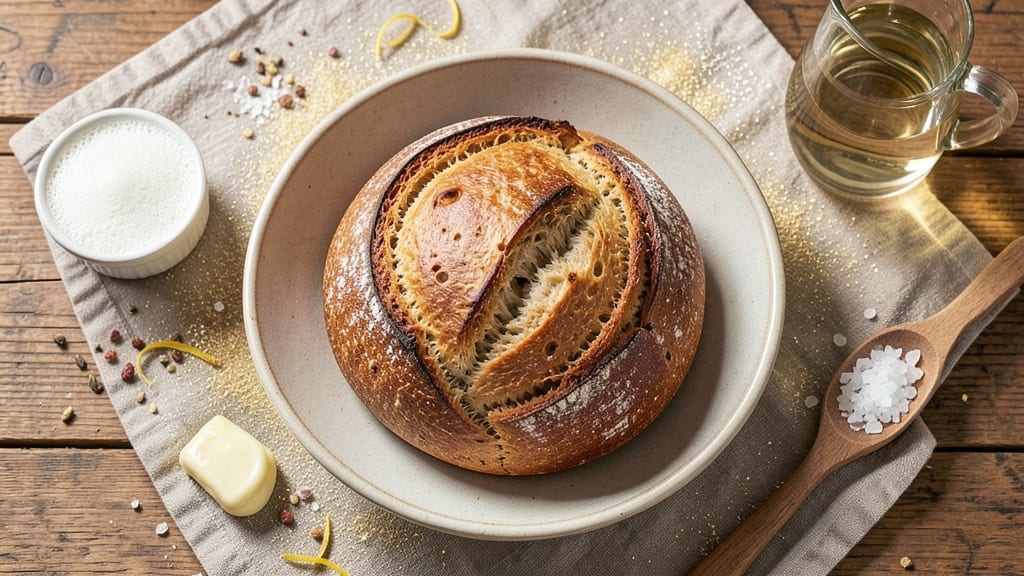
King Arthur flour transforms traditional Anadama bread into a New England classic with a crispy crust and tender interior. This recipe captures the essence of coastal New England baking—where the foil-sealed softness meets a golden, crackling exterior.
The secret lies in the flour's high protein content and the careful balance of yeast and salt, creating that signature texture. What sets this apart is the two-stage baking process: starting uncovered for a crisp crust, then sealed in foil to develop that signature softness.
The dough develops deep flavor as it ferments, and the addition of molasses adds just enough sweetness to complement the crust's savory notes. It's the kind of bread that pairs perfectly with chowder or lobster rolls.
By the time you pull it from the oven, you'll have a loaf with a crackly exterior and a tender crumb that's impossible to resist. The aroma alone will transport you to a seaside bakery in Maine.
This recipe delivers authentic Anadama flavor with modern convenience—no special equipment required, just patience and attention to detail. Perfect for feeding a crowd or enjoying with your favorite seafood dinner. Let's get started on this New England treasure.
Ingredients for anadama bread recipe king arthur
King Arthur flour and a few pantry staples create this iconic New England bread with crispy crust and tender crumb.
| Ingredient | Amount | Notes |
|---|---|---|
| King Arthur Bread Flour 🌾 | 5 cups | High-protein for signature texture |
| Active Dry Yeast 🍞 | ¼ oz | Or 1 packet instant yeast |
| Granulated Sugar 🍚 | 1 tbsp | Feeds yeast for fermentation |
| Unsalted Butter 🧈 | ½ cup | Cold, cubed for dough |
| Warm Water 💧 | 1 ¼ cups | 110°F for yeast activation |
| Salt 🧂 | 2 tsp | Diamond Crystal preferred |
| Molasses 🍯 | 2 tbsp | Unsulphured for authentic flavor |
| Large Eggs 🥚 | 1 whole | Room temperature for mixing |
| Cornmeal 🌽 | ¼ cup | For dusting parchment paper |
| Coarse Sea Salt 🧂 | 1 tbsp | For sprinkling crust |
| Aluminum Foil 📄 | 1 sheet | For sealing during bake |
The King Arthur Bread Flour is non-negotiable here—its high protein content gives that signature chewy texture. Grab a 5-pound bag from their website or local grocery store if you can't find it. For the yeast, Bob's Red Mill or Saf-Instant are reliable brands, but any active dry yeast works. The molasses? Goya unsulphured is my go-to—it's affordable and keeps forever. If you're in a pinch, blackstrap molasses works too, but you'll need to reduce it slightly since it's thicker. Store your flour in an airtight container to keep it fresh, and keep yeast in the fridge for longer shelf life.
No molasses? Light corn syrup or honey in a 1:1 ratio gets you close, though the flavor won't be identical. Running short on butter? Coconut oil or vegetable shortening works, but butter gives the best flavor. The cornmeal is just for dusting—any fine grain like rice flour will do. For the sea salt, Maldon or Jacobsen are perfect, but table salt in a pinch (just use less). The foil? Heavy-duty aluminum foil is ideal, but parchment paper can work if you're sealing it tightly. If your dough feels too sticky, add 1 tbsp more flour—it's better to have slightly stiff dough than one that's too wet.
This dough ferments best at room temperature for 1-2 hours before shaping. Once shaped, it keeps in the fridge for up to 24 hours—perfect for overnight prep. After baking, let it cool completely before slicing, or it'll turn gummy. Store leftovers wrapped in a clean kitchen towel for up to 3 days—the towel keeps it soft. For longer storage, freeze sliced bread for up to 3 months. Reheat slices in a toaster or oven at 300°F for 5 minutes to restore that bakery-fresh crunch.
Why You'll Love This Recipe
- Four-Ingredient Magic: I swear, the simplicity of this dough is what sold me—just flour, yeast, butter, and water. No fancy mix-ins, no stress. The King Arthur flour does all the heavy lifting, so I don’t have to fuss over gluten development or hydration.
- Butter So Rich: That cold, cubed butter melting into the dough? Absolute luxury. It creates pockets so tender you’ll forget this is homemade bread, not something from a bakery. (Yes, even on a Tuesday night.)
- Weeknight Workhorse: Toss a loaf in the freezer for sandwiches all week—no one will guess it’s prepped ahead. Or slice it fresh for toast when company drops by. It’s the bread equivalent of a good pair of jeans: always works.
- Budget-Friendly Luxe: A single batch costs less than $5 and stretches for days. Between us, I’ve fed a crowd of six with two loaves, and they all asked for seconds. That’s the kind of value that makes me happy.
Step-by-step instructions for Anadama bread
Let's make this classic New England bread with a crisp crust and tender interior.
Activate the Yeast and Mix the Dough
In a large bowl, combine the 1.25 cups warm water (about 110°F—it should feel warm to your wrist but not hot), 1 tbsp granulated sugar, and 0.25 oz active dry yeast. Let this sit for 5-10 minutes until the mixture becomes frothy and bubbly—this confirms your yeast is alive and ready to work.
Once bubbly, add the 5 cups King Arthur Bread Flour, 2 tsp salt, and 2 tbsp molasses to the bowl. Mix with a wooden spoon until a shaggy dough forms. Then add the 0.5 cup cold, cubed unsalted butter and the 1 whole large egg. Mix until the dough comes together and is no longer sticky. If it feels too dry, add 1 tablespoon warm water at a time until just combined.
Knead the Dough Until Smooth
Turn the dough onto a lightly floured surface and knead for 8-10 minutes until it becomes smooth and elastic. You'll know it's ready when it springs back slowly after being pressed with your finger. If the dough feels too sticky, add a little more flour, but don't overdo it—too much flour can make the bread dense.
Shape the dough into a round ball and place it back in the bowl. Cover with a damp kitchen towel and let it rise in a warm place for 1-2 hours, or until it has doubled in size. You'll see it puff up and feel light when pressed gently. This rising step is crucial for that signature Anadama texture.
Shape and Prepare for Baking
Once the dough has risen, punch it down to release the air and shape it into a round loaf. Place it on a piece of parchment paper dusted with 0.25 cup cornmeal to prevent sticking. Cover loosely with the damp towel and let it rise for another 30-45 minutes until it puffs up again.
Preheat your oven to 425°F. While the oven heats, cut a piece of 1 sheet aluminum foil large enough to wrap around the loaf. Sprinkle the top of the dough with 1 tbsp coarse sea salt—this will create that signature crusty exterior.
Bake with Foil for Softness
Place the shaped loaf on a baking sheet and bake uncovered for 15 minutes until the top is golden brown. Then, quickly wrap the loaf tightly in the aluminum foil, sealing the edges to trap steam. Return it to the oven and bake for another 35-40 minutes until the bread sounds hollow when tapped on the bottom.
The foil creates a steamy environment that keeps the interior soft and moist while the crust remains crispy. If the top browns too quickly, cover it with an additional sheet of foil. Let the bread cool on a wire rack for at least 30 minutes before slicing—this ensures it stays moist and doesn't crumble.
Serve Warm for Maximum Enjoyment
Anadama bread is best enjoyed fresh from the oven. Slice it thickly and serve it warm with butter or your favorite jam. The crust should be crisp and golden, while the interior remains tender and slightly sweet from the molasses. Store any leftovers wrapped in a clean kitchen towel to keep them fresh for up to 3 days.
This bread is perfect for sandwiches, toast, or simply enjoyed on its own. The molasses and cornmeal give it a rich, slightly sweet flavor that pairs beautifully with savory or sweet toppings. Enjoy your homemade New England classic!
Pro Tips For Making Anadama Bread Recipe King Arthur
- Bloom the Yeast First: Skip the guesswork—proof your yeast in warm water with a pinch of sugar (yes, even though the recipe has sugar later). If it bubbles within 5-10 minutes, your dough’s ready to rock; if not, your yeast is dead, and you’re wasting flour. I learned this the hard way after baking a flat loaf with expired yeast.
- Salt the Dough Early: Add the salt with the yeast, not at the end. It dissolves better and distributes evenly—no more salty pockets or bland bites. My grandmother swore by this, and she was right: the crust gets crispier, and the flavor’s consistent from bite to bite.
- Chill the Dough Overnight: Resist the urge to rush—let the dough rest in the fridge for 12-24 hours. The gluten relaxes, the flavor deepens, and you avoid that dense, chewy mess from overworking it. (Yes, even if you’re impatient like me.)
- Use Cold Butter for Laminating: Cut that unsalted butter into tiny cubes and freeze it for 10 minutes before mixing. It’ll create those signature flaky layers without turning your dough into a greasy disaster. I was skeptical until I tried it—now it’s non-negotiable.
Common mistakes when making great anadama bread recipe king arthur
Over-Kneading the Dough
Anadama dough is delicate—over-kneading develops too much gluten, which can make your bread tough instead of tender. Stop kneading once the dough springs back slowly (not immediately) when pressed with your finger.
I’ve ruined batches by kneading for 12+ minutes—stick to 8-10 minutes max. If the dough resists shaping or feels rubbery, you’ve gone too far. 💫
Skipping the Foil Step
The foil-sealed bake is what makes Anadama special—without it, the interior stays dry and dense. Bake uncovered for only the first 15 minutes to set the crust, then wrap tightly in foil to trap steam.
If you forget, your bread will still be edible but won’t have that signature soft, pillowy center. Think of the foil as your secret weapon for texture. ⚡
Using the Wrong Flour
King Arthur Bread Flour is non-negotiable—its 12.7% protein creates the perfect balance of chew and tenderness. Substituting all-purpose flour (10-11% protein) will give you a lighter, less flavorful loaf.
If you must substitute, blend 4 cups AP flour + 1 cup whole wheat flour for a closer texture. But trust me, the original flour makes all the difference. 🌾
Incorrect Yeast Activation
Cold water kills yeast; hot water burns it. Test your 110°F water with your wrist—it should feel warm but not hot. If your yeast doesn’t bubble in 5-10 minutes, it’s dead. Store-bought yeast can expire, so check the date.
For extra insurance, proof your yeast in ¼ cup warm water + 1 tsp sugar first—if it doesn’t foam in 5 minutes, start over. 🍞
Overloading the Dough
Too much butter or molasses can weigh down your dough, preventing proper rise. Stick to the ½ cup butter and 2 tbsp molasses measurements. If your dough feels gummy or refuses to hold its shape, reduce the molasses by 1 tsp or chill it for 30 minutes before shaping.
Patience here pays off—don’t rush the fermentation! 🧈
Underbaking or Overbaking
Anadama should sound hollow when tapped on the bottom (35-40 minutes total bake time). Underbaking leaves a gummy center; overbaking dries it out. Use an oven thermometer to confirm your oven runs at 425°F—many ovens run hot or cold.
If unsure, cut into the loaf: the interior should be just set, not raw. 🌡️
Nutrition facts
Frequently asked questions about King Arthur Anadama bread
Can I make this bread without molasses?
Yes, but the flavor won't be authentic. Replace the 2 tbsp molasses with 1 tbsp honey or light corn syrup for a similar sweetness level. For a completely savory version, omit it entirely—just reduce the sugar by 1 tsp to balance the dough. The molasses adds depth that pairs perfectly with seafood dishes.
Why does my dough feel too sticky?
Sticky dough usually means one of two things: either your King Arthur flour is too fresh (new flour absorbs more moisture) or your kitchen is humid. Add flour 1 tbsp at a time until the dough pulls away cleanly from your hands. Never over-flour—the dough should be tacky but manageable. If it's still too wet after adding 2 tbsp flour, let it rest 20 minutes covered while you prep the oven.
How do I know when the bread is fully baked?
Your bread is done when it sounds hollow when tapped on the bottom and reaches an internal temperature of 190-200°F. The crust should be deep golden brown with crisp edges. If unsure, cut into the center—it should be just set with no raw dough. For extra accuracy, use an instant-read thermometer.
Can I make this in a Dutch oven instead of a baking sheet?
Shape the dough into a round loaf and place it directly in a preheated 425°F Dutch oven with the lid on. Bake uncovered for 15 minutes, then seal with foil and bake another 35-40 minutes. The Dutch oven creates even steam distribution for a more uniform crust. Just be sure to use oven mitts—the handle gets hot!
What's the best way to reheat stale Anadama?
Wrap slices in a damp paper towel and microwave for 10-15 seconds to restore moisture. For a crispier texture, toast slices in a 350°F oven for 5-7 minutes with a sprinkle of water on top. The foil-sealed method keeps bread fresh longer, but reheating this way brings back that bakery-fresh crunch.