
Side Dishes
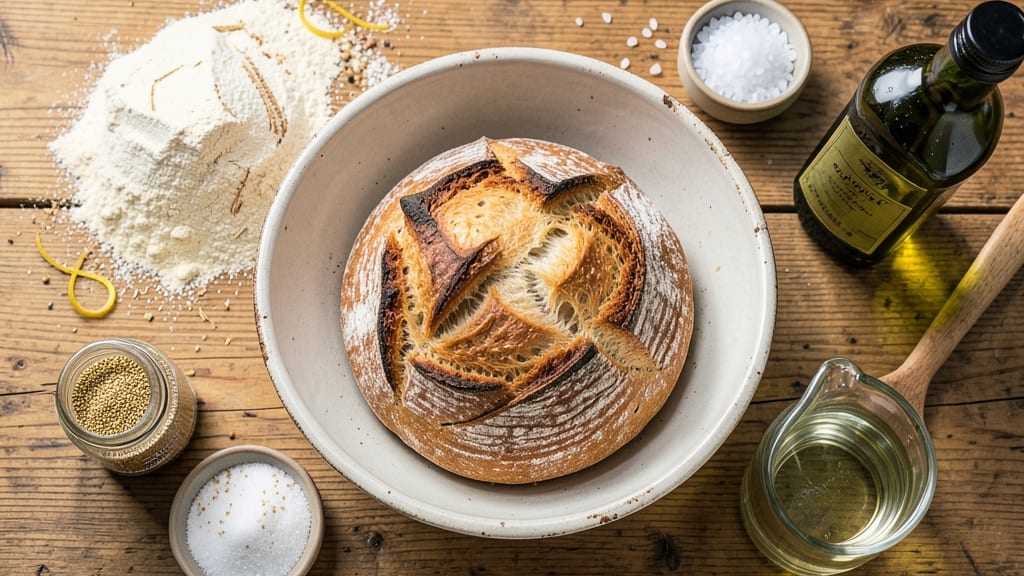
A 60-minute French bread recipe that delivers bakery-quality results without the wait is exactly what you need for weeknight dinners. This method skips the long rise times while still creating that perfect crusty crunch with a soft, airy interior—no bread machine required.
The secret lies in a quick-mix dough and strategic proofing that cuts hours of waiting down to just one hour total.
Professional bakers rely on techniques like instant yeast and a foil-sealed bake to achieve this balance of texture and speed. You'll mix the dough in minutes, shape it quickly, and let it proof while you prepare other components of your meal.
The Dutch oven method ensures a crispy crust without requiring specialized equipment.
By the time you pull that golden-brown loaf from the oven, you'll have a crusty exterior that snaps satisfyingly and a tender crumb that's perfect for soaking up soups or dipping into olive oil.
The aroma alone will transform your kitchen into a Parisian bakery. This recipe proves you don't need hours to create restaurant-quality bread at home.
The best part? You can make this while preparing your main course, and leftovers stay fresh for days. Whether you're feeding a family or just treating yourself, this 60-minute French bread delivers professional results with minimal effort. Let's get started on creating that perfect loaf.
Ingredients for 60 minute french bread
Quick-mix dough and professional techniques make this bakery-style bread possible in just 60 minutes!
| Ingredient | Amount | Notes |
|---|---|---|
| All-Purpose Flour 🌾 | 4 cups | Unbleached preferred for best texture |
| Instant Yeast 🍞 | 2 ½ tsp | Not active dry yeast |
| Granulated Sugar 🍚 | 1 tbsp | Enhances browning and flavor |
| Salt 🧂 | 1 ½ tsp | Diamond Crystal kosher preferred |
| Olive Oil 🫒 | ½ cup | Extra-virgin for richness |
| Warm Water 💧 | 1 ¼ cups | 110°F for optimal yeast activation |
| Cornmeal 🌽 | ¼ cup | For dusting work surface |
| Dutch Oven 🍳 | 1 whole | 5-7 quart capacity preferred |
| Heavy-Duty Aluminum Foil 📄 | 1 sheet | For sealing during bake |
| Coarse Sea Salt 🧂 | 1 tbsp | For topping crust |
| Ice Water ❄️ | ¼ cup | For shaping dough |
| Semolina Flour 🌾 | 2 tbsp | For dusting proofing basket |
The flour is everything here—King Arthur or Gold Medal are my go-tos for that perfect crumb. Bob's Red Mill also works well if you prefer organic. Instant yeast is non-negotiable—it activates faster than active dry yeast, which is key for our speedy timeline. I always buy mine from Penzeys or the bulk bins at Whole Foods if I'm feeling fancy. The olive oil should be extra-virgin (none of that cheap cooking oil)—it makes a noticeable difference in flavor. Warm water is crucial; too hot and you'll kill the yeast, too cold and it won't activate properly. Use a thermometer if you're unsure—110°F is perfect.
No instant yeast? Active dry yeast at double the amount works, but you'll need to proof it first. Running short on olive oil? Avocado oil or melted coconut oil are great substitutes. The Dutch oven is ideal, but if you don't have one, a heavy oven-safe pot with a lid works too. For the foil seal, double-layer it to prevent steam from escaping. The coarse sea salt topping isn't just for looks—it enhances the crust's snap. If you can't find semolina, all-purpose flour works in a pinch, though it won't give that signature crunch.
This dough is best used immediately, but you can shape it ahead and refrigerate for up to 24 hours—just let it sit at room temp for 30 minutes before baking. The baked loaf keeps well for 3-4 days wrapped in a clean kitchen towel. For longer storage, freeze slices wrapped in plastic for up to 3 months. Reheat in a 350°F oven for 5-10 minutes to restore that fresh-baked aroma. The crust gets crispier as it cools, so wait at least 10 minutes before slicing for the best texture.
Why You'll Love This Recipe
- No-Knead Magic: I swear by this trick—just mix the flour, yeast, sugar, and a splash of olive oil, then let it rest. No standing at the counter, no arm workout, just hands-off rising while you watch TV or fold laundry.
- Crispy-Gold Promise: That olive oil brushed on top? It’s the secret to a crust so tender and golden it’ll fool you into thinking you spent hours baking. The inside stays soft, the outside? Pure satisfaction.
- Weeknight Hero: Toss a couple of loaves in the freezer for when you’re too tired to think. Toast straight from frozen—no defrosting, no fuss—and suddenly dinner feels like a victory.
- Pantry Staple Power: Five ingredients, zero specialty items. You’re already buying these—this recipe just turns them into something that makes your home smell amazing and your wallet happy. (Yes, even on a Tuesday night.)
Step-by-step instructions for perfect French bread
Here's how to make restaurant-quality French bread in just 60 minutes—crispy crust and pillowy interior guaranteed!
Mix the Dough and Let It Rise
In a large bowl, combine the 4 cups all-purpose flour, 2.5 teaspoons instant yeast, 1 tablespoon granulated sugar, and 1.5 teaspoons salt. Mix gently to distribute the yeast and sugar evenly through the flour. This dry mix creates the perfect foundation for your dough.
Next, add the 0.5 cup olive oil and 1.25 cups warm water (around 110°F). Stir with a wooden spoon until a shaggy dough forms—it should pull away from the sides of the bowl. Cover the bowl with a damp towel and let it rest for 15 minutes. This brief rest allows the gluten to relax, making the dough easier to handle later.
After resting, turn the dough onto a lightly floured surface and knead for 5-7 minutes until smooth and elastic. Real talk: if it feels sticky, add just a sprinkle of flour—you want the dough to be tacky but not wet. Shape it into a round ball, place it back in the bowl, cover, and let it rise for 30 minutes until doubled in size. You'll know it's ready when it springs back slowly when poked.
Shape and Proof the Loaves
Lightly dust your work surface with 0.25 cup cornmeal and turn out the risen dough. Divide it into 4 equal pieces (about 1 pound each). Roll each piece into a smooth, round ball and let them rest for 5 minutes uncovered. This resting step prevents the dough from shrinking when you shape it into loaves.
Using your hands, gently stretch each dough ball into a 16-inch log, tapering the ends slightly. Place them seam-side up in a dutch oven lined with parchment paper, leaving 1 inch between each loaf. Cover loosely with a towel and let them proof for 15 minutes until puffy. This step ensures the loaves rise beautifully in the oven.
Seal and Bake for Crusty Perfection
Preheat your oven to 450°F with the dutch oven inside for 30 minutes—this creates a steamy environment for maximum browning. Remove the hot dutch oven from the oven and carefully score each loaf with a sharp knife, cutting ½-inch deep diagonally. Dust the tops with 1 tablespoon coarse sea salt and cover tightly with heavy-duty aluminum foil. Return to the oven and bake for 20 minutes.
After 20 minutes, remove the foil and bake for another 10-15 minutes until the crust is deep golden brown. Here's the thing—if the oven runs hot, you might need to reduce heat to 425°F to prevent burning. The bread is done when it sounds hollow when tapped on the bottom.
Cool and Serve for Maximum Enjoyment
Remove the loaves from the dutch oven and place them on a wire rack to cool completely. I know it's tempting to slice into them warm, but resisting this urge ensures the crust stays crispy and the interior remains soft. Let them cool for at least 30 minutes before slicing—this step makes all the difference in texture.
Once cooled, slice the loaves into 1-inch thick pieces. The exterior should be crisp and crackly, while the interior remains light and airy. Serve warm with butter or olive oil for dipping, or use them for sandwiches—they'll hold up perfectly. Store any leftovers in a bread bag at room temperature for up to 3 days, or freeze for up to 3 months.
Pro Tips For Making 60 Minute French Bread
- MEASURE FLUIDS ACCURATELY: I learned this the hard way—using a dry measuring cup for olive oil (or worse, eyeballing it) throws off the dough’s balance. Use a liquid measuring cup and pour the oil in slowly; you’ll need about ¼ cup for this recipe, and precision here keeps the crust crisp without making the bread greasy.
- LET THE DOUGH RISE IN A WARM SPOT: Your oven isn’t just for baking—it’s your dough’s best friend. Turn it on low (around 200°F), place a bowl of hot water inside, then shut the door and let the dough rise there. The steam and warmth cut the wait time nearly in half, and the bread turns out lighter than if you left it on the counter.
- SKIP THE OVER-KNEADING: This dough is forgiving, but don’t mistake "sticky" for "needs more work." After 5–6 minutes of mixing by hand (or 3–4 minutes in a stand mixer with a dough hook), the dough should pull away from the sides but still feel slightly tacky. Overworking it makes gluten tough, and your bread will end up chewy instead of airy.
- USE COLD WATER FOR THE YEAST: I was skeptical until I tried it—dissolve the yeast in ½ cup cold water (not warm) with the sugar. The slow activation gives you more control over timing, and the dough rises more evenly. Plus, if your kitchen’s hot, this prevents the yeast from waking up too fast and making a gummy mess.
Wine and beer pairings for this recipe
Crisp White Wine
For this French bread, a dry white wine like Sauvignon Blanc or Chardonnay from the Loire Valley works beautifully. The crisp acidity cuts through the rich, buttery crust while complementing the bread's subtle olive oil notes.
I love a French Sancerre—its citrus and mineral flavors refresh your palate between bites. 🍷
Light Beer Pairing
A wheat beer or pilsner balances the bread's crusty texture without overpowering it. Try a German Helles or an American wheat ale like Blue Moon—their light malt sweetness and slight effervescence enhance the bread's airy crumb.
For a bolder option, a Belgian witbier with its peppery notes adds an interesting contrast.
Red Wine for Heartier Meals
If serving with a hearty stew or charcuterie, a light-bodied red like Pinot Noir or Beaujolais pairs wonderfully. The red fruit flavors complement the bread's crust while keeping the meal balanced.
A Burgundy Pinot Noir from the Côte de Nuits adds a touch of elegance without competing with the bread's simplicity.
Non-Alcoholic Options
Don't drink alcohol? No problem! A sparkling apple cider or sparkling water with lemon mimics the wine's refreshing quality. For something richer, try a cold-brewed hibiscus tea—its tartness enhances the bread's buttery notes.
I often serve this with San Pellegrino Aranciata for a citrusy kick that brightens every bite. 💫
Nutrition facts
Frequently asked questions
Why does this recipe use instant yeast instead of active dry yeast?
Instant yeast activates faster and doesn't require proofing in water first—critical for our 60-minute timeline. It dissolves directly into the dough, saving 10-15 minutes of prep time while delivering the same rise. For best results, always use the exact amount specified; too much can make the bread taste bitter.
Can I make this bread without a Dutch oven?
Use a heavy oven-safe pot with a lid or even a baking sheet lined with parchment. For best results, create steam by placing a metal tray with boiling water on the lower oven rack. The crust won't be quite as crispy, but you'll still get a great loaf. Pro tip: Spritz the dough with water before baking to help develop that signature crust.
How do I know when the bread is fully baked?
Look for three key signs: the crust should be deep golden brown, the bread should sound hollow when tapped on the bottom, and the internal temperature should reach 190°F (use an instant-read thermometer). If the top browns too quickly, tent with foil. The bread continues cooking as it cools, so resist slicing until it's completely cooled.
What's the best way to reheat stale French bread?
For maximum crispiness, wrap slices in foil and warm in a 350°F oven for 5-8 minutes. Or try this trick: place slices on a baking sheet and broil for 1-2 minutes until golden. Avoid the microwave—it makes the crust soggy. For extra flavor, brush with melted butter before reheating. Fresh bread should last 3-4 days when stored properly.
Can I make this dough ahead of time?
Yes! Shape the dough into loaves and refrigerate for up to 24 hours. Let them sit at room temperature for 30 minutes before baking. For longer storage, freeze shaped loaves (unbaked) for up to 3 months. Thaw in the fridge overnight before baking. The cold rise slows fermentation, giving you more control over the final texture.