
Side Dishes
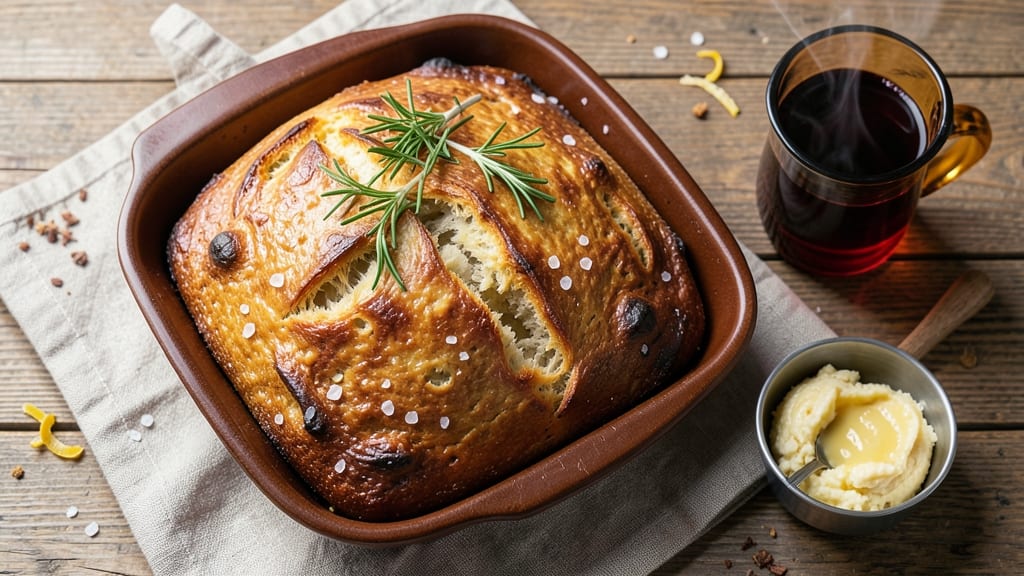
This ale bread recipe transforms simple ingredients into a masterpiece with a crispy, beer-infused crust and a pillowy interior that’s impossible to resist. The key lies in using ale instead of water—its subtle maltiness creates depth while keeping the texture light and airy.
I’ve baked this bread countless times, perfecting the balance between a golden, crackly exterior and a soft, fluffy crumb that begs for butter.
The process is straightforward but requires patience: kneading until smooth, letting the dough rise twice, and baking until the crust achieves that perfect caramelized hue.
Ale bread shines as a side dish for hearty meals or as a base for open-faced sandwiches, but its versatility doesn’t end there—add rosemary or garlic for extra flavor or sprinkle seeds for texture. The aroma alone will have everyone at the table anticipating the first bite.
What sets this ale bread apart is how the beer’s natural sugars caramelize during baking, giving the crust a rich, slightly sweet edge without overpowering the dough. The result is a loaf that’s both rustic and refined, with a chewiness that’s hard to find in store-bought versions.
Whether you’re serving it warm with dinner or saving slices for toast the next morning, this bread delivers restaurant-quality results at home.
Ready to bake? The recipe includes step-by-step instructions for shaping, scoring, and achieving that signature crust, plus tips for troubleshooting common baking challenges.
With just a few ingredients and a little time, you’ll have a loaf that tastes like it came from a European bakery—proof that great bread doesn’t require complicated techniques, just the right approach.
Ingredients for ale bread
Nine simple ingredients transform into a golden, beer-kissed loaf with crisp crust and tender crumb.
| Ingredient | Amount | Notes |
|---|---|---|
| Dark Ale Beer 🍺 | 1 cup | Room temperature, malt-forward |
| All-Purpose Flour 🌾 | 4 cups | High protein for structure |
| Active Dry Yeast 🍞 | 2 ¼ tsp | Or 1 packet instant yeast |
| Granulated Sugar 🍬 | 1 tbsp | Feeds yeast for activation |
| Unsalted Butter 🧈 | ½ cup | Cold, cubed for dough |
| Large Egg 🥚 | 1 whole | Room temperature |
| Salt 🧂 | 1 ½ tsp | Diamond Crystal preferred |
| Milk 🥛 | ¼ cup | Warmed to 100°F |
| Honey 🍯 | 1 tbsp | For crust caramelization |
| Cornmeal 🌽 | ½ cup | For dusting baking sheet |
| Water 💧 | ¼ cup | If beer too strong |
The beer is non-negotiable—dark ales like Guinness or porter work best, but any malt-forward beer (even light) adds character. Skip the light lagers; they lack the depth. Local craft breweries often have affordable options, or check the international aisle at Whole Foods for quality imports. If your beer is too strong (over 6% ABV), mix with water to balance. Room temperature beer activates yeast faster—no need to warm it. For the flour, King Arthur or Caputo are ideal, but any all-purpose works in a pinch. The butter should be cold when added to the dough for optimal texture.
No dark ale? Substitute with equal parts water plus 1 tbsp malt extract—it mimics the caramelization. Running short on butter? Use 2 tbsp neutral oil, though texture will differ slightly. The honey can be swapped for maple syrup or agave, though honey's floral notes enhance the crust. For a richer flavor, add 1 tsp molasses to the dough. If your yeast is old (over 4 months), proof it first in warm milk to ensure it's active. The egg adds structure—omit for vegan version and replace with 1 tbsp flaxseed meal mixed with 3 tbsp water.
Dough rises best in a warm spot (75-80°F)—turn on your oven light or place near a sunny window. Once shaped, cover with a damp towel to prevent drying. The baked loaf keeps well for 3 days at room temperature wrapped in a cotton towel, or 1 week refrigerated in an airtight bag. For longer storage, freeze slices wrapped in parchment—toast directly from frozen. The crust hardens as it cools; rewarm at 350°F for 5 minutes to restore crispness. Leftovers make incredible croutons or breadcrumbs.
Why You'll Love This Recipe
- No-Knead Nightmare Solved: I swear by this recipe because it actually works—no standing at the counter for 10 minutes like my old bread attempts. The dark ale does all the heavy lifting while you mix, shape, and forget about it for an hour.
- Rich Without the Effort: That first bite? Malty, buttery, and just sweet enough—like a hug from a bakery. The beer’s depth cuts through the flour’s simplicity, and the butter? It melts into pure, golden satisfaction. (Yes, even on a Tuesday night.)
- Sandwich Star or Sidekick: Thick enough to hold a grilled cheese or chili, but light enough to pair with soup. I’ve served it at tailgates, picnics, and lazy Sundays—it’s the bread equivalent of a good multitool. Honestly, I’ve never met a meal it didn’t improve.
- Budget-Friendly Leftovers: A single batch feeds my family for days, and the dough stalls beautifully. Freeze half for when you’re too tired to bake, or toast stale slices—trust me, they’re still better than store-bought. Plus, using pantry staples means no last-minute grocery runs.
Step-by-step instructions for ale bread recipe
Here's the method for crafting a beer-infused loaf with a crispy crust and tender interior.
Activate the Yeast with Beer and Sugar
In a small bowl, combine the 1 cup dark ale beer (at room temperature) with the 1 tablespoon granulated sugar. Stir until the sugar dissolves completely. This sweetened beer creates the perfect environment for yeast activation.
Sprinkle the 2.25 teaspoons active dry yeast over the beer mixture and let it sit for 5-10 minutes until it becomes frothy. You'll know it's ready when you see bubbles forming on the surface and the mixture smells slightly yeasty. If it doesn't activate within 10 minutes, your yeast may be old—start over with fresh yeast.
Mix Dough Ingredients Until Fully Combined
In the bowl of a stand mixer fitted with the dough hook attachment, combine the 4 cups all-purpose flour and the 1.5 teaspoons salt. Mix on low speed for 30 seconds to aerate the flour.
Add the yeast-beer mixture, the 1 whole large egg, the 0.25 cup warmed milk, and the 0.25 cup water (if using). Mix on low speed until a shaggy dough forms, about 2 minutes. Then add the 0.5 cup cold cubed unsalted butter and continue mixing until the dough comes together and clears the sides of the bowl, approximately 5-7 minutes.
Knead Until Smooth and Elastic
Switch the mixer to medium speed and knead the dough for 5-7 minutes, until it becomes smooth, elastic, and slightly tacky. The dough should form a windowpane when you stretch a small piece—this means it's properly developed.
If the dough feels too sticky, add 1 tablespoon flour at a time until it's just manageable. The beer content makes this dough slightly more hydrated than traditional bread dough, so don't be surprised if it's stickier than expected. Once kneaded, transfer the dough to a lightly greased bowl, cover with a damp towel, and let it rise in a warm place for 1-1.5 hours, or until it doubles in size.
Shape and Proof the Dough
Punch down the risen dough to release air, then turn it out onto a lightly floured surface. Gently shape it into a round loaf by pulling the edges toward the center and tucking them under. Place the shaped dough on a baking sheet dusted with 0.5 cup cornmeal to prevent sticking.
Cover the dough loosely with plastic wrap and let it proof again for 30-45 minutes, until it has puffed up noticeably. The beer in the dough will give it a slightly denser texture than traditional bread, but this second rise ensures a good oven spring. Preheat your oven to 375°F during this final proofing time.
Bake Until Golden and Hollow-Sounding
Brush the top of the dough with the 1 tablespoon honey mixed with 1 teaspoon water to create a caramelized crust. Bake in the preheated oven for 30-35 minutes, until the bread is deep golden brown and sounds hollow when tapped on the bottom.
For extra crispiness, broil for 1-2 minutes at the end of baking time. Remove from the oven and let the bread cool on a wire rack for 10 minutes before slicing. The interior should be tender and pillowy, with a slightly crisp crust infused with beer flavor.
Pro Tips For Making Ale Bread
- CHILL THE BUTTER: Cold butter makes all the difference in ale bread—don’t let it soften too much before mixing. I learned this the hard way when my dough turned gummy and dense; just grate or cut the butter into small cubes and keep it in the fridge until the very last minute before shaping.
- WEIGH YOUR FLOUR: Spooning flour from the bag packs too much air, and that throws off your ratio. Use a kitchen scale for accuracy—this isn’t the time to eyeball it. A 1% difference in flour can make your ale bread either light and airy or a brick.
- LET THE DOUGH RISE TWICE: Skip the second rise, and you’ll end up with a sad, flat loaf. The first rise develops the yeast, but the second—after shaping—lets the gluten relax and the beer’s flavor infuse properly. Give it at least 1 hour, even if you’re eager.
- USE ROOM-TEMP BEER: Cold beer slows the yeast down, and that means a weaker rise. Let your dark ale sit out for 30-60 minutes before mixing it into the dough—just until it’s barely warm to the touch. Your bread will thank you with a better texture and richer flavor.
Creative variations of this dish
Herb-Infused Twist
Add 1 tablespoon fresh rosemary or 2 tablespoons chopped thyme directly to the dough after mixing to create a fragrant, aromatic loaf. The herbs pair beautifully with the beer's maltiness, adding earthy notes that complement the crust.
For a stronger flavor, finely chop the herbs and mix them into the butter before adding it to the dough. 🌿
Seeded Crunch
Sprinkle 2 tablespoons sesame seeds, 2 tablespoons poppy seeds, or ¼ cup chopped walnuts on top of the dough before the final proof. Press them gently into the surface so they adhere.
These additions not only add texture but also enhance the visual appeal of your loaf. For a savory-sweet combo, try 1 tablespoon flaxseeds mixed with 1 teaspoon cinnamon.
Sweet Variations
Transform your ale bread into a dessert-loaf by adding ½ cup raisins or chopped dried cranberries to the dough. For a richer flavor, swap the honey egg wash for a mix of 1 tablespoon melted butter and 1 tablespoon maple syrup.
The beer's caramelization will create a subtle sweetness that pairs perfectly with the dried fruit. 🍯
Savory Garlic & Parmesan
Enhance the flavor profile by incorporating 2 minced garlic cloves and ¼ cup grated Parmesan cheese into the dough. The garlic adds a bold punch, while the Parmesan contributes a salty, umami depth that balances the beer's maltiness.
For extra richness, brush the baked loaf with garlic-infused olive oil before serving.
Whole Wheat Boost
Replace 1 cup of the all-purpose flour with whole wheat flour for a nuttier, heartier loaf. The whole wheat adds fiber and a slightly denser texture, which works well with the beer's robust flavor.
To maintain a good rise, ensure your yeast is fresh and active. The crust will be slightly darker but equally crisp and flavorful.
Spiced Ale Bread
Infuse your loaf with warmth by adding 1 teaspoon ground cinnamon and ½ teaspoon nutmeg to the dough. These spices complement the beer's maltiness and create a cozy, comforting flavor that’s perfect for fall or winter.
For a kick, add a pinch of cayenne pepper to the egg wash before brushing it on top. ⚡
Nutrition facts
Frequently asked questions
Can I use any type of beer for ale bread?
Dark ales like Guinness or porter work best, but any malt-forward beer adds character. Light lagers lack depth, so avoid them. If your beer is too strong (over 6% ABV), dilute with 1-2 tablespoons water per cup to balance flavor while keeping the beer's essence.
Why does my ale bread dough feel extra sticky?
The beer increases hydration, making the dough stickier than traditional bread dough. Use a dough scraper to handle it, and add 1 tablespoon flour at a time only if absolutely necessary. The stickiness is normal—don't over-flour, or the texture will suffer.
How do I fix dense ale bread?
Dense bread usually means underproofed dough or over-kneading. Next time, let the dough rise until it doubles in size (1-1.5 hours) and avoid kneading beyond 7 minutes. Also, ensure your yeast is fresh—old yeast won't activate properly in beer.
Can I make ale bread without an egg?
Yes! Replace the egg with 1 tablespoon flaxseed meal mixed with 3 tablespoons water (let sit for 5 minutes to gel). The bread will be slightly less rich but still delicious. For vegan baking, this substitution works perfectly with the beer's flavor profile.
What's the best way to store ale bread?
Wrap cooled loaves in a cotton towel and store at room temperature for 3 days. For longer storage, refrigerate in an airtight bag for 1 week or freeze slices wrapped in parchment. Reheat frozen slices at 350°F for 5 minutes to restore crispness.