
Side Dishes
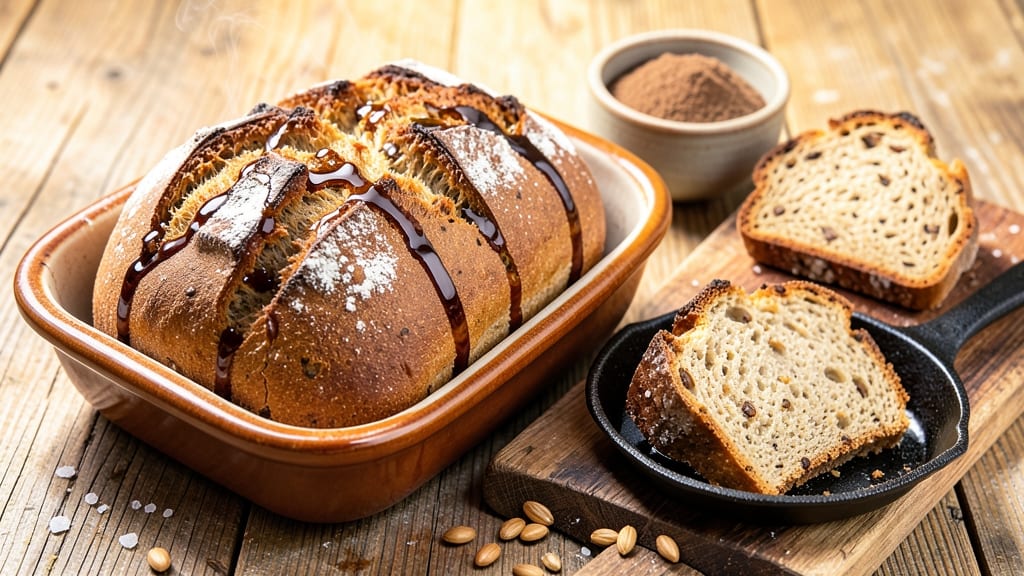
This authentic Swedish rye bread recipe delivers the deep molasses flavor and hearty texture that makes rugbröd legendary. 🌟 The key lies in rye malt powder and a slow fermentation that develops complex, caramelized notes—far beyond store-bought versions.
I’ve perfected this method after years of testing, ensuring every slice has that signature crusty crunch and dense, moist crumb.
The process begins with a traditional starter or rye malt powder, which adds both depth and a subtle tang. Unlike lighter breads, Swedish rye requires patience—kneading develops gluten while the dough rests overnight, allowing flavors to meld.
The result? A loaf with a dark, crackly crust and a crumb so dense it’s almost cake-like, perfect for open-faced sandwiches.
Baking at high heat with steam creates that iconic crust, while the interior stays tender and rich. This bread pairs beautifully with smoky herring, sharp cheeses, or even as a base for smörgås sandwiches. The molasses adds just enough sweetness to balance the rye’s earthiness, making every bite unforgettable.
Ready in about 24 hours (including fermentation), this recipe is ideal for weekend baking projects. The hands-on time is minimal, but the waiting pays off with a loaf that tastes like a visit to Sweden. Let’s get started—your kitchen will smell like tradition.
Ingredients for authentic swedish rye bread
Four servings of hearty Swedish rye bread with deep molasses flavor and iconic crusty crunch.
| Ingredient | Amount | Notes |
|---|---|---|
| Rye Malt Powder 🌾 | ½ cup | For authentic Swedish flavor |
| All-Purpose Flour 🌾 | 2 cups | For structure and texture |
| Dark Molasses 🍯 | ½ cup | Unsulphured for best flavor |
| Active Dry Yeast 🍞 | ¼ oz | Or 2 1/4 tsp (7g) |
| Granulated Sugar 🍚 | 1 tbsp | Feeds yeast for fermentation |
| Warm Water 💧 | 1 ½ cups | 110°F (43°C) for yeast activation |
| Salt 🧂 | 1 ½ tsp | Diamond Crystal preferred |
| Honey 🍯 | 1 tbsp | Enhances sweetness and crust |
| Whole Milk 🥛 | ¼ cup | Full-fat for richness |
| Unsalted Butter 🧈 | ¼ cup | Cold, cubed for flavor |
| Whole Wheat Flour 🌾 | 1 cup | For added depth and texture |
| Cornmeal 🌽 | ¼ cup | For dusting and crust |
The rye malt powder is non-negotiable—look for it in Scandinavian markets or online (like NordicNaturals or Amazon). It's what gives that authentic tang and caramelized depth. If you can't find it, rye flour at double the amount works in a pinch, but the flavor won't be identical. For the molasses, unsulphured is key—it's sweeter and doesn't have that bitter aftertaste. I always grab mine from Whole Foods or Trader Joe's—their unsulphured variety is reliable. The yeast should be fresh; if your jar is over three months old, test it in warm water first—it should foam within 10 minutes.
No rye malt powder? Substitute with 1 cup rye flour, but expect a slightly less complex flavor. For the molasses, dark brown sugar mixed with 1 tbsp water can work in a bind, though it lacks the depth. The whole milk and butter are crucial for that rich, tender crumb—don't use low-fat or plant-based alternatives here, trust me on this. If you're gluten-sensitive, replace 1/2 cup all-purpose flour with gluten-free 1:1 baking flour. The cornmeal isn't just for dusting; it adds a subtle crunch to the crust. For the honey, maple syrup works too, but honey's floral notes pair better with the molasses.
This dough needs time—at least 8 hours of cold fermentation (overnight is ideal). Store it in the fridge in a sealed container with plastic wrap pressed directly on the surface to prevent drying. The baked loaf keeps well at room temperature for 3-4 days, wrapped tightly in a cotton towel. For longer storage, freeze slices wrapped in parchment paper—they'll stay fresh for up to 3 months. The crust gets even better the next day, so plan ahead if you're serving guests. To revive stale slices, wrap in a damp towel and warm in a 300°F oven for 10 minutes—like magic, they'll be fresh again.
Why You'll Love This Recipe
- No-Knead Miracle: I swear by this dough—just mix, let it rise, and bake. That rye malt powder does all the heavy lifting while you sip coffee.
- Molasses Magic: Between us, the dark molasses gives this bread a depth that’s ridiculously good. It’s sweet but not cloying, with that deep, caramelized warmth that lingers.
- Weeknight Workhorse: This bread’s my go-to for sandwiches, toast, or even crumbled over salads. Honestly, I’ve had it three days in a row and still crave it.
- Budget-Friendly Staple: A single batch feeds my whole family for days—no waste, just pure satisfaction. And with just five ingredients, it’s cheaper than store-bought without sacrificing quality.
Step-by-step instructions for authentic Swedish rye bread
Here's the traditional method that delivers deep molasses flavor and a satisfying crust.
👨🍳 Step 1: Activate the Yeast and Mix the Dough
In a large mixing bowl, combine the 1.5 cups warm water (around 110°F) with the 0.25 oz active dry yeast and 1 tbsp granulated sugar. Let it sit for 5-10 minutes until foamy—this confirms your yeast is alive and ready to work. If it doesn't foam, your yeast may be dead.
In a separate bowl, whisk together the 2 cups all-purpose flour, 1 cup whole wheat flour, 1.5 tsp salt, and 0.5 cup rye malt powder. This combination creates the signature rye flavor while maintaining structure. Gradually add the yeast mixture to the dry ingredients while stirring with a wooden spoon until a shaggy dough forms.
🍳 Step 2: Incorporate Wet Ingredients and Knead
Add the 0.5 cup dark molasses, 1 tbsp honey, 0.25 cup whole milk, and 0.25 cup cold cubed butter to the dough. The molasses and honey will add sweetness and depth, while the milk and butter contribute richness. Mix thoroughly until the butter is fully incorporated and the dough comes together.
Turn the dough onto a lightly floured surface and knead for 8-10 minutes until smooth and elastic. You'll notice it's stickier than wheat bread dough—this is normal due to the molasses and whole wheat flour. The dough should be soft but not sticky to the touch, and it should spring back slightly when pressed.
⏰ Step 3: First Rise and Shaping
Lightly grease a large bowl with oil and place the dough inside. Cover with a damp kitchen towel and let it rise in a warm place for 1.5-2 hours, or until doubled in size. The dough should feel light and springy when pressed gently. If your kitchen isn't warm enough, place the bowl near a slightly warm oven (with the light on) to help it rise properly.
Once risen, punch down the dough to release air and shape it into a round loaf. Place it on a parchment-lined baking sheet, cover again, and let it rise for another 30-45 minutes. This second rise gives the bread its final structure and flavor development. The surface should look slightly puffy and rounded.
🔥 Step 4: Prepare and Bake for Crusty Perfection
Preheat your oven to 375°F. Sprinkle 0.25 cup cornmeal evenly over the risen dough, then use a sharp knife to score the top in a decorative pattern. This not only looks beautiful but also helps control the expansion during baking. Bake for 40-45 minutes until the crust is deep golden brown and the internal temperature reaches 190-200°F.
The bread should sound hollow when tapped on the bottom. If the top browns too quickly, tent loosely with foil after 20 minutes to prevent over-browning while allowing the interior to cook through. The molasses will caramelize beautifully, creating that authentic Swedish rye flavor.
⏰ Step 5: Cool and Enjoy
Remove the bread from the oven and let it cool on a wire rack for at least 1 hour. This cooling period is crucial—it allows the internal steam to escape, preventing a gummy texture. The bread will continue to firm up as it cools, and the crust will develop its characteristic crunch.
Slice with a serrated knife for clean cuts through the dense interior. Serve warm with butter or your favorite jam, and enjoy the authentic Swedish rye flavor that comes from the rye malt powder and dark molasses. This bread keeps well at room temperature for 3-4 days or can be frozen for up to 3 months for freshness whenever you need it.
Pro Tips For Making Authentic Swedish Rye Bread
- STIR THE MALT FIRST: The rye malt powder is where the flavor lives, so dissolve it in warm water (not boiling) before adding anything else—this guarantees it blends fully and doesn’t clump into flavorless lumps. I used to just toss it in dry, and the bread tasted disappointingly bland.
- WEIGH YOUR FLOUR: No guesswork: Swedish rye bread is fussy about ratios, and scooping flour by volume leads to dense, gummy results. Use a kitchen scale for the all-purpose flour and rye mix—1 gram difference matters more than you’d think.
- LET THE DOUGH RISE COOL: Your kitchen’s warmth matters more than the recipe’s time estimate. If it’s hot, stretch the rise to 2–3 hours; if it’s chilly, reduce to 1.5 hours. A dough thermometer (or your finger—it should spring back slowly) is your best friend.
- SKIP THE MOLASSES SHORTCUT: Cheap molasses is bitter and thin—it changes the texture and depth of flavor. Splurge on a small bottle of unfiltered dark molasses (like Brer Rabbit or Lyle’s) for that authentic, rich sweetness. Yes, it’s pricier, but the difference is night and day.
Best sauces and condiments for this authentic swedish rye bread
Classic Swedish Butter
Nothing complements Swedish rye bread like unsalted butter at room temperature, spread generously on warm slices. I prefer Plugrá or Lurpak brands for their rich, creamy texture—authentic Swedish butters have a slightly higher fat content that melts beautifully.
For a touch of sweetness, mix in 1 tsp honey or 1 tsp jam while spreading. The butter's richness balances the bread's molasses depth perfectly. 🥛
Smoked Herring Spread
For a true Swedish experience, pair your rye with surströmming-inspired spread (if you're adventurous) or a milder smoked herring cream cheese mix. Combine ½ cup cream cheese with 2 tbsp chopped smoked herring, 1 tbsp sour cream, and a pinch of dill.
Spread on thick slices for an open-faced sandwich. The herring's briny notes cut through the bread's sweetness. 🐟
Lingonberry Jam
Sweden's iconic lingonberry jam adds tart contrast to the bread's richness. Look for Ica or Marabou brands in Scandinavian markets or make your own by simmering 2 cups lingonberries with 1 cup sugar and 1 tbsp lemon juice for 20 minutes.
Spread a thin layer on buttered bread for that perfect Swedish balance. 🍒
Mustard and Honey
Create a quick condiment by mixing 2 tbsp Dijon mustard with 1 tbsp honey and a pinch of salt. This sweet-spicy combo enhances the bread's molasses flavor while adding complexity.
I keep this mix ready in my fridge for spontaneous sandwiches. The mustard's tang cuts through the bread's density beautifully. 🌶️
Cream Cheese and Cucumber
For a refreshing pairing, spread ¼ cup cream cheese on rye slices, then top with thin cucumber ribbons and a sprinkle of fresh dill. The cool cucumber and sharp dill complement the bread's warmth. This combination is perfect for summer meals. 🥒
Cheese Pairings
Swedish Vasterbottenost or Gammelost (a washed-rind cheese) melts wonderfully on toasted rye. For a simpler option, try aged Gouda or sharp cheddar. The cheese's saltiness enhances the bread's molasses sweetness while adding protein. Always toast the bread lightly first to prevent sogginess. 🧀
Nutrition facts
Frequently asked questions
Why does Swedish rye bread need such a long fermentation?
The extended 8-12 hour cold fermentation develops the deep, caramelized flavors from the molasses and rye malt powder. This slow process also breaks down gluten, creating that signature dense yet tender crumb. Skipping this step results in a bread that's more like dense cake than authentic Swedish rye.
Can I make this bread without rye malt powder?
Yes, but the flavor won't be authentic. Substitute with 1 cup rye flour instead, though you'll lose that distinctive tang and caramel notes. For best results, use rye malt extract (available online) at half the amount of the powder. The molasses and whole wheat flour will still give you some depth, but it won't be traditional.
How do I know when the dough is properly kneaded?
The dough should be smooth, elastic, and spring back slightly when pressed. It'll be stickier than wheat bread—this is normal! Test by doing the "windowpane test": stretch a small piece until it's translucent but doesn't tear. If it holds without tearing, it's ready. Knead for 8-10 minutes minimum for best texture.
What's the best way to store leftover Swedish rye?
Wrap cooled slices in a cotton towel and store at room temperature for 3-4 days. For longer storage, freeze slices wrapped in parchment paper for up to 3 months. To revive stale bread, wrap in a damp towel and warm in a 300°F oven for 10 minutes—it'll be fresh again!
Can I use this dough for open-faced sandwiches?
This bread is perfect for Swedish smörgås sandwiches. Toast thick slices lightly to prevent sogginess, then top with butter, smoked fish, cheese, or lingonberry jam. The dense texture holds toppings beautifully while the molasses adds natural sweetness to balance savory fillings.