
Side Dishes
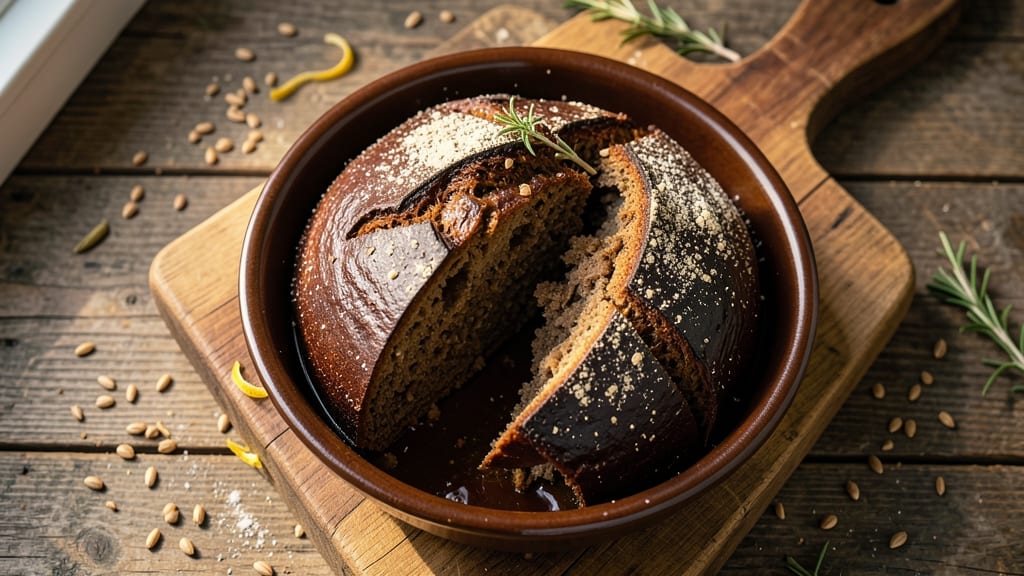
This authentic German pumpernickel bread recipe delivers the deep, molasses-kissed flavor and dense texture that makes it a staple in German households. This recipe stays true to tradition using rye flour, molasses, and a slow-baking process that develops rich, caramelized notes. The key to success lies in proper hydration and fermentation, which creates that signature chewy yet hearty crumb.
What sets this recipe apart is its reliance on German-style rye flour and high-quality molasses—both essential for achieving authentic flavor. Unlike commercial versions, this loaf develops its signature dark color and robust taste through slow baking, not artificial additives.
The dough is notably sticky, which is normal for pumpernickel, and requires patience during shaping to avoid tearing.
By the time it emerges from the oven, you'll have a rustic loaf with a deep amber crust and a dense, slightly sweet crumb that crumbles perfectly for sandwiches or toast.
The molasses adds complexity, while the rye flour provides a satisfying heartiness. This is the kind of bread that transforms simple meals into something special.
Store it wrapped at room temperature for up to 5 days, or freeze for longer shelf life. Perfect for pairing with smoked meats, cheeses, or enjoying on its own with butter. Let's get started on this traditional German classic.
Ingredients for authentic german pumpernickel bread
Four cups of dark rye flour kickstart this traditional German loaf's signature depth and chew.
| Ingredient | Amount | Notes |
|---|---|---|
| German-Style Rye Flour 🌾 | 4 cups | Dark rye flour preferred for authentic flavor |
| All-Purpose Flour 🌾 | 1 cup | For structural balance in dough |
| Unsalted Butter 🧈 | ½ cup | Cold, cubed for proper mixing |
| Molasses 🍯 | ½ cup | High-quality, unsulphured preferred |
| Active Dry Yeast 🍞 | 2 ¼ tsp | Instant yeast works too |
| Granulated Sugar 🍚 | ¼ cup | Feeds yeast for proper rise |
| Warm Water 💧 | 1 ½ cups | 105-110°F for yeast activation |
| Salt 🧂 | 1 ½ tsp | Diamond Crystal preferred |
| Ground Fennel Seeds 🌿 | 1 tsp | Traditional German flavor enhancer |
| Black Peppercorns 🌶️ | ½ tsp | Lightly crushed for subtle heat |
| Cornmeal 🌽 | ¼ cup | For dusting baking sheet |
| Coarse Sea Salt 🧂 | 1 tbsp | For final crust sprinkle |
The German-style rye flour is non-negotiable for authentic flavor—Bob's Red Mill or King Arthur brands deliver consistent results. Look for dark rye flour with a deep amber hue, which indicates higher malt content for that signature caramelized taste. The molasses should be unsulphured—sulphured versions taste artificial. For the yeast, Saf-Instant is my go-to as it doesn't require proofing, but traditional active dry yeast works if proofed properly. The butter should be cold when mixed in to prevent overdevelopment of gluten, which would make the loaf tough rather than chewy. Fennel seeds are crucial for that subtle anise note found in authentic pumpernickel—Penzeys sells them pre-ground for convenience.
No dark rye flour? Substitute with 1/2 cup whole wheat flour plus 1/2 cup all-purpose, though the flavor won't be identical. Short on molasses? Maple syrup at half the amount works in a pinch, though it lacks the deep complexity. The yeast can be omitted entirely for a quick bread version, but the texture will be denser. For the peppercorns, lightly crush them with a mortar and pestle or rolling pin—this releases their oils for better flavor distribution. The cornmeal is essential for preventing sticking during baking, especially since pumpernickel dough is notoriously sticky. If you're feeling adventurous, add 1 tsp caraway seeds for an extra layer of German authenticity.
This dough requires 24 hours of cold fermentation for optimal flavor development—don't rush it. Shape the loaf gently to avoid tearing, and let it proof at room temperature until it's 25-50% larger. For the final bake, use a Dutch oven if possible to create steam, which enhances the crust. The loaf will continue developing flavor for 3-4 days after baking, so patience is key. Store wrapped at room temperature for 5-7 days, or freeze for up to 3 months. The crust gets harder as it sits, so slice with a serrated knife and toast lightly before serving.
Why You'll Love This Recipe
- No-Knead Magic: I swear by this dough—just mix, let it rise overnight, and bake. The molasses and rye do all the heavy lifting while you sleep, so you’re not stuck babysitting it all day.
- Deep, Rich Bite: That molasses caramelizes into something almost chocolatey, while the rye flour gives it a hearty, slightly tangy crunch. Honestly, it’s the kind of bread that makes you pause mid-bite just to savor it.
- Weeknight Workhorse: Slice it thick for breakfast with butter, pack it for lunch, or serve it at dinner with soups—it’s my go-to for any meal. (Yes, even on a Tuesday night when you’re too tired to think.)
- Budget-Friendly Staple: Rye flour and molasses are cheap, and one loaf lasts me ages. I freeze slices for toast later, so it’s basically free bread—just mix, bake, and enjoy without guilt.
Step-by-step instructions for authentic German pumpernickel bread
Master the traditional German technique that delivers deep molasses flavor and dense, rustic texture.
Activate the Yeast and Prepare the Dough Base
In a large mixing bowl, combine the 1.5 cups warm water (between 105-110°F) with the 2.25 tsp active dry yeast and 0.25 cup granulated sugar. Let this sit for 5-10 minutes until frothy—this confirms the yeast is active. If it doesn't bubble, your yeast may be stale.
In a separate bowl, whisk together the 4 cups German-style rye flour, 1 cup all-purpose flour, 1.5 tsp salt, 1 tsp ground fennel seeds, and 0.5 tsp black peppercorns. The rye flour should be dark and coarse for that authentic pumpernickel character. Add the 0.5 cup molasses and mix until combined—this will create a thick, sticky paste.
Combine Wet and Dry Ingredients for Proper Texture
Gradually add the yeast mixture to the dry ingredients while mixing with a wooden spoon. The dough will be extremely sticky—this is normal. Once fully combined, add the 0.5 cup cold cubed unsalted butter and knead gently until incorporated. The butter should remain in small clumps to prevent overdevelopment of gluten.
Cover the bowl with a damp towel and let the dough rest at room temperature for 1 hour. This allows the flour to fully hydrate and the gluten to relax slightly. The dough should still feel very soft and tacky after resting—don't be tempted to add more flour.
Shape and Proof the Dough for Optimal Rise
Lightly dust a clean work surface with 0.25 cup cornmeal and turn out the dough. Gently shape it into a 12-inch log by folding and rolling the dough away from you. Place the log seam-side down on a parchment-lined baking sheet and cover loosely with plastic wrap.
Let the dough proof at room temperature for 2-3 hours until it has nearly doubled in size. You'll know it's ready when the dough springs back slowly when gently pressed. The proofing time may vary based on your kitchen temperature—warmer environments will speed up the process.
Bake for Deep Flavor Development
Preheat your oven to 350°F. Brush the top of the dough with water and sprinkle generously with 1 tbsp coarse sea salt. This creates a crisp crust while keeping the interior moist. Bake for 50-60 minutes until the internal temperature reaches 200°F and the crust is deep brown.
For authentic German flavor, I recommend baking the bread at 325°F for the first 30 minutes, then increasing to 375°F for the final 20-30 minutes. This slower start allows the molasses to caramelize properly, creating that signature deep flavor. The bread is done when it sounds hollow when tapped on the bottom.
Cool and Store for Maximum Flavor
Remove the bread from the oven and let it cool on a wire rack for at least 2 hours. This resting period is crucial—it allows the internal moisture to redistribute and the flavors to fully develop. Cutting it too soon will result in a gummy texture.
Store the pumpernickel wrapped in a clean kitchen towel in an airtight container at room temperature for up to 5 days. For longer storage, freeze slices wrapped in plastic wrap. The flavor actually improves over time as the molasses continues to penetrate the bread.
Pro Tips For Making Authentic German Pumpernickel Bread
- Bloom the Yeast Cold: Mix your yeast with lukewarm water (around 85°F/29°C) and let it sit in the fridge overnight—yes, overnight. I used to rush this, but chilling it slows fermentation, giving you more control over the dough’s rise. The molasses in this recipe can overpower yeast, so this method guarantees a strong, even start.
- Soak the Rye Properly: German-style rye flour absorbs water like a sponge. Mix it with hot water (not boiling) and let it sit for at least 30 minutes before adding other ingredients—this breaks down the gluten and makes the dough smoother. Skipping this step leads to a dense, crumbly loaf that’s more brick than bread.
- Shape the Dough Tight: Pumpernickel dough is sticky, but resist the urge to handle it too much. Roll it into a tight log, tucking the ends under as you go. A loose shape means uneven baking and a less dense crumb. Wrap it in plastic and let it rest—this makes shaping easier and keeps the shape intact during baking.
- Bake Low and Slow: This isn’t a quick bread. Cover the loaf with foil and bake at 350°F (175°C) for the first hour, then uncover and finish at 375°F (190°C) until deep brown. I learned this the hard way—high heat too soon turns the crust bitter before the center cooks. Patience here makes all the difference for that classic pumpernickel flavor.
Wine and beer pairings for these flavors
German Beer Pairings
Pumpernickel’s deep molasses and rye flavors shine with German lagers and dark ales. A crisp Helles like Weihenstephaner Original (5% ABV) cuts through the richness while highlighting the bread’s caramel notes. For something bolder, try a Dunkel like Ayinger Altbairisch Dunkel (5.8% ABV)—its malt sweetness mirrors the molasses. 🍺
Avoid overly hoppy beers, as they’ll clash with the bread’s earthy depth. Instead, opt for malty, low-bitterness options. My go-to is a Märzen (6% ABV) during Oktoberfest season—its toasty notes complement the crust beautifully.
Wine Pairings
For wine lovers, a German Riesling Kabinett (8-9% ABV) with its bright acidity and honeyed fruit balances the molasses perfectly. Look for one from the Mosel region—their slate soils create a mineral backbone that enhances the rye’s nuttiness. 🍷
Red wine drinkers should try a Pinot Noir from Baden, Germany (12-13% ABV). Its red fruit and subtle earthiness won’t overpower the bread’s dark flavors. Avoid heavy Cabernets—they’ll compete with the molasses’s sweetness.
Unexpected Pairings
Don’t overlook German-style radler (half beer, half lemon soda) for a refreshing contrast. The citrus brightens the bread’s richness, making it ideal for summer. For a non-alcoholic option, sparkling apple cider (like Brauhaus Apple Cider) adds a crisp, fruity balance. 🍎
For a hearty meal, pair with smoked sausage (like Thüringer Rostbratwurst) and a dark rye mustard to create a full German spread. The bread’s density holds up perfectly against the smoky flavors.
Nutrition facts
Frequently asked questions
Why does this pumpernickel dough feel so sticky?
The high rye flour content (especially dark rye) absorbs more moisture than wheat flour, creating a naturally sticky dough. This is normal for authentic German pumpernickel—don't add extra flour, as it will make the bread denser rather than improving texture. The molasses and butter also contribute to the stickiness, which is why cornmeal is used for dusting during shaping.
Can I make this without molasses?
Yes, but the flavor won't be authentic. Substitute with 1/4 cup maple syrup plus 1/4 cup dark brown sugar for a similar sweetness level. For a completely molasses-free version, omit both and increase the rye flour's natural maltiness by adding 1 tsp malt powder (available in baking sections). The texture will still be dense, but the signature caramel depth will be missing.
How do I know when the bread is fully baked?
Look for three key indicators: the internal temperature should reach 200°F, the crust should be deep amber-brown, and it should sound hollow when tapped on the bottom. The bread continues cooking slightly as it cools, so remove it when it's just barely done. For extra assurance, insert a toothpick—it should come out clean with no wet dough clinging.
Why does my pumpernickel taste bland?
Bland flavor usually means the molasses wasn't caramelized enough during baking. Try baking at 325°F for 30 minutes before increasing to 375°F—this slow start develops deeper flavor. Also check your molasses quality: use unsulphured molasses for authentic taste. Finally, let the bread rest 24 hours before slicing to allow flavors to fully develop.
Can I make this in a bread machine?
While possible, bread machines struggle with the high hydration and sticky nature of pumpernickel dough. If attempting, use the dough setting, add 1 extra tablespoon of water, and let the machine knead for the full cycle. You'll likely need to shape the dough by hand afterward. For best results, stick with the traditional mixing method described in the recipe.