
Side Dishes
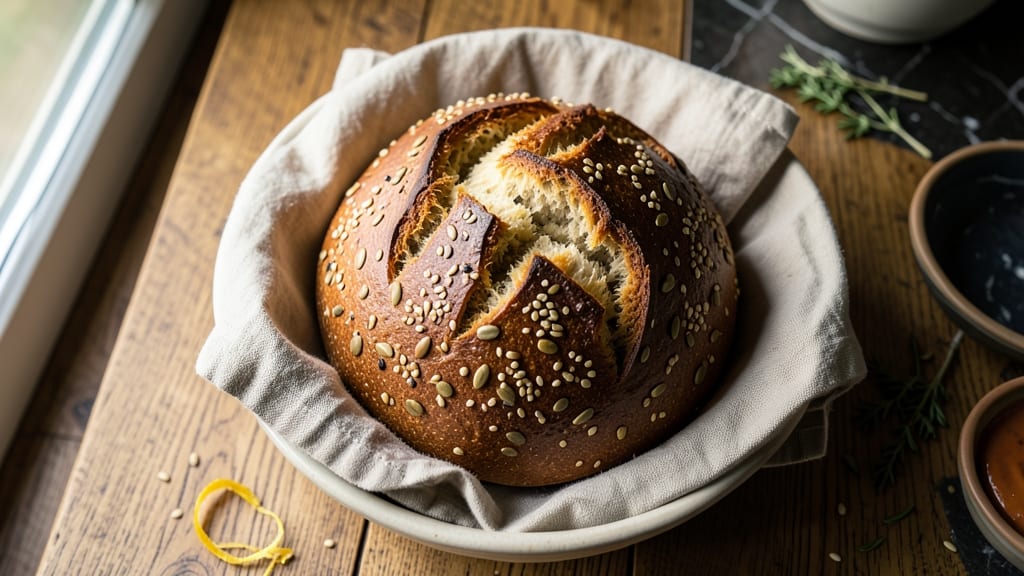
This artisan seeded bread recipe delivers a chewy crust and toasted seed crunch that transforms ordinary meals into something special. The secret lies in a precise blend of whole grains and seeds—sunflower, sesame, and flax—that add both texture and nutrition.
I’ve perfected this recipe through years of baking, balancing traditional techniques with modern twists for a bread that’s as beautiful as it is delicious.
The dough starts with a foolproof no-knead method, ensuring even beginners can achieve professional results. A slow fermentation develops deep flavor, while the seeds are pressed into the top before baking for maximum crunch.
The crust develops a golden, crispy exterior that contrasts perfectly with the soft, airy interior—every bite is a balance of textures and tastes.
What sets this bread apart is its versatility—perfect for toast, sandwiches, or served alongside soups and salads. The seeds add a subtle nuttiness that pairs beautifully with butter, jam, or even as a side to hearty stews.
With just a few simple ingredients and 30 minutes of active time, you’ll have a loaf that looks like it came from a bakery.
Ready to impress? This recipe is designed for restaurant-quality results at home, with tips for shaping, scoring, and baking that ensure a perfect rise every time. Whether you’re a seasoned baker or just starting out, the satisfaction of pulling a warm, seeded loaf from the oven is unmatched.
Ingredients for artisan seeded bread
Twelve essential ingredients for a restaurant-quality artisan seeded bread with perfect chewy crust and nutty crunch.
| Ingredient | Amount | Notes |
|---|---|---|
| All-Purpose Flour 🌾 | 4 cups | High-protein preferred for chewy texture |
| Whole Wheat Flour 🌾 | 1 cup | Adds nutty depth and nutrition |
| Active Dry Yeast 🍞 | 2 ¼ tsp | Ensure freshness with expiration check |
| Granulated Sugar 🍚 | 1 tbsp | Feeds yeast for proper rise |
| Salt 🧂 | 2 tsp | Diamond Crystal preferred for accuracy |
| Sunflower Seeds 🥜 | ½ cup | Unsalted, toasted for enhanced flavor |
| Sesame Seeds 🌿 | ¼ cup | Toasted until golden brown |
| Flaxseeds 🌾 | ¼ cup | Ground for optimal texture |
| Extra-Virgin Olive Oil 🫒 | ½ cup | High-quality for rich flavor |
| Warm Water 💧 | 1 ½ cups | 110°F for optimal yeast activation |
| Honey 🍯 | 1 tbsp | Enhances crust browning |
| Cornmeal 🌽 | ¼ cup | For dusting baking sheet |
The flours form the foundation, where King Arthur high-protein flour creates that signature chewy texture while whole wheat flour adds depth. For the seeds, Bob's Red Mill organic varieties are ideal—sunflower seeds should be toasted until golden, sesame seeds until fragrant. The yeast is critical: always check the expiration date and store in the freezer for long-term freshness. Warm water activates the yeast perfectly at 110°F—use a thermometer to ensure accuracy. Honey isn't just sweetening here; it contributes to that beautiful crust color during baking.
No sunflower seeds? Pumpkin seeds work beautifully—just toast them longer for deeper flavor. Sesame seeds too expensive? Poppy seeds provide a similar crunch, though with a milder taste. For a gluten-free version, substitute Bob's Red Mill 1:1 baking flour and reduce liquids by 10%. The olive oil should be extra-virgin with a fruity aroma—skip the light or refined varieties. Cornmeal can be swapped for semolina if preferred, though it yields a slightly different texture. All seeds should be toasted before mixing—this enhances their flavor and prevents them from absorbing too much moisture during fermentation.
Store the dough in an airtight container at room temperature for up to 24 hours before baking for enhanced flavor development. Once baked, the bread keeps well at room temperature wrapped in a clean kitchen towel for 3-4 days. For longer storage, freeze the cooled loaf in slices wrapped individually in plastic wrap—up to 3 months. The seeds release their oils when toasted, so avoid pre-toasting if you plan to store the seeds for future use. Reheat slices in a toaster or oven for maximum crunch restoration.
Why You'll Love This Recipe
- No-Knead Magic: I swear by this—just mix, let it rise, and bake. The whole wheat flour gives it structure without the fuss of kneading, and the yeast does all the heavy lifting while I sip coffee.
- Nutty Crunch Perfection: That mix of seeds (if you add them!) turns every bite into a little flavor explosion. The whole wheat adds earthy depth, while the sugar just hints at sweetness—like a cozy hug for your sandwich.
- Weeknight Workhorse: Toss it in a lunchbox, tear it for soup dippers, or use it as a base for garlic butter toast. It’s my go-to when I’m too tired to think, but still want something that feels special.
- Budget-Friendly Staple: All-purpose and whole wheat flour are pantry basics, and a little yeast stretches into a whole loaf. It freezes like a dream too—so I bake one, freeze half, and never stress about stale bread.
Step-by-step instructions for artisan seeded bread
Master this method and you'll achieve a bread with a chewy interior and irresistible toasted seed crunch.
Prepare the Seeds for Maximum Flavor
In a dry skillet over medium heat, toast the 0.5 cup sunflower seeds, 0.25 cup sesame seeds, and 0.25 cup flaxseeds together for 4-5 minutes until they're golden brown and fragrant. Stir constantly to prevent burning—they'll darken quickly. Immediately transfer to a bowl and let cool completely before using. This toasting enhances their natural oils and creates that signature crunch we're after.
While the seeds cool, grind the 0.25 cup flaxseeds in a spice grinder or food processor until they resemble coarse meal. This helps them bind with the dough and creates a nutty depth. Set aside for the next step. The contrast between toasted whole seeds and ground flaxseed will give your bread both texture and nutrition.
Activate the Yeast for Optimal Rise
In the bowl of a stand mixer fitted with the dough hook attachment, combine the 1.5 cups warm water (about 110°F—test by dropping a thermometer in), 1 tbsp granulated sugar, and 2.25 tsp active dry yeast. Let this mixture sit for 5-10 minutes until it becomes foamy and bubbly. This confirms your yeast is active and ready to work. If it doesn't bubble, start fresh with new yeast.
Add the 0.5 cup extra-virgin olive oil and 1 tbsp honey to the yeast mixture. Mix on low speed for 30 seconds until fully combined. The honey will help create that beautiful caramelized crust later. The olive oil adds richness and helps develop the bread's tender crumb structure. This liquid mixture should be slightly sticky but not runny.
Combine Flours and Build the Dough
With the mixer running on low speed, gradually add the 4 cups all-purpose flour and 1 cup whole wheat flour to the wet ingredients. Mix for 1 minute until a shaggy dough begins to form. Then add the 2 tsp salt and the ground flaxseeds. Increase the speed to medium and knead for 5-7 minutes until the dough becomes smooth and elastic.
You'll know it's ready when it clears the sides of the bowl and forms a windowpane—if you stretch a small piece, it should be thin enough to see light through without tearing. The whole wheat flour adds nutrition and a subtle nuttiness, while the high-protein all-purpose flour gives that signature artisan chew. If the dough feels too sticky, add 1 tablespoon more flour at a time until it comes together properly.
First Rise and Seed Incorporation
Transfer the dough to a lightly oiled bowl, cover with a damp kitchen towel, and let rise in a warm place for 1-1.5 hours or until doubled in size. The kitchen should feel warm—if it's cool, place the bowl near a warm oven with the light on. The dough should spring back slowly when poked with a finger. This first rise develops the gluten structure that gives artisan bread its satisfying chew.
Once risen, punch down the dough to release air, then turn it out onto a lightly floured surface. Gently shape into a round loaf and create a well in the center. Scatter the toasted seeds evenly over the surface, then use your fingers to press them lightly into the top half of the dough. This creates that beautiful seed-studded crust we're after. Cover with the towel again and let rise for another 30-45 minutes until puffy.
Shape and Bake for Perfect Crust
Preheat your oven to 425°F with a baking stone or inverted baking sheet inside. Line a baking sheet with parchment paper and dust generously with 0.25 cup cornmeal. Shape the dough into a round loaf and place it seam-side up on the prepared sheet. The cornmeal prevents sticking and adds a subtle crunch to the bottom crust.
Bake for 25-30 minutes until the bread is deep golden brown and sounds hollow when tapped on the bottom. The internal temperature should reach 190-200°F. For extra browning, brush the top with water after 15 minutes in the oven. Let the bread cool on a wire rack for at least 30 minutes before slicing—this allows the crumb to set and prevents a gummy texture.
Pro Tips For Making Artisan Seeded Bread
- Mix Warm Water: DESCRIPTION: Your yeast needs a cozy start—use water that’s 100–110°F (like a warm bath, not a sauna). I learned this the hard way when my dough rose like a sad pancake after I dumped in scalding water. Mix the yeast, sugar, and a pinch of salt in the warm water first, then let it sit for 5–10 minutes until frothy before adding flours.
- Weigh Your Flours: DESCRIPTION: Cups lie. Whole wheat flour packs differently than all-purpose, and your bread’s texture will suffer if you eyeball it. Use a kitchen scale for precision—this recipe’s balance of flours matters. I finally stopped guessing after my first loaf turned dense and chewy.
- Knead Until Smooth: DESCRIPTION: Stop when the dough springs back slowly when poked and looks silky, not sticky or shaggy. Over-kneading glues gluten together too tight, making the bread tough. Whole wheat fights back more than all-purpose, so give it extra time—about 8–10 minutes by hand or 5–6 on a stand mixer with a dough hook.
- Steam the Oven: DESCRIPTION: Place a metal bowl of boiling water on the oven rack before baking to create steam—this guarantees a crisp crust, not a dry one. I used to skip this, and my seeded tops would turn sad and pale. Do it for the first 10–15 minutes, then remove the bowl. Your bread’s crust will thank you.
Flavor customization for this artisan seeded bread
Sweet & Spicy Twist
Add 1 tsp cinnamon and ½ tsp cayenne pepper to the dough for a subtle warmth that pairs perfectly with honey or jam. Toast ½ cup pepitas with the seeds for an extra crunch and nutty depth.
This variation works beautifully with breakfast spreads like almond butter or fig preserves. 🌶️
Herb-Infused Crust
Mix 1 tbsp dried rosemary or 1 tbsp fresh thyme leaves into the dough before shaping. Press the seeds into the top as usual, then sprinkle with flaky sea salt before baking.
The herbs add an earthy aroma that complements the seeds' nuttiness. Perfect for serving with roasted meats or charcuterie boards.
Everything Bagel Style
Replace the seeds with ½ cup sesame seeds and ¼ cup poppy seeds, then add 1 tbsp garlic powder and 1 tbsp onion powder to the dough.
Toast the seeds with a pinch of salt for an everything-bagel-inspired flavor. This version is ideal for sandwiches or toasted with cream cheese and smoked salmon.
Nutty & Crunchy Upgrade
Add ½ cup chopped walnuts or pecans to the dough along with the seeds. Toast the nuts with the seeds for maximum flavor. The combination creates a rich, buttery depth that pairs wonderfully with strong cheeses like aged cheddar or blue cheese.
For extra crunch, sprinkle additional toasted nuts on top before baking.
Savory Garlic & Herb
Infuse the dough with 2 minced garlic cloves and 1 tbsp chopped fresh parsley. Press the seeds into the top, then make decorative slashes in the dough before baking.
Brush the crust with melted butter after baking for a golden finish. This version shines when served with olive oil and balsamic vinegar for dipping.
Seasonal Pumpkin Spice
Add 1 tsp pumpkin pie spice to the dough and reduce the honey to ½ tbsp. Use ½ cup sunflower seeds and ¼ cup chia seeds for topping.
This autumnal variation pairs perfectly with spiced apple butter or whipped cream cheese. The warm spices complement the seeds' natural crunch beautifully. 🍂
Nutrition facts
Frequently asked questions
Can I make this seeded bread without a stand mixer?
Simply mix the dough by hand on a lightly floured surface using a dough scraper. Knead for 8-10 minutes until smooth and elastic, working the dough vigorously to develop the gluten. The texture will be slightly less uniform than with a mixer, but still delicious. For extra strength, let the dough rest for 10 minutes between kneading sessions.
Why did my bread turn out dense instead of chewy?
Dense bread usually means under-proofing or over-kneading. Check your yeast first—it must be fresh and active. For the no-knead method, ensure the dough rises until doubled in size (about 1-1.5 hours). If your kitchen is cool, place the bowl near a warm oven with the light on. Also, avoid over-handling the dough during shaping—gentle pressure is key for that perfect artisan texture.
How do I store leftover seeded bread?
Wrap the cooled loaf tightly in a clean kitchen towel or beeswax wrap to maintain freshness. Store at room temperature for 3-4 days in an airtight container. For longer storage, freeze slices individually wrapped in plastic—they'll stay fresh for up to 3 months. To restore crunch, toast slices in a toaster or oven for 3-5 minutes at 350°F.
Can I substitute seeds in this recipe?
Yes! Swap seeds based on what you have: pumpkin seeds for sunflower, poppy seeds for sesame, or chia seeds for flax. For a nutty twist, add toasted walnuts or pecans (reduce seeds by ¼ cup to balance moisture). Always toast seeds before using to enhance flavor and prevent sogginess. Just ensure the total seed amount stays around 1 cup for proper texture.
What's the best way to reheat sliced bread?
For maximum crunch, toast slices in a toaster or toaster oven at 375°F for 2-3 minutes until golden. For a softer texture, warm in a 350°F oven for 5-7 minutes wrapped in foil. Avoid microwaving—it makes seeds soggy. Pro tip: Brush warm slices with melted butter for extra richness before serving.