
Side Dishes
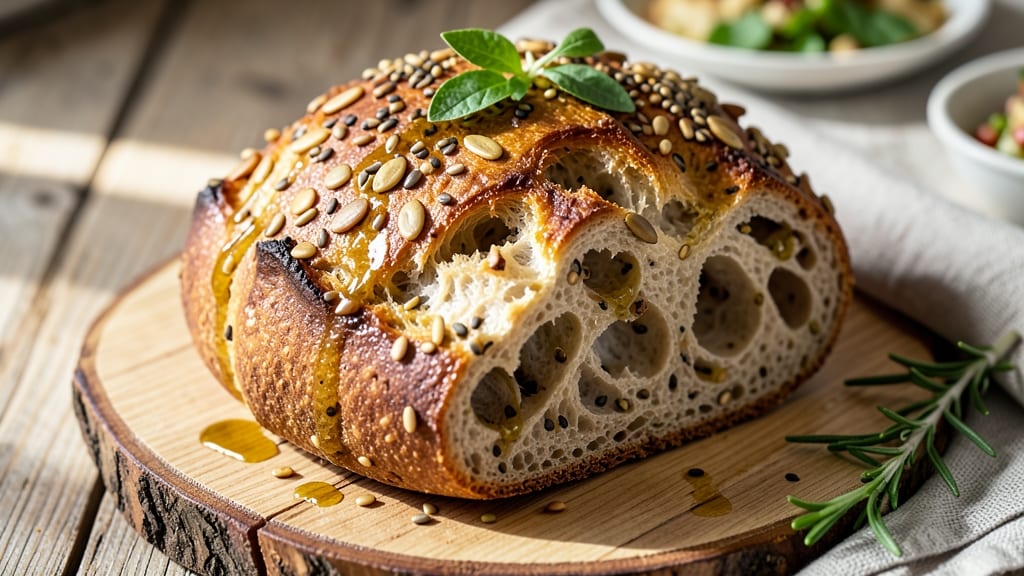
This artisan seed bread recipe delivers crusty, golden crusts and nutty seed-packed bites that taste like a bakery loaf without the fuss. The secret lies in a foolproof sourdough starter (or yeast alternative) and a blend of seeds—sunflower, flax, and sesame—that stay evenly distributed for every satisfying crunch.
I developed this recipe after years of testing, balancing rustic texture with modern convenience, so you get restaurant-quality results at home.
The process starts with a simple dough that comes together in under 10 minutes, but the magic happens during the slow fermentation—whether you use a wild yeast starter or instant yeast.
Shaping the loaf with confidence (no fancy techniques required) and baking in a Dutch oven ensures that crispy crust and airy crumb you crave. The seeds toast slightly during baking, adding depth to every bite.
What you’ll end up with is a hearty, seed-studded loaf that’s perfect for sandwiches, toast, or serving alongside soups. The crust stays crisp for days, while the interior remains tender and slightly chewy.
This recipe is vegan by default (no butter or eggs), but I’ll show you how to adapt it for extra richness if you prefer.
Store leftovers wrapped at room temperature for 3 days, or freeze for up to 3 months. The seeds keep the bread interesting even after reheating—just pop slices in the toaster or oven for freshness. Ready to bake? Let’s get started with the step-by-step instructions that guarantee success.
Ingredients for artisan seed bread
Four cups flour, three kinds of seeds, and a touch of Dutch oven magic. That's all it takes for bakery-style seed bread at home.
| Ingredient | Amount | Notes |
|---|---|---|
| Active Sourdough Starter 🍞 | ½ cup | Unfed, bubbly starter (or vegan yeast) |
| All-Purpose Flour 🌾 | 4 cups | Organic white or bread flour preferred |
| Sunflower Seeds 🥜 | ½ cup | Raw, unsalted, toasted for depth |
| Flaxseeds 🌿 | ¼ cup | Whole, lightly toasted |
| Sesame Seeds 🌻 | ¼ cup | Toasted for nutty aroma |
| Extra-Virgin Olive Oil 🫒 | 2 tbsp | High-quality, fruity variety |
| Water 💧 | 1 ½ cups | Room temperature, filtered preferred |
| Kosher Salt 🧂 | 1 ½ tsp | Diamond Crystal preferred |
| Instant Yeast 🍄 | ¼ tsp | Vegan-certified, optional for faster rise |
| Brown Sugar 🍯 | 1 tbsp | Light or dark, for crust color |
| Cornmeal 🌽 | ¼ cup | For Dutch oven dusting |
The seeds are non-negotiable here. Sunflower adds crunch, flax brings earthy notes, and sesame delivers that toasty aroma. Toast them separately in a dry pan for 3-4 minutes until fragrant—Trader Joe's sells pre-toasted seeds, but fresh is better. For flour, King Arthur or Bob's Red Mill organic bread flour gives the best rise. If using sourdough starter, it should be at its peak activity—bubbly and just starting to collapse when poked. The Dutch oven is your secret weapon for that restaurant-worthy crust—any brand works, but Le Creuset or Lodge are my go-tos.
No sourdough starter? Instant yeast works perfectly—just add it directly to the dough. Short on seeds? Pumpkin seeds or chia make great substitutes, though the flavor will shift slightly. The olive oil matters here—California extra-virgin has the best balance of fruitiness and mildness. For a lighter loaf, you can reduce the seeds by 2 tbsp and add 2 tbsp vital wheat gluten. The brown sugar isn't just for sweetness—it helps create that golden, crispy crust. If you're gluten-free, swap the flour for a 1:1 blend like Bob's Red Mill GF 1-to-1, but expect a denser crumb.
This dough is best baked the same day, but you can shape it and refrigerate overnight for a slower rise. Wrap the shaped loaf in a damp towel and let it sit at room temperature for 1-2 hours before baking if you're prepping ahead. The bread stays fresh for 3-4 days at room temperature, wrapped tightly in parchment. For longer storage, freeze slices wrapped in plastic—just toast straight from frozen. The crust gets even crunchier after reheating, so don't skip this step. Leftovers? Toss them in a toaster for freshness—those seeds keep everything interesting even after reheating.
Why You'll Love This Recipe
- No-Knead Magic: I swear by this—just mix, let it rise, and bake. The sourdough starter does all the heavy lifting while you sip coffee or scroll through your phone. Honestly, I’ve made it on lazy Sundays and weeknights alike, and the crust always turns out golden and crackly.
- Nutty Crunch Delight: That first bite? Pure texture contrast—sunflower and sesame seeds pop with every chew, while the flaxseeds add a subtle earthiness. It’s like a toasted seed salad in bread form, and I’ll never look at plain bread the same way again.
- Meal Prep MVP: Slice it, freeze it, and toast as needed. I keep a loaf in my freezer for when I’m too tired to bake, and it reheats in minutes. Perfect for breakfast, sandwiches, or even charcuterie boards—no one will guess it’s not homemade.
- Budget-Friendly Staple: A single batch costs pennies but feels luxurious. The seeds add richness without breaking the bank, and the sourdough starter lasts for weeks. I’ve fed a family of four for days with just one loaf—zero waste, all flavor.
Step-by-step instructions for artisan seed bread
Let's craft a rustic, seed-studded loaf with a crackly crust and tender crumb—every bite delivers that satisfying crunch.
Toast the Seeds and Mix the Dough
Toast the sunflower seeds, flaxseeds, and sesame seeds in a dry skillet over medium heat for 3-4 minutes, stirring constantly until fragrant and lightly golden. This step unlocks their nutty flavors and prevents bitterness in the finished bread. Transfer them to a plate to cool slightly while you prepare the dough.
In a large bowl, combine the 0.5 cup active sourdough starter, 4 cups all-purpose flour, 1.5 tsp kosher salt, and 0.25 tsp instant yeast. Add the 1 tbsp brown sugar and 2 tbsp extra-virgin olive oil, then mix with a wooden spoon until the ingredients form a shaggy mass. The sugar helps activate the yeast while adding subtle caramel notes to the crust.
Hydrate and Knead for Structure
Gradually add the 1.5 cups room-temperature water while stirring, then pour in the toasted seeds. Mix vigorously until a sticky dough forms—it should pull away from the sides of the bowl but still cling slightly. Let it rest for 10 minutes to hydrate fully. This step ensures even seed distribution and prevents a dry crumb.
Wet your hands and work the dough on a lightly floured surface for 5-7 minutes, folding and pressing until smooth and elastic. The dough should feel slightly tacky but not wet. If it's too sticky, add 1 tablespoon flour at a time until it's manageable. This kneading develops gluten for that perfect oven-spring and chewy texture.
Bulk Ferment for Flavor Development
Place the dough in a lightly oiled bowl, cover with a damp towel, and let it rise at room temperature for 4-6 hours, or until it has nearly doubled in size. You'll see bubbles form on the surface and the dough will feel light when pressed gently. This long fermentation builds deep flavor and improves digestibility—don't rush it.
After the bulk rise, perform a series of 3-4 stretch-and-folds at 30-minute intervals to strengthen the gluten further. To do this, wet your hands, grab one side of the dough, stretch it upward, and fold it over itself. Rotate the bowl and repeat. This technique creates a tighter crumb and better oven rise.
Shape and Final Proof
Turn the dough onto a lightly floured surface and shape it into a 24-inch round loaf by pulling the edges toward the center while rotating the dough. For a rustic look, create a well in the center and let the edges rise slightly. Place the shaped loaf on a parchment-lined baking sheet, cover it, and let it proof for 1-2 hours until it's puffy and jiggly when shaken gently.
While the dough proofs, preheat your oven to 450°F and place a Dutch oven in it for 30 minutes to heat through. Sprinkle the 0.25 cup cornmeal evenly on the bottom of the Dutch oven—this prevents sticking and adds a subtle crunch to the crust. The hot Dutch oven creates steam, which is essential for that crackly crust and open crumb.
Bake to Golden Perfection
Carefully transfer the dough to the hot Dutch oven, cover it, and bake for 30 minutes. Then remove the lid and bake for another 15-20 minutes until the crust is deep golden brown and sounds hollow when tapped on the bottom. The internal temperature should reach 190-200°F—this ensures a fully baked crumb.
Let the bread cool on a wire rack for at least 1 hour before slicing. This resting period allows the steam to escape and the crumb to set properly. The seeds should be evenly distributed, the crust should crackle with each bite, and the crumb should be tender yet sturdy. Slice thickly for maximum satisfaction—this bread is best enjoyed fresh from the oven with a smear of olive oil and flaky salt.
Pro Tips For Making Artisan Seed Bread
- Toast Your Seeds First: Pop sunflower, flax, and sesame seeds in a dry pan for 2-3 minutes until fragrant—this deepens their flavor and prevents them from turning bitter during baking. I learned this the hard way when my first batch tasted bland; now I never skip it.
- Hydrate Seeds Properly: Soak flaxseeds in warm water for 10 minutes before adding them to the dough—they’ll swell and bind better, giving your bread a denser crumb. Skip this, and they’ll just sit like tiny rocks in your loaf.
- Don’t Over-Knead the Dough: This isn’t a baguette—handle the dough just until the seeds are evenly distributed and the gluten is loosely developed. Overworking it will make the bread tough, and trust me, you don’t want that with seeds in the mix.
- Steam the Loaf: Place a metal bowl filled with boiling water in your oven for the first 15 minutes of baking—this creates steam and guarantees a crisp crust without burning the seeds. I used to skip this, and my bread always came out flat and sad.
Regional styles of these flavors
French Rustic Baguette
For a lighter, airier loaf with a crispy crust, try the French approach. Replace 1 cup of all-purpose flour with 1 cup bread flour and reduce the seeds to 0.3 cup total (equal parts sunflower and sesame).
Shape the dough into a 12-inch baguette by rolling it tightly on a floured surface, then score the top with a razor blade before baking. Brush with 1 tbsp melted butter (or olive oil for vegan) after baking for extra shine. 🥖
Italian Focaccia Style
Transform your seed bread into Italian-inspired focaccia by pressing the dough into a 9x13-inch pan and dimpling the top with your fingers. Top with 2 tbsp olive oil, 1 tsp coarse sea salt, and 1 tsp dried rosemary before baking.
After removing from the oven, drizzle with more olive oil and sprinkle with flaky salt. This version is perfect for dipping or using as a base for bruschetta. 🌿
German Pumpernickel Twist
For a denser, heartier loaf, swap 2 cups all-purpose flour for 2 cups rye flour (or rye blend) and add 1 tbsp molasses to the dough. Reduce the yeast to 0.125 tsp and bake at 325°F for 1 hour covered, then 15-20 minutes uncovered.
The result is a dark, moist loaf with deep malty flavors—ideal for sandwiches or pairing with smoked meats. 🍖
Scandinavian Cardamom Seed Bread
Add a fragrant twist by incorporating 1 tsp ground cardamom into the dough along with the seeds. Use 0.4 cup total seeds (sunflower and flax) and shape into a 10-inch round boule.
Brush the crust with 1 tbsp heavy cream (or plant-based cream) after baking for a glossy finish. This version pairs beautifully with Scandinavian dishes like smoked salmon or lingonberry jam. ❄️
Mexican Corn-Seed Pan Dulce
For a sweet variation, replace 1 cup all-purpose flour with 1 cup masa harina and add 0.5 cup pumpkin seeds instead of sunflower. Mix in 2 tbsp brown sugar and 1 tsp cinnamon to the dough.
Shape into a round loaf and bake in a cast-iron skillet for a crispy crust. Serve warm with horchata or as a dessert bread. 🌶️
Japanese Milk Bread Adaptation
Create a softer, fluffier loaf by adding 2 tbsp powdered milk (or unsweetened almond milk powder for vegan) to the dough. Reduce the seeds to 0.25 cup total and shape into a 12-inch round loaf.
Bake at 350°F for 30 minutes covered, then 10 minutes uncovered. The result is a tender, slightly sweet bread perfect for toast or sandwiches. 🍚
Nutrition facts
Frequently asked questions
Can I make this seed bread without a sourdough starter?
The recipe works perfectly with instant yeast! Simply add 0.25 tsp instant yeast directly to the dough along with the flour. The fermentation time will be shorter (2-3 hours instead of 4-6 hours), but you'll still get that delicious flavor. For extra richness, let it rise overnight in the fridge for a slower development.
How do I prevent the seeds from sinking to the bottom?
Toast the seeds first—they'll stay lighter and distribute better! After mixing the dough, let it rest for 10 minutes before kneading. This gives the seeds time to hydrate slightly and cling to the gluten strands. For extra security, fold them in during the last stretch-and-fold session before shaping.
What's the best way to store leftover seed bread?
Wrap the cooled loaf tightly in parchment paper or a clean kitchen towel, then store at room temperature for up to 3-4 days. For longer storage, slice the bread and freeze individual portions in airtight containers. Toast frozen slices directly from the freezer—the seeds add crunch even after reheating!
Can I add other seeds or nuts to this recipe?
Try pumpkin seeds, chia, or walnuts for variety. Toast them first to enhance flavor, but reduce the total seed amount by 2 tbsp if adding extra. For a sweeter version, add 1 tbsp honey or maple syrup to the dough. Just remember—more seeds means a denser crumb, so adjust hydration slightly if needed.
Why did my bread turn out dense instead of crusty?
Dense bread often results from over-kneading, under-proofing, or insufficient oven heat. Make sure your Dutch oven is fully preheated (450°F for 30 minutes) and that the dough has fully doubled in size before baking. For extra crustiness, try brushing the baked loaf with melted butter or olive oil while still warm.