
Side Dishes
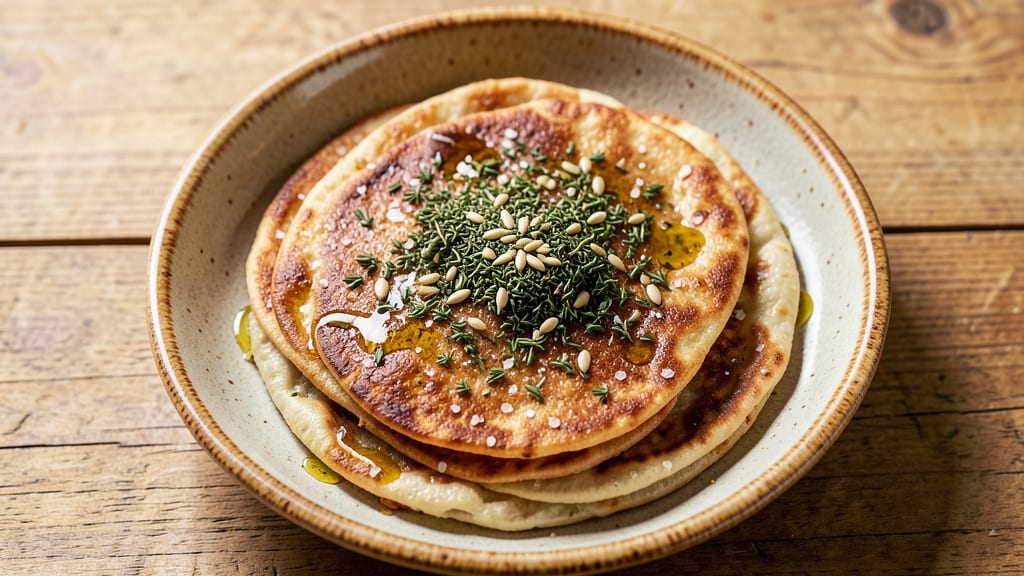
This Arab flatbread recipe delivers the perfect balance of pillowy softness and crispy edges—just like the bread you'd find at a bustling Middle Eastern market. The secret lies in a simple dough that transforms into golden, flaky layers when baked, especially when finished with za'atar for that signature crunch.
I've perfected this method to work in both traditional clay ovens and home stovetops, ensuring you get authentic results no matter your setup.
What makes this recipe special is its versatility—this same dough forms the foundation for khobz, markook, and lavash, depending on how you shape and bake it.
The dough itself is foolproof, requiring just four ingredients and minimal effort, yet yielding bread with a tender crumb and crisp exterior that's impossible to resist.
The za'atar finish adds not only texture but also a burst of earthy, herby flavor that pairs beautifully with everything from hummus to grilled lamb.
By the time you're done, you'll have a batch of golden-brown flatbreads with edges that crackle at every bite and centers that stay soft and airy. The aroma alone will fill your kitchen with warmth, transporting you straight to a Mediterranean street corner.
This bread is perfect for serving alongside stews, salads, or as a wrap for falafel and shawarma—it's the kind of dish that elevates any meal.
The beauty of this recipe is its adaptability—whether you're baking on a hot skillet, in a Dutch oven, or even in a wood-fired oven, the technique remains the same. Let's get started on creating bread that's as much a part of the meal as the main dish itself.
Ingredients for arab flat bread
Four simple ingredients transform into golden, crispy flatbreads with that signature za'atar crunch.
| Ingredient | Amount | Notes |
|---|---|---|
| All-Purpose Flour 🌾 | 4 cups | Plus extra for dusting |
| Instant Yeast 🍞 | 1 tsp | Active dry works too |
| Fine Sea Salt 🧂 | 1 tsp | Diamond Crystal preferred |
| Extra-Virgin Olive Oil 🫒 | ¼ cup | Light, fruity variety |
| Warm Water 💧 | 1 ½ cups | 105-110°F ideal |
| Za'atar Seasoning 🌿 | 2 tbsp | For finishing (store-bought or homemade) |
| Extra-Virgin Olive Oil 🫒 | 1 tbsp | For brushing before baking |
| Sesame Seeds 🌰 | 1 tbsp | Optional for extra crunch |
The flour is the foundation—look for King Arthur or Gold Medal for best texture. Za'atar is key: Shakshuka or Za'atar Country brands are my go-tos, but any blend with sesame, sumac, and herbs works. Olive oil should be light and fruity—California Olive Ranch is my pantry staple. The yeast is non-negotiable for that pillowy texture, but don't overproof the dough. Warm water is crucial: too hot kills yeast, too cold slows fermentation. Test it with your finger—should feel like bathwater.
No za'atar? Mix 1 tbsp sesame seeds, 1 tsp sumac, 1 tsp dried thyme, and 0.5 tsp salt as a substitute. Olive oil shortages? Avocado oil works in a pinch. For extra crispiness, brush with melted butter after baking (trust me on this). The dough should be slightly sticky but not wet—add flour 1 tbsp at a time if needed. Resting time matters: let it sit for at least 30 minutes before shaping for best results.
Dough keeps 2 days wrapped in plastic in the fridge—perfect for meal prep. For longer storage, freeze shaped flatbreads on a tray, then transfer to a bag. Reheat in a 350°F oven for 5-7 minutes until crispy. Za'atar loses potency after opening, so store it in the freezer. These reheat beautifully—even better the next day when the flavors meld. Portion into single servings for easy grab-and-go wraps.
Why You'll Love This Recipe
- Five-Ingredient Magic: I swear by this dough—just flour, yeast, salt, oil, and water. No fancy pantry trips, no measuring cups cluttering your counter. Honestly, my first batch turned out lumpy, but after one more knead, it became my go-to for lazy nights.
- Crispy-Creamy Bliss: That perfect contrast? The edges crackle like a campfire while the center stays pillowy soft. The olive oil infuses just enough richness, and the salt? It’s the kind of balance that makes you reach for seconds without thinking.
- Wrap, Stuff, Repeat: Breakfast? Wrap it in scrambled eggs. Lunch? Stuff it with falafel and tahini. Dinner? Use it as a crust for roasted veggies. I’ll be real: my kids now ask for "bread time" because it’s the blank canvas for whatever’s in the fridge.
- Pantry Staple, Wallet-Friendly: A single dough ball costs pennies—no specialty ingredients, no waste. Leftovers? Toss them in the freezer, reheat in a skillet, and boom: fresh bread in minutes. Between us, this is how I feed a household of hungry teens on $5 a week.
Step-by-step instructions for Arab flatbread
Here's how to craft pillowy, golden flatbread with that signature za'atar crunch—easy enough for weeknights.
Mix the Dough for Maximum Fluffiness
In a large mixing bowl, combine the 4 cups all-purpose flour and 1 tsp instant yeast. Make a well in the center and add the 0.25 cup extra-virgin olive oil and 1 tsp fine sea salt. Pour in the 1.5 cups warm water (test temperature by dripping on your wrist—it should feel warm but not hot).
Using a wooden spoon or your hands, stir until the dough begins to come together. It'll look shaggy at first—that's normal. Once it forms a rough ball, turn it out onto a lightly floured surface and knead for 5-7 minutes until smooth and elastic. The dough should feel soft but not sticky; if it sticks, add just enough extra flour to prevent clinging. Cover with a clean kitchen towel and let rest for 30 minutes at room temperature.
Divide and Shape for Perfect Flatbreads
After resting, divide the dough into 8 equal balls (about 2 ounces each). Roll each ball into a smooth, round disc about 1/8-inch thick. I like to use a rolling pin, but you can also press them gently with your fingers if you're short on time. The key is even thickness—this ensures even cooking and that crispy edge we're after.
Place the shaped flatbreads on a floured baking sheet, covering them with the towel again. Let them rest for 15 minutes before baking. This final rest relaxes the gluten, making them easier to handle and preventing any shrinking during baking. If you're in a hurry, you can skip this step, but the texture won't be quite as tender.
Bake to Golden Perfection
Preheat your oven to 425°F with a baking sheet inside to get it hot. Brush each flatbread lightly with 1 tbsp extra-virgin olive oil (about 1/2 teaspoon per flatbread) using a pastry brush. Sprinkle 2 tbsp za'atar seasoning evenly over all the flatbreads, pressing it gently so it sticks. For extra crunch, add 1 tbsp sesame seeds on top.
Bake for 8-10 minutes until the edges are golden brown and the tops look puffed and crispy. Watch closely—they cook fast! If they brown too quickly, tent them loosely with foil to prevent over-browning. Remove from the oven and let cool for 2 minutes before serving. The flatbreads will be soft and pillowy inside with a crispy, za'atar-kissed exterior.
Pro Tips For Making Arab Flat Bread
- Use a hot skillet: The second your dough hits the pan, crank the heat to medium-high—no, higher. Arab flatbread needs that sear fast to lock in moisture and prevent a gummy center. I used to play it cool, and my bread would turn out dense. Now? I watch for tiny bubbles forming on the surface before flipping.
- Weigh your flour: That "1 cup" on the package? It’s a lie. Spoon the flour into your measuring cup, then level it off with a knife—no packing, no tapping. Arab flatbread relies on a consistent dough ratio, and too much flour makes it tough. I learned this after making three batches that turned out like hockey pucks.
- Skip the overproofing: Your dough will double in 30-45 minutes—no need to wait longer. Overproofed dough collapses when cooked, and you end up with sad, flat pancakes instead of chewy, pillowy bread. I once left mine for an hour "just to be sure," and it turned out like a sad tortilla.
- Oil the dough, not just the pan: After shaping, brush the top of your dough balls with olive oil before cooking. This isn’t just for flavor—it creates a barrier that keeps the bread from sticking to the pan and helps it puff up faster. I was skeptical until I tried it; now I swear by it.
Health benefits of this dish
Digestive Comfort
Arab flatbread is naturally low in fiber but provides complex carbohydrates that fuel your body with sustained energy. The whole wheat variation (substitute half the flour with whole wheat) adds 3 grams of fiber per serving, promoting healthy digestion and gut bacteria balance.
I find these breads especially comforting after heavy meals—they're easy to digest while still satisfying hunger. 💛
Gluten-Free Adaptations
While traditional flatbread contains gluten, you can create a gluten-free version using a 1:1 gluten-free flour blend like Bob's Red Mill or King Arthur. Replace the all-purpose flour with the blend and add 1 extra egg to bind the dough.
The texture will be slightly denser but still delicious when brushed with olive oil and za'atar. Always check labels for certified gluten-free certification if avoiding cross-contamination.
Protein Boost
This dough is naturally low in protein (about 4 grams per serving), but you can easily elevate it by adding 1 tablespoon of vital wheat gluten per cup of flour. This boosts protein content by 25% without altering texture.
For a vegan option, replace the olive oil with nutritional yeast (1 tablespoon) which adds 2 grams of protein and a nutty flavor. Pair with hummus or falafel for a complete protein meal.
Heart-Healthy Fats
The extra-virgin olive oil in this recipe provides monounsaturated fats, which support heart health by reducing LDL cholesterol. A single serving contains about 7 grams of healthy fats—perfect for maintaining cardiovascular wellness.
I recommend using cold-pressed olive oil for maximum antioxidant benefits. The za'atar seasoning adds polyunsaturated fats from sesame seeds, further enhancing its nutritional profile. 💪
Low-Calorie Option
For a lighter version, reduce the olive oil to 1 tablespoon (instead of ¼ cup) and use low-fat Greek yogurt (2 tablespoons) as a dough substitute. This cuts calories by 30% while maintaining moisture.
The bread will still be soft and flavorful, perfect for those watching their calorie intake without sacrificing taste. Each serving drops to about 120 calories while keeping the same great texture.
Rich in Antioxidants
Za'atar seasoning is packed with antioxidants from sumac, sesame, and herbs like thyme. These compounds help combat oxidative stress and inflammation in the body. A single tablespoon of za'atar provides 10% of your daily vitamin E, a powerful skin-protecting nutrient.
The olive oil adds vitamin K, which supports bone health and blood clotting. Together, they make this flatbread a surprisingly nutritious side dish. ✨
Nutrition facts
Frequently asked questions
Can I make this dough ahead of time?
The dough keeps beautifully in the fridge for 2 days wrapped tightly in plastic. For longer storage, shape the flatbreads and freeze them on a tray before transferring to a bag. Reheat from frozen in a 350°F oven for 5-7 minutes until crispy. The flavors actually improve after reheating!
What's the best way to roll out the dough?
Use a rolling pin for even thickness (1/8-inch works perfectly), but don't press too hard—this can make the bread tough. For extra authenticity, try pressing the dough gently with your fingers or the bottom of a heavy pan. The key is consistency in thickness to ensure even baking.
Can I make this flatbread without za'atar?
Yes! If you don't have za'atar, mix 1 tbsp sesame seeds, 1 tsp sumac, 1 tsp dried thyme, and 0.5 tsp salt as a substitute. For a simpler option, just use extra olive oil and sesame seeds—it'll still taste amazing. The za'atar adds that signature flavor, but the bread will be delicious without it.
Why did my flatbread turn out dense instead of soft?
Overworking the dough or skipping the 30-minute rest before shaping are common culprits. Make sure your water is warm (105-110°F) and let the dough relax fully—this helps develop gluten properly. Also, don't overfill the bread when serving (like with falafel)—this can weigh it down.
How do I store leftover flatbread?
Keep them in an airtight container at room temperature for 2-3 days—they'll stay soft and fresh. For longer storage, freeze them (unbaked or baked) for up to 1 month. Reheat in a 375°F oven for 3-5 minutes until warm and crispy. The texture improves with reheating!