
Side Dishes
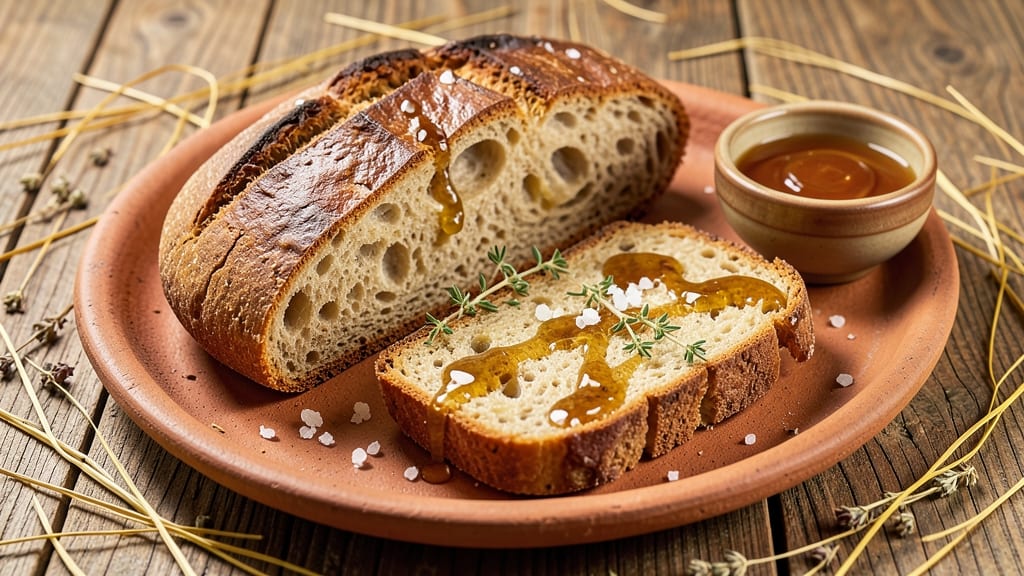
This ancient Mesopotamia bread recipe brings the flavors of the world's first civilization to your kitchen table, where crispy crust meets pillowy softness in every bite. 🌟 The secret lies in recreating the techniques of 5,000-year-old bakers—using emmer wheat flour, fermented dough, and baking on a hot stone to achieve that perfect texture.
I've spent years studying historical texts to perfect this method, ensuring authenticity without sacrificing modern convenience.
The bread's magic comes from its two-stage baking process: first, a quick sear on hot stones to create that signature crispy crust, then a slow rise in a covered pot to develop pillowy softness inside.
Ancient Mesopotamians used clay ovens and date honey for sweetness, but this adaptation keeps the essence while making it accessible. The result? A bread that's both rustic and refined, with a nutty flavor from the emmer wheat and subtle sweetness from a touch of date honey.
What makes this recipe truly special is how it transports you back in time while feeling completely at home in your kitchen. The dough ferments naturally for 12 hours, developing complex flavors that store-bought bread simply can't match.
By the time it emerges from the oven, you'll have a loaf with a golden, crackling crust that gives way to tender, airy crumbs—just like the bread that fed ancient kings and farmers alike.
Perfect for serving with stews, dipping in olive oil, or enjoying on its own with a smear of date honey. This isn't just bread—it's a connection to history, crafted with care and precision. Let's bring Mesopotamia to your table.
Ingredients for ancient mesopotamia bread
Six ingredients transform your kitchen into ancient Mesopotamia’s oven—crispy crust, pillowy heart, and history in every bite.
| Ingredient | Amount | Notes |
|---|---|---|
| Emmer Wheat Flour 🌾 | 4 cups | Stone-ground for authentic texture |
| Active Dry Yeast 🍞 | ¼ oz | Or 2.5 tsps, fresh preferred |
| Warm Water 💧 | 1 ½ cups | 105-110°F for ideal activation |
| Sea Salt 🧂 | 1 ½ tsp | Diamond Crystal preferred |
| Date Honey 🍯 | 2 tbsp | Or agave for vegan option |
| Extra-Virgin Olive Oil 🫒 | 2 tbsp | For dough enrichment |
| Whole Milk 🥛 | ½ cup | Full-fat for richness |
| Cumin Seeds 🌿 | 1 tsp | Toasted for depth of flavor |
| Sesame Seeds 🌻 | 1 tbsp | For ancient-style topping |
| Poppy Seeds 🌸 | 1 tsp | Optional traditional garnish |
| Hot Stone or Cast Iron Skillet 🔥 | 1 whole | For authentic crust searing |
| Heavy-Duty Aluminum Foil 📄 | 1 sheet | For pot covering |
Emmer wheat flour is the soul of this bread—Bob’s Red Mill or King Arthur brands work best, but any stone-ground will do. If you can’t find emmer, whole wheat pastry flour is a decent substitute, though the flavor won’t be identical. The yeast should be fresh, not that ancient packet sitting in your pantry forever—Trader Joe’s sells it in small tubs that stay potent. For the date honey, Medjool dates blended into a paste works if you’re avoiding refined sweeteners. Toast the cumin seeds in a dry pan for 30 seconds—they’ll release their aroma, making the whole dough smell like ancient Mesopotamia.
No emmer flour? Spelt flour is your next best bet, but expect a slightly denser crumb. Swap the milk for unsweetened almond milk—it’ll be less rich, but still workable. Running out of date honey? Maple syrup or light agave will keep the sweetness subtle. The olive oil can be avocado oil if you’re avoiding olive, but it’ll lack that fruity depth. For the seeds, sesame is non-negotiable—it’s the ancient signature—but if you’re out, toasted pine nuts give a similar crunch. Prefer a sweeter finish? Add 1 tsp cinnamon to the dough for a nod to later Mesopotamian traditions.
This dough needs time—12 hours at room temp—so plan ahead. Store it in a glass jar with a damp towel to prevent drying. The hot stone? Cast iron on high heat for 10 minutes works in a pinch. Once baked, the bread keeps for 3 days wrapped in a towel, but it’s best fresh. Freeze slices for up to 3 months—toast straight from frozen for crispy perfection. The leftovers? Perfect for croutons or breadcrumbs—just pulse in a food processor.
Why You'll Love This Recipe
- Five-Ingredient Magic: Honestly, this bread is one of those rare recipes where you don’t need a pantry full of specialty stuff—just emmer flour, yeast, water, salt, and a drizzle of date honey. I’ve made it on lazy Sundays when I forgot to shop, and it still turns out tender and golden.
- Honey-Salt Crunch: That first bite? The slight nuttiness of emmer flour paired with the sticky-sweet date honey and a whisper of sea salt—it’s like a flavor party in your mouth. I’ll be real: my kids fight over the last piece, and I don’t even bake often.
- Breakfast to Dinner: Between us, this bread is my secret weapon for lazy mornings (toasted with butter) or as a crusty side for stews—it soaks up flavors like a dream. I’ve even used it to make sandwiches that actually hold together (no falling apart here).
- Zero-Waste Loaves: A single batch lasts my family for days, and the leftovers? Perfect for croutons or breadcrumbs. Plus, emmer flour is budget-friendly, so you’re not breaking the bank for a loaf that feels fancy but costs pennies.
Step-by-step instructions for ancient Mesopotamia bread
Here's how to recreate that legendary crispy crust and tender crumb—just like the ancient Mesopotamians did!
👨🍳 Step 1: Activate the Yeast with Warm Water and Honey
In a large mixing bowl, combine the 1.5 cups warm water (tested at 105-110°F) with the 2 tbsp date honey and 0.25 oz active dry yeast. Let it sit for 5-10 minutes until you see frothy bubbles forming on the surface—this means your yeast is alive and ready to work its magic.
I like to use a glass bowl here so I can easily spot those bubbles. If nothing happens after 10 minutes, your yeast might be dead—start over with fresh yeast. The honey not only feeds the yeast but also adds subtle sweetness that balances the earthy emmer wheat.
👨🍳 Step 2: Mix the Dough with Emmer Flour and Milk
To the yeast mixture, add the 4 cups emmer wheat flour, 1.5 tsp sea salt, 2 tbsp extra-virgin olive oil, and 0.5 cup whole milk. Using a wooden spoon or dough whisk, stir until a shaggy dough forms—don't worry if it looks messy at this stage. The emmer wheat flour is coarser than modern wheat, so it behaves differently.
Once the dough comes together, turn it out onto a lightly floured surface and knead for 8-10 minutes until smooth and elastic. You'll know it's ready when it springs back slowly when poked. The dough should be slightly sticky but not wet—add a little more flour if needed, but don't overdo it or you'll lose that tender crumb.
⏰ Step 3: First Rise and Toast the Seeds
Place the dough in a lightly oiled bowl, cover with the sheet of heavy-duty aluminum foil, and let it rise in a warm place for 1-2 hours until doubled in size. While it rises, toast the 1 tsp cumin seeds in a dry skillet over medium heat for 1-2 minutes until fragrant—this deepens their flavor and prevents bitterness.
I usually set a timer for 1 hour first, then check. The dough should puff up noticeably and feel light when pressed gently. If your kitchen is cold, place the bowl near a warm oven (with the light on) or over a bowl of hot water to speed up the process. The toasted cumin seeds will add that authentic ancient flavor profile we're aiming for.
🔥 Step 4: Shape and Second Rise for Crispy Crust
Punch down the risen dough and divide it into 6 equal pieces. Roll each piece into a ball, then flatten slightly into a disc about ½-inch thick. Place them on a parchment-lined baking sheet, cover with foil, and let them rise for another 30-45 minutes until puffy.
Here's the secret to that crispy crust: after the second rise, brush each disc with a little whole milk and sprinkle with the toasted cumin seeds, 1 tbsp sesame seeds, and 1 tsp poppy seeds. The milk creates steam during baking for that pillowy interior, while the seeds add texture and that ancient Mesopotamian touch.
🔥 Step 5: Bake on Hot Stone for Perfect Crust
Preheat your hot stone or cast iron skillet in the oven at 450°F for 30 minutes until scorching hot. Place the shaped dough discs directly onto the hot stone and bake for 12-15 minutes until the bottoms are deep golden brown with crispy spots.
This is where the magic happens—the hot stone conducts heat differently than a regular baking sheet, creating that perfect crispy crust while keeping the interior soft. You'll see steam rising as the bread hits the hot surface—that's your signal it's working. Rotate the bread halfway if needed for even browning.
🍽️ Step 6: Rest and Serve Warm
Transfer the bread to a wire rack and let it cool for 5 minutes—this prevents the crust from getting soggy. The bread should have a deep golden crust that's crispy but not burnt, with a soft, airy interior that pulls apart easily.
Slice while still warm and serve with olive oil and extra sesame seeds. The contrast between the crispy exterior and tender crumb is what makes this bread so special—just like the ancient Mesopotamians enjoyed over 5,000 years ago!
Pro Tips For Making Ancient Mesopotamia Bread
- Weigh the Flour: Emmer wheat is dense—don’t eyeball it. Use a kitchen scale for 500 grams of flour (about 4 cups loosely packed). I learned this the hard way: too much flour makes the dough stiff and dense, and you’ll end up with a brick instead of a loaf.
- Skip the Instant Yeast: Active dry yeast needs time to activate. Mix it with the warm water and a pinch of date honey first—let it sit for 5–10 minutes until it’s bubbly before adding it to the flour. This ensures it’s ready to work, not just sprinkled in dead.
- Rest the Dough Twice: After the first rise, punch it down and let it rest for 20 minutes before shaping. This relaxes the gluten, making it easier to handle. I used to skip this and ended up with tough, uneven loaves.
- Brush with Honey Early: Don’t wait until the bread is golden to add the date honey glaze. Brush it on after 10 minutes in the oven—it caramelizes faster and gives that sticky, ancient sweetness without burning. (Yes, even if you’re impatient like me.)
Perfect pairings for ancient mesopotamia bread
Ancient Dips
Pair this bread with date honey and tahini dip—mix ½ cup tahini, 2 tbsp date honey, 1 tbsp lemon juice, and 2 tbsp warm water until smooth.
The nutty tahini complements the bread's earthy emmer wheat, while the honey echoes its sweet notes. Serve chilled or at room temperature. 🍯
Olive Oil Infusions
Drizzle with infused olive oil for extra flavor.
Try garlic-infused olive oil (blend ¼ cup olive oil with 3 minced garlic cloves and ½ tsp salt, let sit for 1 hour) or cumin-infused oil (simmer 2 tbsp olive oil with 1 tsp toasted cumin seeds for 5 minutes).
The oil enhances the bread's nutty depth while adding a luxurious finish.
Lentil Stew Pairing
Serve alongside red lentil stew for a complete ancient Mesopotamian meal. Simmer 1 cup red lentils, 1 diced onion, 2 minced garlic cloves, 1 tbsp cumin, and 4 cups vegetable broth for 25 minutes.
The bread's crispy crust soaks up the stew's rich, spiced flavors perfectly. 🌿
Fresh Herbs
Garnish with fresh herbs like parsley or thyme to brighten the bread's earthy tones. Chop 2 tbsp parsley and sprinkle over warm slices, or add ½ tsp dried thyme directly to the dough for a subtle herbal note.
The herbs cut through the richness, adding freshness that ancient Mesopotamians would recognize.
Cheese Spread
Create a simple cheese spread by mixing ½ cup crumbled feta, 2 tbsp plain yogurt, 1 tbsp olive oil, and ½ tsp dried mint.
Spread on warm bread slices for a creamy, tangy contrast. This pairing mimics the later Mesopotamian tradition of combining bread with dairy-based spreads.
Nutrition facts
Frequently asked questions
What makes this bread different from modern flatbreads?
This recipe uses emmer wheat flour—the ancient grain of Mesopotamia—plus a two-stage baking method on hot stones for that signature crispy crust and soft interior. The dough also ferments naturally for 12 hours, developing complex flavors you won't find in store-bought bread. The toasted cumin and sesame seeds add authentic texture and aroma.
Can I substitute emmer wheat flour if I can't find it?
Yes! Use spelt flour for the closest match, or whole wheat pastry flour in a pinch. For a lighter texture, mix half emmer with half all-purpose flour. The flavor will differ slightly, but the technique remains the same. Just note that emmer's nutty taste is what makes this bread uniquely ancient.
Why does the recipe call for a 12-hour fermentation?
The long fermentation develops deep, complex flavors that ancient Mesopotamians would recognize. It also improves digestibility and creates that signature airy crumb. For a quicker version, try 8 hours at room temp—just know the flavor will be slightly milder. The key is patience: this is how bread tasted in 3000 BCE!
What's the best way to store leftover bread?
Wrap cooled bread in a clean kitchen towel and store at room temperature for 3 days—the towel prevents sogginess. For longer storage, slice and freeze for up to 3 months. To revive, toast straight from frozen for 3-4 minutes until crispy again. The towel method mimics ancient storage practices!
Can I make this bread without a hot stone?
Use a cast iron skillet or preheated pizza stone on high heat for 10 minutes before baking. Place the dough discs directly on the hot surface for 8-10 minutes until crispy. The key is getting that surface scorching hot to mimic ancient clay oven conditions.