
Breakfast & Brunch
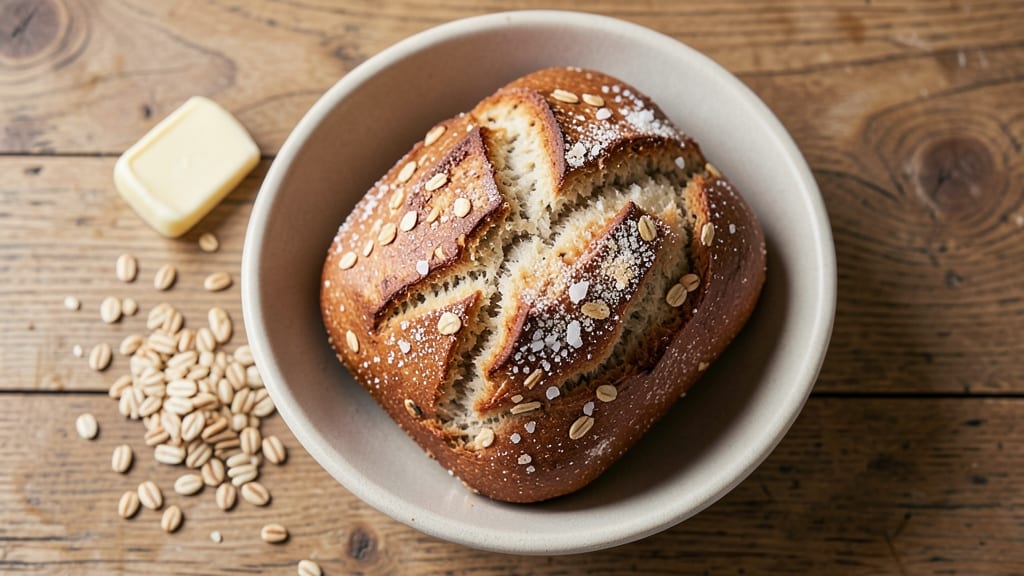
Alton Brown's oat bread recipe delivers bakery-style crust and texture with a foolproof no-knead method that transforms simple ingredients into something extraordinary. The secret lies in precise hydration and a long, slow rise—techniques that create that signature open crumb and crisp exterior.
I’ve baked this version dozens of times, and it never fails to impress, whether you’re feeding a crowd or treating yourself to homemade toast.
What sets this recipe apart is the balance of oats and hydration, which gives the bread its distinctive chewiness and golden crust. Alton’s method skips the kneading entirely, relying instead on time and patience to develop gluten naturally.
The dough rests overnight, allowing flavors to meld and the texture to become impossibly tender. This isn’t just bread—it’s a canvas for butter, jam, or savory toppings.
The result is a loaf with a crisp, caramelized crust that shatters when you tap it, and a soft, airy interior studded with oats that add subtle nuttiness. The aroma alone—warm, buttery, and just slightly sweet—will have everyone gathering around the table.
Perfect for breakfast, sandwiches, or as a show-stopping centerpiece, this bread proves that great baking doesn’t require complicated techniques.
Ready in just 24 hours (with minimal active time), this recipe is ideal for bakers of all levels. The key is attention to detail during mixing and proofing, but the payoff is worth every minute. Let’s get started—your kitchen will smell like a bakery before you know it.
Ingredients for alton brown oat bread
Simple pantry staples transform into bakery-style oat bread with Alton's foolproof no-knead method.
| Ingredient | Amount | Notes |
|---|---|---|
| All-Purpose Flour 🌾 | 3 ½ cups | Unbleached preferred for better texture |
| Quick Oats 🥣 | 1 cup | Old-fashioned or steel-cut if preferred |
| Granulated Sugar 🍚 | ¼ cup | White or light brown sugar |
| Instant Yeast 🍞 | ½ tsp | Ensure freshness by checking expiration |
| Salt 🧂 | 1 ½ tsp | Kosher or sea salt preferred |
| Unsalted Butter 🧈 | ½ cup | Cold, cubed for easier mixing |
| Warm Water 💧 | 1 ¼ cups | 110°F for optimal yeast activation |
| Honey 🍯 | 1 tbsp | For subtle sweetness and yeast feed |
| Milk 🥛 | ¼ cup | Whole milk for richer flavor |
| Cornmeal 🌽 | ½ cup | For dusting loaf pan |
| Egg Wash 🥚 | 1 whole | Beaten with 1 tbsp water |
| Coarse Sugar 🍚 | 2 tbsp | For topping before baking |
The flour is the backbone of this recipe—King Arthur or Bob’s Red Mill brands work best for their protein balance. Quick oats are ideal (they soften more evenly), but if you prefer steel-cut, toast them lightly in a dry pan first for deeper flavor. The butter should be cold when mixed—this prevents the dough from becoming too sticky. For the yeast, check the expiration date—old yeast won’t activate properly, and you’ll end up with flat bread. Warm water is critical: too hot kills the yeast, too cold slows fermentation. Use a thermometer to hit 110°F—this is non-negotiable for reliable rise times. The honey and milk add subtle richness, but don’t skip them—they’re what gives this bread its signature tender crumb.
No quick oats? Old-fashioned oats work too—just pulse them briefly in a food processor for a finer texture. Short on butter? Coconut oil or vegetable shortening can substitute, though the flavor won’t be identical. The milk can be swapped for water or plant-based milk, but whole milk’s fat content enhances the final texture. For a gluten-free version, replace the flour with a 1:1 gluten-free blend (like King Arthur’s Measure for Measure), but expect a denser loaf. The egg wash is optional but highly recommended—it creates that golden, bakery-style crust. If you’re baking in a humid climate, reduce the water by 1 tbsp to prevent a gummy texture. And if your kitchen is cold, place the dough in a slightly warmer spot to encourage fermentation.
This dough is best made the night before—the overnight rise is what develops those signature open crumbs. Store the shaped loaf in an airtight container at room temperature for 2-3 days, or freeze for up to 3 months. To reheat, wrap the loaf in foil and warm at 300°F for 10 minutes. The crust stays crisp for 24 hours if kept in a bread box, but it’s best enjoyed fresh. Double the recipe if you’re feeding a crowd—the dough scales perfectly, and you’ll have leftovers for days. For extra crunch, sprinkle extra coarse sugar or sesame seeds on top before baking. Every bite of this bread proves that great baking isn’t about complexity—it’s about precision.
Why You'll Love This Recipe
- No Mixer Needed: I swear by this recipe for lazy days—just toss the dry ingredients (flour, oats, sugar, yeast) in a bowl, stir, then let the dough rest while I make dinner. The quick oats add texture without extra work, and the dough comes together faster than my old kneading attempts.
- Sweet & Savory Flex: That touch of sugar in the dough? It’s subtle but addictive—perfect for toast with jam or butter, but also works as a base for sandwiches when I’m craving something heartier. Between us, I’ve even used it for French toast (yes, really).
- Weeknight Survival Bread: This loaf is my secret weapon for busy evenings. Bake one batch on Sunday, and you’ve got breakfast, snacks, and sandwich fixings for days. The oats keep it dense and satisfying, so it doesn’t dry out like regular bread sitting in the pantry.
- Pantry Staple Magic: Honestly, the ingredients cost next to nothing—flour, oats, sugar, yeast, salt—and stretch into multiple meals. I’ve made two loaves for under $5 total, and the leftovers? Perfect for croutons, breadcrumbs, or even a quick bread pudding when I’m out of ideas.
Step-by-step instructions for Alton brown's oat bread
Here's the method for bakery-style crust and perfect rise every time.
Mix the Dough with Cold Butter
In a large mixing bowl, combine the 3.5 cups all-purpose flour, 1 cup quick oats, 0.25 cup granulated sugar, 0.5 tsp instant yeast, and 1.5 tsp salt. Whisk these dry ingredients together until evenly distributed—this ensures consistent flavor and texture throughout the bread.
Cut the 0.5 cup unsalted butter into small cubes and add them to the dry mixture. Using your fingertips or a pastry cutter, work the butter into the flour until the mixture resembles coarse crumbs with pea-sized butter pieces scattered throughout. This cold butter method creates tender layers in the final bread, giving it that signature bakery-style texture.
Make a well in the center of the bowl and add the 1.25 cups warm water (about 110°F), 1 tbsp honey, and 0.25 cup milk. Mix gently with a wooden spoon until just combined—you want a shaggy dough that comes together when folded. Overmixing develops gluten too early, which can make the bread dense instead of light and airy.
Knead and Shape the Dough
Turn the dough onto a lightly floured surface and knead gently for 2-3 minutes until smooth and elastic. The dough should be slightly tacky but not sticky. This minimal kneading is key to the no-knead approach—it develops just enough gluten for structure without overworking the bread.
Shape the dough into a loose rectangle about 12x8 inches and fold it like a letter. This folding technique builds strength without excessive handling. Place the dough seam-side down in a greased 9x5-inch loaf pan, pressing gently to fill the pan completely. This shape ensures even baking and a consistent rise.
First Rise for Flavor Development
Cover the loaf pan tightly with plastic wrap and let the dough rise at room temperature for 1-2 hours, or until it has nearly doubled in size. The dough should feel springy when pressed gently with one finger—this indicates proper fermentation. If your kitchen is cold, place the pan in a warm spot near the oven (with the oven off) to encourage a steady rise.
During this time, the yeast activates and the gluten relaxes, creating that light, airy crumb we want. Don't rush this step—proper fermentation is what gives this bread its bakery-style quality. The dough should expand to about 2-3 inches above the pan's rim when fully risen.
Bake with Cornmeal and Egg Wash
Preheat your oven to 375°F. While the oven heats, dust the top of the risen dough with 0.5 cup cornmeal—this creates a beautiful, crispy crust that's characteristic of Alton Brown's version. The cornmeal also prevents the bread from sticking to the pan during baking.
Brush the top of the dough with the 1 whole egg wash (beaten egg mixed with 1 tbsp water) and sprinkle evenly with 2 tbsp coarse sugar. The egg wash creates a golden-brown crust, while the sugar caramelizes for that perfect bakery finish. Bake for 45-50 minutes, until the internal temperature reaches 190-195°F and the top is deep golden brown.
Cool and Slice for Perfect Texture
Remove the bread from the oven and let it cool in the pan for 10 minutes before transferring to a wire rack to cool completely. This gradual cooling prevents the bread from becoming gummy in the center. The internal structure will firm up as it cools, making it easier to slice without falling apart.
Slice the bread while still slightly warm for clean cuts and maximum tenderness. Each slice should reveal a fine, even crumb with pockets of air from the oats and a crisp exterior. Serve warm with butter or jam for the ultimate bakery experience.
Pro Tips For Making Alton Brown Oat Bread
- Pulse the Oats: Ditch the food processor for a blender—it’s faster and cuts oats more evenly. I learned this the hard way after struggling with a jammed processor; the blender handles the job in seconds without the mess.
- Proof at Room Temp: Skip the warm oven trick unless your kitchen is chilly. A standard countertop (70°F+) works fine—just give the yeasty dough 1–1.5 hours to rise. Hurrying it with heat makes the bread dense and gummy.
- Salt the Water First: Dissolve the salt in the warm water before adding yeast—it keeps the yeast from dying a slow death. I used to add it last, and the proofing always took forever. Do this step, and you’ll see the difference.
- Grease the Pan: Use a pastry brush with butter or oil, not just flour. The recipe’s oats soak up dry flour like a sponge, leaving the loaf stuck to the pan. A light coat of fat guarantees easy release—no sad, torn crusts here.
Regional styles of alton brown oat bread
Scandinavian Oat Bread
In Sweden and Norway, oat bread often includes cardamom and whole grain rye flour for a heartier texture. Replace 0.5 cup all-purpose flour with 0.5 cup rye flour and add 1 tsp ground cardamom to the dry ingredients.
The result is a denser, slightly sweet loaf perfect for open-faced sandwiches with smoked salmon or herring. Use whole milk and 1 tbsp molasses instead of honey for deeper flavor. 🌍
Southern U.S. Sweet Oat Bread
In the American South, oat bread often gets a molasses twist, inspired by traditional gingerbread. Add 0.25 cup molasses to the wet ingredients and 1 tsp ground ginger to the dry mix.
Top with 0.5 cup chopped pecans before baking for a crunchy finish. This version pairs beautifully with peanut butter or chocolate spread—a Southern breakfast staple. 🥜
Irish Soda Bread Adaptation
For a soda bread-inspired take, swap the yeast for 1 tbsp baking soda and reduce the water to 1 cup. Add 1 tsp buttermilk to the wet ingredients for tang.
Skip the rise entirely and bake immediately at 375°F for 35-40 minutes. The result is a dense, slightly tangy loaf perfect for soup dipping or Irish breakfast plates. 🍞
Japanese Mugi Bread Style
In Japan, mugi bread (wheat-oat bread) often includes honey and soy sauce for umami depth. Replace 0.25 cup milk with 0.25 cup soy milk and add 1 tsp soy sauce to the wet ingredients.
Use white sesame seeds instead of coarse sugar for topping. This version has a milder sweetness and pairs well with green tea or miso soup. 🍵
German Pumpernickel Twist
For a darker, denser loaf, replace 1 cup quick oats with 1 cup whole wheat flour and add 1 tbsp blackstrap molasses. Reduce the sugar to 0.125 cup and bake at 350°F for 55-60 minutes.
The result mimics Pumpernickel’s deep flavor—ideal for cheese platters or savory spreads. 🧀
Mexican Sweet Oat Pan Dulce
In Mexico, pan dulce often includes cinnamon and citrus. Add 1 tsp cinnamon and zest of 1 lime to the dry ingredients. Top with 0.5 cup chopped walnuts and a sprinkle of cajeta (goat’s milk caramel) before baking. Serve warm with Mexican hot chocolate for a festive touch. 🌶️
Nutrition facts
Frequently asked questions
Why does Alton Brown's oat bread use a no-knead method?
The no-knead approach creates a lighter, airier texture by allowing gluten to develop naturally during the long rise. This method also saves time and effort while producing a bread with a signature open crumb structure. The overnight rest is key—it mimics commercial bakery techniques for that bakery-style quality.
Can I make this recipe without a loaf pan?
Yes! Shape the dough into a round boule or freeform loaf instead. For a boule, round the dough and place it on a baking sheet lined with parchment. Bake at 375°F for 35-40 minutes, rotating halfway for even browning. The crust will be slightly different but still delicious.
What if my dough doesn't rise properly?
Check your yeast first—it should be fresh and activated in warm water with a pinch of sugar (it should foam within 5-10 minutes). If the dough is too cold, place it in a warm spot (like near the oven with the light on). Overproofing is common—if the dough collapses, shape it again and let it rise for 30-45 minutes before baking.
How do I store leftovers to keep them fresh?
Wrap the cooled loaf tightly in plastic wrap or store it in an airtight container. Keep it at room temperature for 2-3 days or freeze for up to 3 months. To revive stale bread, warm slices in a 350°F oven for 5-7 minutes or toast until crispy. The crust stays crisp for 24 hours if stored properly.
Can I add seeds or nuts to this recipe?
Fold in 0.5 cup chopped walnuts, pecans, or seeds (like sunflower or pumpkin) during the final kneading. For extra flavor, toast them first in a dry pan. Keep portions under 1 cup total to avoid a dense texture. Try sesame seeds or flaxseeds for a nut-free option.