
Side Dishes
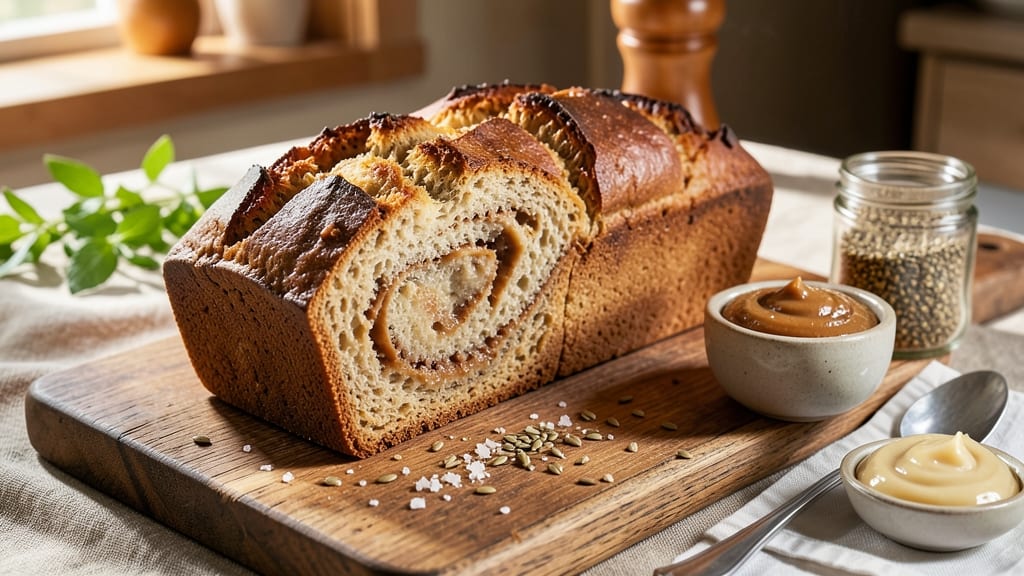
This vegan almond butter bread delivers the perfect balance of rich, nutty swirls and a soft, pillowy crust—no dairy or eggs needed. 🌟 The secret lies in a simple yet foolproof method that transforms basic pantry staples into a loaf that's both satisfying and wholesome.
I've perfected this recipe over years of baking, ensuring it rises beautifully and stays moist for days.
The magic happens with a combination of almond butter and plant-based ingredients that create a tender crumb while maintaining that signature nutty flavor. Unlike traditional bread recipes, this version relies on flax eggs and applesauce for binding, delivering a texture that's surprisingly light for a vegan loaf.
The swirls of almond butter add visual appeal and a satisfying crunch with every bite.
By the time it emerges from the oven, you'll have a golden-brown loaf with a crisp crust and a soft interior that's perfect for slicing. The aroma alone will have everyone gathering around the table, and the taste is rich, slightly sweet, and deeply comforting.
This bread is ideal for breakfast toast, sandwiches, or simply enjoying with a cup of coffee.
Whether you're baking for a family gathering or treating yourself to a homemade loaf, this recipe delivers restaurant-quality results with minimal effort. The best part? It's completely customizable—add chocolate chips, nuts, or seeds to suit your taste. Let's get started on creating your perfect loaf.
Ingredients for almond butter bread
Rich almond butter swirls meet tender vegan bread—just 13 ingredients for a loaf that's pure comfort.
| Ingredient | Amount | Notes |
|---|---|---|
| Almond Butter 🥜 | 1 cup | Natural, unsweetened preferred |
| All-Purpose Flour 🌾 | 3 cups | Plus 2 tbsp for dusting |
| Granulated Sugar 🍚 | ½ cup | Or coconut sugar for refined-free |
| Brown Sugar 🍚 | ½ cup | Packed firmly |
| Ground Flaxseed 🌾 | 3 tbsp | For flax eggs (mix with 9 tbsp water) |
| Unsweetened Applesauce 🍎 | ½ cup | For moisture and binding |
| Active Dry Yeast 🍞 | 1 package | Or 2.25 tsp instant yeast |
| Warm Water 💧 | 1 cup | 110°F for optimal yeast activation |
| Vegetable Oil 🫒 | ½ cup | Or melted coconut oil |
| Vanilla Extract 🍯 | 1 tsp | Pure extract preferred |
| Salt 🧂 | 1 tsp | Diamond Crystal preferred |
| Baking Soda 🍞 | 1 ½ tsp | For lift and tenderness |
| Almond Slices 🥜 | ½ cup | For topping (optional) |
Almond butter is the star here, so pick a natural, unsweetened variety—the kind with just almonds and maybe a pinch of salt. Trader Joe's has a great organic option, but any store-brand natural almond butter works. For the yeast, check the expiration date—old yeast won't activate properly. The flaxseed needs to be ground fresh (or buy pre-ground), and the applesauce should be unsweetened—no added sugar sneaking in. Pro tip: Mix your flax eggs (3 tbsp ground flaxseed + 9 tbsp water) ahead and let them sit for 5 minutes to thicken properly.
No almond butter? Peanut butter works in a pinch, but the flavor will be different. Running low on applesauce? Mashed banana or pumpkin puree adds moisture too. The yeast can be tricky—if your kitchen is cold, use warmer water (110°F) to activate it faster. For the sugar, coconut sugar adds a caramel note, while regular white sugar keeps it neutral. Want extra richness? Add 1 tbsp melted vegan butter to the dough. And if you're feeling fancy, swap half the all-purpose flour for whole wheat flour for a nuttier crumb.
This dough is sticky—don't panic! It's normal. Keep everything ready before you start mixing. The bread keeps beautifully for 3-4 days at room temperature, wrapped in a towel, or 1 week in the fridge. For longer storage, slice and freeze portions—3 months is no problem. The best part? It reheats like a dream—wrap a slice in foil and warm in the oven for 5 minutes. Leftovers? Toast them for breakfast—trust me, it's even better the second day.
Why You'll Love This Recipe
- No Mixer Needed: Mixing this dough is basically a 30-second job—just stir the almond butter into the wet ingredients until it’s smooth, then fold in the dry stuff. No stand mixer, no stress, just a bowl and a spoon. Honestly, it’s the kind of recipe that makes me feel like a baking pro without any of the fuss.
- Rich, Nutty Magic: That creamy almond butter isn’t just flavor—it’s the star. The combo of brown and granulated sugar gives it just enough sweetness to balance the nutty depth, while the flaxseed adds a subtle earthiness. It’s the kind of bread that makes you reach for seconds without even thinking.
- Breakfast or Snack Hero: I keep a loaf in my freezer for lazy mornings—just toast a slice and slather it with peanut butter or jam. Or, cut it into squares and pack them for work; they stay fresh for days. Between us, it’s also my go-to for quick dessert when I crave something sweet but don’t want to bake from scratch.
- Budget-Friendly Stretch: Almond butter might sound fancy, but it’s cheaper than buying pre-made nut breads, and the flaxseed adds fiber without breaking the bank. A single batch feeds my family for days, and leftovers freeze perfectly. It’s my secret weapon for keeping pantry staples from going to waste.
Step-by-step instructions for almond butter bread
Here's how to create that perfect balance of nutty swirls and soft crust—every slice will impress!
👨🍳 Step 1: Activate the Yeast and Mix the Flax Eggs
First, let's get the yeast party started. In a small bowl, combine the 1 cup warm water (around 110°F) with the 1 package active dry yeast and 0.5 cup granulated sugar. Let it sit for 5-10 minutes until it becomes frothy—this means your yeast is alive and kicking! If it doesn't bubble, your bread might not rise properly.
While that's happening, mix the 3 tbsp ground flaxseed with 9 tbsp water in a separate bowl. Let it sit for 5 minutes to thicken into a gel-like consistency—this is your egg substitute. The flax eggs will give your bread structure and moisture without traditional eggs. Stir occasionally to prevent clumping.
🍳 Step 2: Combine Wet Ingredients for the Base
In a large mixing bowl, combine the 1 cup almond butter, 0.5 cup vegetable oil, 0.5 cup unsweetened applesauce, 1 tsp vanilla extract, and the flax egg mixture. Mix until smooth—you're creating the rich, nutty foundation of your bread. The almond butter will give that signature flavor, while the applesauce adds moisture and tenderness.
Next, add the 0.5 cup brown sugar and 1 tsp salt to the wet mixture. Stir well to distribute evenly. Here's the thing—brown sugar adds moisture and a subtle caramel flavor, while salt enhances all the other flavors. Don't skip this step, as it balances the sweetness and makes every bite more flavorful.
👨🍳 Step 3: Mix the Dry Ingredients and Combine
In a separate bowl, whisk together the 3 cups all-purpose flour and 1.5 tsp baking soda. The baking soda will help your bread rise beautifully and give it that tender crumb. Gradually add this dry mixture to your wet ingredients, mixing just until combined. Don't overmix—you're looking for a soft dough that comes together but still has some texture.
Once combined, transfer the dough to a lightly floured surface and knead for 5-7 minutes until smooth and elastic. You'll know it's ready when it springs back when gently pressed. This kneading develops gluten, which gives your bread structure. If the dough feels too sticky, add 1-2 tbsp more flour as needed.
🥘 Step 4: Create the Swirl and Let It Rise
Here's where the magic happens! Divide the dough in half. Roll one portion into a 12-inch rectangle and spread 2-3 tbsp of the remaining dough (about ¼ cup) mixed with extra almond butter on top. Roll it up tightly like a jelly roll, then place it seam-side down in a greased 9x5-inch loaf pan.
Repeat with the second portion of dough. Brush the top with a little warm water and sprinkle 0.5 cup almond slices on top for that gorgeous crunch. Cover the pan with a damp towel and let it rise in a warm place for 1-1.5 hours until it doubles in size. You'll see it puff up and smell that amazing yeasty aroma—this is your signal it's ready for the oven!
🔥 Step 5: Bake to Golden Perfection
Preheat your oven to 350°F while the dough rises. Once it's doubled, bake the bread for 50-55 minutes until the top is golden brown and a toothpick inserted in the center comes out clean. The edges should pull away from the pan slightly, and the almond slices should be toasted to a beautiful color.
Let the bread cool in the pan for 10 minutes before transferring it to a wire rack. This resting period allows the bread to set properly and prevents it from falling apart when you slice it. Once cooled, slice it thickly—each piece should have that perfect balance of soft, moist crumb and nutty swirls. Serve warm for the ultimate experience!
Pro Tips For Making Almond Butter Bread
- STIR THE FLAXSEED: Mix the ground flaxseed with the almond butter first—it dissolves better and prevents clumpy dough. I learned this after pulling out three batches with weird texture; now it blends like butter.
- USE WARM ALMOND BUTTER: Scoop the almond butter straight from the jar while it’s still warm—it’s smoother and mixes faster. Cold almond butter? You’ll be fighting lumps the whole time. (Yes, even if you’re impatient like me.)
- DON’T OVERMIX THE DOUGH: Stop folding the wet ingredients into the dry once they just combine—overmixing makes the bread dense. I used to beat it like I was punishing it, and the result was sad. Two minutes max after the flour disappears.
- CHILL THE DOUGH: Let it rest 30 minutes in the fridge before baking—it rises better and doesn’t spread like a pancake. I skipped this once and ended up with a flat, sad loaf. (Your future self will thank you.)
Essential equipment for great almond butter bread
Mixing Essentials
Start with a stand mixer fitted with the paddle attachment—this makes combining wet ingredients like almond butter and applesauce effortless. I use my KitchenAid Artisan Series for its consistent mixing power, but even a hand mixer works if you're patient.
The paddle prevents overmixing, which can make your bread dense. For the flax eggs, grab a small mixing bowl—glass is best since it won't retain flavors from previous mixes. 🥜
Kneading Tools
A lightly floured surface (I use a marble pastry mat) is your best friend for kneading. If you're not comfortable by hand, a stand mixer with dough hook saves your arms.
Knead for 5-7 minutes until the dough springs back when pressed—this develops gluten for structure. For extra ease, use food-safe silicone kneading gloves to keep hands clean and reduce sticking.
Loaf Pan Prep
Your 9x5-inch loaf pan needs proper prep to prevent sticking. Lightly grease it with vegetable oil or line with parchment paper for easy removal. I swear by Wilton's non-stick baking spray—just one coat works wonders.
For the almond butter swirl, use a small offset spatula to spread the filling evenly before rolling. Pro tip: Chill the pan in the fridge for 10 minutes before baking to help the bread rise higher.
Yeast Activation
Yeast needs the right conditions to work—use a small heat-safe bowl and instant-read thermometer to check water temperature (110°F). A scale helps measure yeast accurately (1 package = 2.25 tsp).
For extra insurance, proof your yeast in warm water for 5-10 minutes—it should foam before mixing into dough. If you're baking in a cold kitchen, place your mixing bowl near the oven (with light on) to create a warm, draft-free environment for rising. 🌡️
Swirl Technique
Rolling dough into a 12-inch rectangle takes practice—use a rolling pin with silicon handles for grip. Spread almond butter with a small rubber spatula (like Oxo Good Grips) for clean lines. For a jelly roll effect, keep the seam side down in the pan.
If your dough resists rolling, let it rest 5 minutes covered with a towel. A damp paper towel draped over the pan during rising traps moisture for better rise.
Baking Must-Haves
Preheat your oven with the loaf pan inside for 10 minutes to ensure even heat. A digital oven thermometer (like Thermoworks Oven Thermometer) verifies 350°F accuracy. For testing doneness, grab a long skewer or toothpick—clean means done.
Cool the bread on a wire rack (never on a plate) to prevent sogginess. For extra crunch, brush the top with melted vegan butter in the final 5 minutes of baking. 🔥
Nutrition facts
Frequently asked questions
Can I make this bread without almond butter?
Yes! While almond butter gives the signature flavor, you can substitute with peanut butter (for a similar texture) or sunflower seed butter (for nut-free versions). Just reduce any added liquid by 1-2 tablespoons since nut butters vary in thickness. For a sweeter profile, add 1 tablespoon maple syrup to the wet ingredients.
Why did my bread not rise properly?
Most likely, your yeast wasn't activated or the kitchen was too cold. Always check that warm water (110°F) makes the yeast bubble in 5-10 minutes before mixing. For cold kitchens, place your dough bowl near the oven (light on) to create a warm environment. If the dough rises too quickly, it may collapse—try reducing yeast by 0.25 teaspoons next time.
How do I store leftovers to keep them fresh?
Wrap cooled slices in beeswax wrap or aluminum foil to maintain moisture. At room temperature, it stays fresh for 3-4 days in an airtight container. For longer storage, freeze slices for up to 3 months—reheat in a 350°F oven for 5 minutes or toaster for best texture. The bread actually improves after 1-2 days!
Can I add chocolate chips or nuts to this recipe?
Fold in ½ cup chocolate chips or ½ cup chopped walnuts with the dry ingredients. For extra richness, swap 2 tablespoons almond butter with vegan chocolate hazelnut spread. Keep portions to 10% of total dough to avoid overloading. Pro tip: Toast nuts first for enhanced flavor!
What's the best way to slice this bread?
Use a serrated knife and dip it in hot water between slices to prevent crumbs. Cut into ½-inch thick slices for ideal toast or sandwiches. For a rustic look, use a bread knife with a sharp edge and angle it slightly. Always let the bread cool completely first—warm bread sticks together!