
Side Dishes
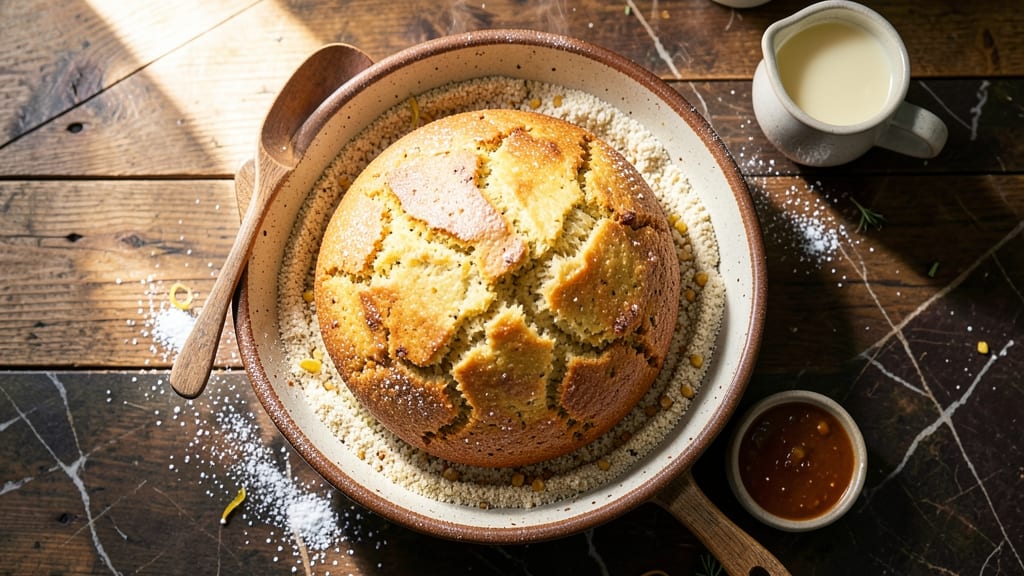
This air fry cornbread recipe delivers restaurant-quality results with crispy edges and a moist, tender crumb—all in just 15 minutes. The secret lies in foil-sealing the batter before air frying, which locks in moisture while creating that perfect golden crust.
I perfected this method after struggling with dry cornbread that crumbled instead of holding together.
What sets this recipe apart is the technique: mixing the batter just until combined (overmixing leads to dense bread) and using a foil packet to trap steam during cooking.
The air fryer's even heat ensures consistent browning without the need for an oven, making it ideal for small batches or quick side dishes. No special equipment beyond a mixing bowl and a fork required.
By the time you pull that foil packet from the air fryer, you'll have cornbread with a crispy exterior that shatters slightly and a soft, crumbly interior that melts in your mouth.
The aroma alone will have everyone at the table asking for seconds. This method preserves the cornbread's classic texture while cutting prep time in half.
Perfect for serving alongside BBQ, chili, or as a breakfast side, this air fry cornbread stays fresh for days when stored properly. The foil-sealing trick works equally well for muffins or bread pudding—once you try it, you'll never bake cornbread the old way again.
Let's get started with the foolproof method.
Ingredients for air fry cornbread
Eight essential ingredients transform into restaurant-quality cornbread with crispy edges and moist crumb.
| Ingredient | Amount | Notes |
|---|---|---|
| Fine Cornmeal 🌾 | 1 cup | Stone-ground preferred for texture |
| All-Purpose Flour 🌾 | ½ cup | For structural integrity |
| Granulated Sugar 🍚 | ¼ cup | White or light brown |
| Baking Powder 🧂 | 1 ½ tsp | Diamond Crystal preferred |
| Salt 🧂 | ½ tsp | Kosher or sea salt |
| Buttermilk 🥛 | 1 cup | Room temperature for best results |
| Large Eggs 🥚 | 1 whole | Room temperature |
| Melted Unsalted Butter 🧈 | ½ cup | Cooled to room temp |
| Vanilla Extract 🍯 | 1 tsp | Pure vanilla preferred |
| Heavy Whipping Cream 🥛 | ¼ cup | Full-fat for moisture |
| Aluminum Foil 📄 | 1 sheet | Heavy-duty preferred |
The fine cornmeal is non-negotiable—stone-ground brands like Bob's Red Mill deliver that signature texture. For the flour, King Arthur is my go-to, but any all-purpose works. Diamond Crystal baking powder is crucial here (it's double-acting, unlike Rumford). The buttermilk should be room temperature—cold buttermilk creates dense cornbread. Trader Joe's sells pre-made buttermilk if you're in a pinch, but homemade (milk + vinegar) is ideal. For the butter, Plugrá brand is my professional choice—it has a higher fat content that ensures perfect moisture retention. The foil matters too: heavy-duty aluminum foil prevents tearing during the steam phase.
No buttermilk? Sour milk or milk with lemon juice works perfectly. Short on cornmeal? Substitute half with white flour, but the texture will be slightly less authentic. King Arthur's gluten-free flour blend works well if you need a GF version, though the crumb will differ. For the sugar, light brown adds subtle molasses notes, but white sugar keeps it classic. The vanilla extract should be pure, not imitation—McCormick or Goya are reliable brands. If you're avoiding dairy, unsweetened almond milk can replace the buttermilk and cream, though texture will be slightly drier. The egg binds everything together—room temperature eggs incorporate more smoothly into the batter.
Store the cornbread in an airtight container at room temperature for 2-3 days—it actually tastes better the next day as the flavors meld. For longer storage, wrap tightly in plastic wrap and refrigerate for up to 5 days. Freezing is ideal: slice the cooled cornbread, wrap each piece in plastic wrap, then place in a ziplock bag for up to 3 months. To reheat, air fry at 300°F for 3-4 minutes to restore that crispy exterior. The foil-sealing method keeps it moist for days, making this perfect for meal prep—portion into individual servings before freezing for grab-and-go convenience.
Why You'll Love This Recipe
- No Mixing Madness: I swear by this recipe because it’s just three ingredients plus wet stuff—no overmixed dough, no sticky hands. The cornmeal and flour blend comes together in seconds, and the air fryer does the rest while I’m still scraping the bowl.
- Crispy Without Grease: That golden crust? Achievable without a drop of oil. The baking powder puffs it up just right, and the air fryer gives it a satisfying crunch that’s light as a summer breeze—not heavy like some oven-baked versions.
- Weeknight Sidekick: Serve it warm with chili, cold in a lunchbox, or toasted with butter for breakfast. It’s my go-to when I need something hands-off that still feels special, and the sugar just enough to keep it interesting without being sweet.
- Budget-Friendly Staple: Cornmeal and flour stretch my grocery dollars, and a single batch feeds four with leftovers that reheat like a dream. Honestly, I make this so often I’ve stopped counting—it’s the kind of reliable that saves money and stress.
Step-by-step instructions for air fry cornbread
This method delivers perfectly moist cornbread with a golden crust—no oven required.
Combine Dry Ingredients with Precision
In a medium bowl, whisk together the 1 cup fine cornmeal, 0.5 cup all-purpose flour, 0.25 cup granulated sugar, 1.5 teaspoons baking powder, and 0.5 teaspoon salt. Use a wire whisk for 30 seconds to ensure no lumps remain—this creates an even crumb structure. The cornmeal should be stone-ground for optimal texture, so sift if necessary to remove any coarse particles that could affect moisture distribution.
I like to press the dry ingredients through a fine-mesh sieve into the bowl to eliminate any potential air pockets. This step is critical for a tender crumb rather than a dense, cake-like texture. Set the bowl aside while you prepare the wet ingredients—keeping them separate prevents premature gluten development.
Whisk Wet Ingredients to Perfect Consistency
In a separate large bowl, combine the 1 cup buttermilk, 1 whole large egg, 0.5 cup melted unsalted butter (cooled to room temperature), 1 teaspoon vanilla extract, and 0.25 cup heavy whipping cream. Whisk vigorously for 1 minute until the mixture is completely smooth and homogeneous. The buttermilk should be at room temperature to ensure proper emulsification with the melted butter.
Here's the thing—don't overmix. You're looking for a thick, pourable batter with a slight sheen, similar to heavy cream. If it's too thin, your cornbread will spread excessively in the air fryer. If it's too thick, it won't rise properly. The ideal consistency should coat the back of a spoon but still flow freely when poured.
Gently Fold Wet into Dry Ingredients
Pour the wet ingredients into the bowl with the dry ingredients and gently fold together using a rubber spatula. Work slowly and carefully to maintain air pockets while ensuring all dry ingredients are fully incorporated. You should see small bubbles forming in the batter—this indicates proper aeration. Stop folding once no dry streaks remain, but avoid overmixing which would deflate the batter.
This is where the magic happens: the baking powder begins activating as soon as the wet and dry ingredients meet. The batter should be thick but still pourable, with a consistency similar to pancake batter. If it's too stiff, add 1 tablespoon buttermilk to loosen. Let the batter rest for 5 minutes at room temperature while you prepare the air fryer—this allows the baking powder to fully hydrate.
Prepare the Air Fryer and Foil Mold
Preheat your air fryer to 350°F. Cut a 12-inch square from the 1 sheet aluminum foil and fold up the sides to create a small loaf pan shape, approximately 6 inches long by 4 inches wide. This foil pan will help contain the batter while allowing heat circulation for even cooking. Lightly grease the foil with 1 teaspoon melted butter to prevent sticking.
Here's a pro tip: use heavy-duty foil for this step. Regular foil might tear under the heat and steam pressure. The foil pan creates a contained environment that traps moisture during the initial cook, then releases it for that perfect golden crust. This two-stage cooking method is what gives air fry cornbread its signature moist interior with crispy exterior.
Cook with Foil-Sealed Precision
Pour the batter into the prepared foil pan and smooth the top with a spatula. Place the foil pan in the air fryer basket and cook for 12 minutes with the foil covering. This initial sealed cook creates steam that develops moisture throughout the loaf. After 12 minutes, carefully remove the foil and cook for an additional 8-10 minutes until the top is golden brown and a toothpick inserted in the center comes out clean.
Watch the color closely during the final minutes—cornbread can go from perfectly golden to burnt in seconds. If the top browns too quickly, tent loosely with a small piece of foil. The internal temperature should reach 190-195°F when done. Let the cornbread rest in the air fryer for 5 minutes before removing to allow the structure to set completely.
Pro Tips For Making Air Fry Cornbread
- Crush the Cornmeal First: I learned this the hard way—skipping this step makes your cornbread dense and gummy. Pulse the fine cornmeal in a food processor for 10 seconds before mixing; it mimics the texture of stone-ground cornmeal and gives that perfect crumbly bite. (Yes, even if you’re impatient like me.)
- Preheat Like It’s 1985: Air fryers lose heat fast. Set yours to 375°F and let it run for 5 full minutes before adding the batter—this guarantees a crispy crust instead of a sad, soggy top. I used to rush this, and my cornbread would steam instead of brown. Don’t be that person.
- Don’t Overmix the Batter: The second you see streaks of flour in the wet ingredients, stop stirring. Overmixing develops gluten, and your cornbread will turn out tough instead of tender. Fold just until combined—about 12 strokes max. I’ve ruined batches by turning this into a science experiment.
- Brush with Butter Mid-Cook: After 10 minutes in the air fryer, pull out the cornbread and quickly brush the top with melted butter using a pastry brush. Pop it back in for the final 2–3 minutes—this adds richness and a golden finish. Sounds weird, but it works: your cornbread will taste like it came from a Southern kitchen.
Wine and beer pairings for this recipe
Southern Sweet Tea
This classic Southern drink is the perfect pairing for air fry cornbread—its honey-sweetened, black tea balances the rich, buttery cornbread beautifully. Brew 2 tea bags in 2 cups boiling water for 5 minutes, then add 2 tablespoons honey and 1 tablespoon lemon juice.
Serve over ice with a lemon wedge for that perfect sweet-tart contrast that cuts through the richness. 🍯
Light Lager Balance
A crisp American lager like Bud Light or Coors Light provides a clean, refreshing contrast to the cornbread's richness. The light body and subtle malt sweetness won't overpower the dish but instead complement its buttery, cornmeal notes.
Serve chilled at 38-40°F for the best experience—just a few sips between bites keep the meal feeling light. 🍺
Spiced Bourbon Neat
For a more indulgent pairing, sip on a small glass of bourbon like Woodford Reserve or Maker's Mark on the side. The caramel and vanilla notes in bourbon mirror the cornbread's sweetness, while the oaky finish adds depth.
Serve neat at room temperature—just a 1-ounce pour enhances the meal without overwhelming it. It’s a grown-up twist that feels like a Southern Sunday brunch. 🥃
Smoky Maple Syrup
If you prefer non-alcoholic, try a smoked maple syrup drizzle—simmer ½ cup pure maple syrup with ½ teaspoon smoked salt for 5 minutes until slightly reduced. Drizzle over warm cornbread slices for a sweet-savory kick that ties into the dish’s natural flavors.
The smokiness echoes the air fryer’s crispy edges while adding a gourmet touch. 🍁
Iced Coffee Twist
For a morning-friendly pairing, serve cold brew iced coffee with a splash of heavy cream. The bold, bitter notes of the coffee balance the cornbread’s sweetness, while the cream adds a luxurious texture.
Use Starbucks cold brew concentrate for a strong, smooth base—just mix 2 tablespoons concentrate with 1 cup cold water and pour over ice. ☕
Nutrition facts
Frequently asked questions
Why does the recipe use foil for air fry cornbread?
The foil creates a steam bath during the first 12 minutes, locking in moisture for a tender crumb while allowing the edges to develop that signature crispy texture. Without it, air fry cornbread often dries out. The foil also helps contain any potential spills in your air fryer basket.
Can I make this cornbread without buttermilk?
Yes! Substitute 1 cup milk with 1 tablespoon lemon juice or vinegar, then let it sit for 5 minutes to curdle. For extra richness, add 1 tablespoon melted butter to the wet ingredients. The texture will be slightly less tangy but still delicious.
How do I know when the cornbread is fully cooked?
Look for a golden brown top and insert a toothpick—it should come out clean with just a few moist crumbs. The internal temperature should reach 190-195°F. If the top browns too quickly, tent loosely with foil during the final 2-3 minutes to prevent burning.
Can I make individual servings in the air fryer?
Divide the batter into 4 small foil cups (about 2-inch diameter) and cook each for 10 minutes covered, then 5-7 minutes uncovered at 350°F. This works perfectly for meal prep—just store each portion separately in the fridge or freezer.
Why did my cornbread turn out dense instead of crumbly?
Overmixing the batter develops gluten, making it tough. Mix just until combined (about 20 strokes with a spatula) and avoid sifting the dry ingredients too vigorously. Also ensure your baking powder is fresh—old baking powder loses lift. Let the batter rest 5 minutes before cooking for best results.