Side Dishes
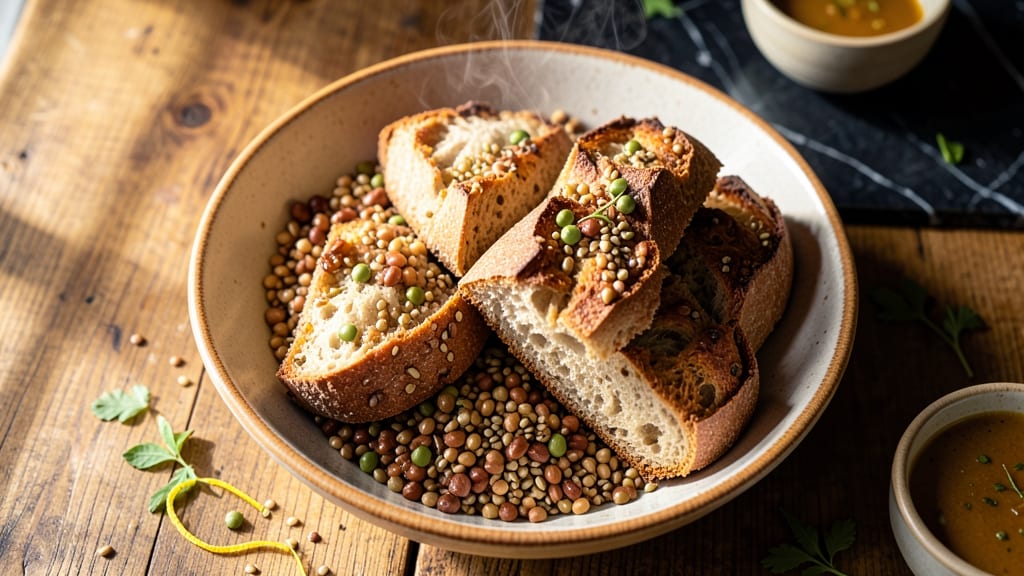
This authentic Ezekiel bread recipe delivers the same nutty, chewy texture and gut-healing benefits as the original biblical loaf, made with traditional sprouted whole grains. The process combines ancient grain fermentation with modern baking techniques to create a loaf that's both nourishing and deeply satisfying.
What sets this bread apart is the 24-hour sprouting period, which unlocks enzymes and nutrients that store-bought versions simply can't match.
The foundation of authentic Ezekiel bread lies in its simple yet powerful ingredients: sprouted wheat, barley, spelt, lentils, and millet—all combined in precise proportions to achieve that signature chewy texture and nutty flavor profile.
This isn't just bread; it's a complete protein source with high fiber content that supports digestive health, making it a staple for those following whole-food, plant-based diets. The fermentation process also enhances digestibility, transforming these grains into a more bioavailable form.
What you'll end up with is a beautifully rustic loaf with a crisp crust and tender, slightly dense crumb that's perfect for sandwiches, toast, or served alongside soups. The flavor develops complexity as it bakes, resulting in that unmistakable nutty aroma that signals authentic Ezekiel bread.
Each bite delivers a satisfying combination of texture and nutrition that goes far beyond conventional whole grain breads.
While the classic version requires just these core ingredients, you can easily customize it with seeds, herbs, or even a touch of sea salt for added flavor without compromising the bread's nutritional integrity.
The beauty of this recipe lies in its simplicity—no yeast, no refined flours, just pure, sprouted whole grains transformed through time and heat into something truly special.
Ingredients for authentic ezekiel bread
Eight whole grains and seeds transform into a loaf with biblical origins and modern nutrition.
| Ingredient | Amount | Notes |
|---|---|---|
| Sprouted Organic Wheat Berries 🌾 | 2 cups | Soaked 24 hours, rinsed well |
| Sprouted Organic Barley 🌾 | 1 cup | Soaked 24 hours, rinsed well |
| Sprouted Organic Spelt Berries 🌾 | 1 cup | Soaked 24 hours, rinsed well |
| Green Lentils 🌱 | ½ cup | Dry, rinsed thoroughly |
| Millet 🌾 | ½ cup | Dry, rinsed thoroughly |
| Filtered Water 💧 | 3 cups | Room temperature preferred |
| Sea Salt 🧂 | 1 ½ tsp | Fine grain, non-iodized |
| Extra-Virgin Olive Oil 🫒 | 2 tbsp | Cold-pressed, unrefined |
| Ground Flaxseed 🌿 | 1 tbsp | For binding, optional |
| Sesame Seeds 🌰 | 2 tbsp | Toasted for flavor |
| Sunflower Seeds 🌻 | 2 tbsp | Toasted for texture |
| Dried Rosemary 🌿 | 1 tsp | Crushed between fingers |
| Dried Thyme 🌿 | ½ tsp | Fresh preferred if available |
The quality of your sprouted grains determines the bread's authenticity. Bob's Red Mill or Azusa Mills offer pre-sprouted grains, saving you the 24-hour soaking time—though nothing beats fresh sprouting for enzyme activation. Look for organic certification to ensure no synthetic additives. The lentils and millet should be plump and uniform, with no signs of discoloration or pests. If sourcing whole grains, sprout them in a glass jar with a mesh cover; rinse twice daily. The 24-hour soak is non-negotiable—this unlocks the bread's gut-healing enzymes and digestibility. For the seeds, toast them in a dry skillet until fragrant—this enhances their nutty flavor and crunch.
No sprouted grains? Pre-sprouted Ezekiel bread mixes from health food stores work in a pinch, though they lack the fresh enzyme boost. Substitute barley with rye berries for a deeper flavor profile, though texture may vary slightly. The seeds can be omitted entirely if you prefer a simpler loaf, but they add valuable omega-3s and texture contrast. For the herbs, fresh thyme or rosemary can be used at half the dried amount. The flaxseed is optional but acts as a natural binder—if omitted, add an extra 1 tbsp of water to the dough. The olive oil should be extra-virgin and unrefined; refined oils lack the flavor complexity needed for authentic Ezekiel bread.
Store the dough in an airtight container in the fridge for up to 24 hours before baking—this allows flavors to meld further. The baked loaf keeps well at room temperature for 3-4 days, though it's best enjoyed within 2 days for optimal texture. For longer storage, wrap tightly in beeswax wrap or foil and freeze for up to 3 months. To revive, warm in a 200°F oven for 10 minutes. The crust develops best when baked in a preheated Dutch oven, which creates that signature crisp exterior. Leftovers make excellent toast or croutons—just brush with olive oil and toast until golden.
Why You'll Love This Recipe
- No-Fuss Sprouting: I swear by this method—just soak the wheat berries, barley, and spelt overnight, then blend with lentils and millet. No yeast, no kneading, no waiting around. Honestly, it’s the kind of recipe that makes me feel like a baking genius when I’m really just letting nature do the work.
- Nutty Earthy Crunch: That first bite? The sprouted grains give it a satisfying chew, while the millet adds a subtle sweetness. It’s not just bread—it’s like biting into a field of fresh harvest, but way more delicious.
- Meal Prep MVP: I make a double batch on Sundays and keep it in the freezer. Toast it straight from frozen for breakfast, use it for sandwiches all week, or pack it for lunch. Between us, this is the only bread I trust to not turn into hockey pucks in my bag.
- Budget-Friendly Staple: Sprouted grains are cheaper than you’d think, especially in bulk, and they stretch farther than regular bread. Plus, the lentils add protein, so you’re basically making a superfood loaf without the grocery bill shock. My wallet thanks me every time.
Step-by-step instructions for authentic Ezekiel bread
Transforming sprouted grains into a nourishing loaf requires precision and patience.
Prepare the Grain Mixture for Optimal Digestion
Combine all the soaked grains - the 2 cups sprouted organic wheat berries, 1 cup sprouted organic barley, and 1 cup sprouted organic spelt berries - in a large mixing bowl. Add the 0.5 cup green lentils and 0.5 cup millet to the bowl. These grains have been pre-soaked for 24 hours and rinsed thoroughly to activate enzymes and reduce phytic acid, making them more digestible and nutrient-available.
Using your hands, gently massage the grains to break them down slightly while maintaining their structure. This creates a proper texture for the dough. The mixture should feel moist but not wet - if it's too dry, add 1-2 tablespoons of the filtered water gradually until you achieve a workable consistency. The grains should hold together when pressed but not be sticky.
Blend and Hydrate for Perfect Dough Texture
Transfer the grain mixture to a high-powered food processor fitted with the metal blade. Add the 3 cups filtered water, 1.5 teaspoons sea salt, 2 tablespoons extra-virgin olive oil, 1 tablespoon ground flaxseed, 1 teaspoon dried rosemary, and 0.5 teaspoon dried thyme. Process in batches for 2-3 minutes per batch until you achieve a thick, paste-like consistency similar to hummus.
Scrape down the sides of the processor between batches to ensure even processing. The mixture should be smooth but still retain some texture from the grains. This blending creates the perfect foundation for the bread's structure while preserving the nutritional benefits of the sprouted grains. The olive oil and flaxseed act as natural binders, while the herbs add subtle depth of flavor.
Knead and Rest for Maximum Rise Potential
Transfer the blended mixture to a clean, lightly oiled mixing bowl. Add the 2 tablespoons toasted sesame seeds and 2 tablespoons toasted sunflower seeds, then use your hands to gently incorporate them throughout the dough. The seeds will add texture and nutritional value to the finished loaf. Cover the bowl with a damp kitchen towel and let the dough rest at room temperature for 1 hour.
During this resting period, the dough will begin to hydrate fully and develop gluten strands that will give the bread its structure. The seeds will absorb some moisture, which helps prevent them from sinking to the bottom during baking. After resting, the dough should be soft and pliable, with a slightly sticky surface that pulls away cleanly from the sides of the bowl.
Shape and Proof for Optimal Crumb Structure
Line a standard loaf pan with parchment paper, leaving an overhang on both sides for easy removal. Transfer the rested dough to the prepared pan and gently press it down to fill the pan completely, creating a smooth, even surface. The dough should reach the top edge of the pan but not overflow. Cover the pan with a damp towel and let it proof at room temperature for 2-3 hours, or until it has risen about 1 inch above the pan's rim.
This proofing stage is crucial for developing the bread's open crumb structure. The dough should feel springy when pressed gently with your finger - it should leave a slight indentation but spring back slowly rather than immediately. The proofed dough should smell slightly sweet and nutty from the sprouted grains. If the dough doesn't rise sufficiently, place it in a warm oven (with light on) for an additional 30-60 minutes to encourage rising.
Bake for Perfect Crust and Interior Moisture
Preheat your oven to 375°F and place a baking sheet on the middle rack. Pour 1 cup of hot water into the baking sheet to create steam during the initial baking phase. Transfer the proofed loaf to the preheated oven and bake for 45-50 minutes, until the top is deep golden brown and the internal temperature reaches 205-210°F when measured with an instant-read thermometer.
During the last 10 minutes of baking, you may want to tent the loaf with aluminum foil if the top is browning too quickly. This helps prevent over-browning while allowing the interior to cook through. The bread is done when it sounds hollow when tapped on the bottom and pulls away cleanly from the sides of the pan. Remove from the oven and let cool on a wire rack for at least 1 hour before slicing - this resting period allows the crumb to set properly and prevents a gummy texture.
Pro Tips For Making Authentic Ezekiel Bread
- SOAK GRAINS 12 HOURS MINIMUM: I learned this the hard way—rushing the soak for Ezekiel bread is a fast track to gummy, dense loaves. Use warm water (not boiling) and cover loosely with a damp towel; the grains need oxygen to fully sprout. Twelve hours is the absolute minimum, but 16-20 hours guarantees better texture and digestibility.
- GRILL THE LENTILS FIRST: Green lentils are the workhorses of this bread, but they can turn it gluey if overcooked. Toast them dry in a skillet over medium heat for 5-7 minutes until they smell nutty and develop a slight crust—this caramelizes their starches. Then soak them separately from the grains; they’ll hold their shape better and prevent a mushy crumb.
- DON’T OVER-KNEAD THE DOUGH: Ezekiel dough is delicate—it’s not sourdough, and it won’t bounce back like commercial bread dough. After mixing, handle it just enough to combine. Overworking it develops gluten, which defeats the purpose of sprouted grains. Two turns with a dough scraper is usually plenty; let the structure form during the bulk rise.
- BAKE LOW AND SLOW: This isn’t regular bread. Set your oven to 325°F (165°C) and bake the loaves on the middle rack for 50-60 minutes, covered with foil for the first 30 minutes. The low temp ensures even hydration and prevents a hard crust before the interior is fully cooked. A toothpick should come out clean, but the bread will still feel slightly dense—it firms up as it cools.
Creative variations of this authentic ezekiel bread
Classic Seed Variations
For a more rustic texture, swap the sesame and sunflower seeds for 2 tbsp each of pumpkin seeds and flaxseeds—toasted until fragrant. The pumpkin seeds add a toasty depth, while flaxseeds boost omega-3s. I like this combo for a heartier loaf that still maintains the signature chewiness.
Toast all seeds together in a dry skillet over medium heat for 3-4 minutes, stirring constantly until golden and aromatic. 🌰
Herb-Infused Twist
Brighten the loaf with fresh herbs by replacing the dried rosemary and thyme with 1 tbsp each of fresh rosemary and thyme (finely chopped). The fresh herbs add vibrant flavor and a subtle floral note that pairs beautifully with the nutty grains.
For an extra layer of complexity, add 1 tsp dried oregano—it complements the earthiness of the sprouted grains without overpowering. The fresh herbs also contribute a lovely aroma during baking.
Sweet Cinnamon Raisin
Transform this savory loaf into a lightly sweetened version by adding 2 tbsp raisins or chopped dates and 1 tsp cinnamon to the dough. The cinnamon enhances the natural sweetness of the sprouted grains, while the raisins add chewy texture.
This variation works beautifully as a breakfast loaf or with jam for a satisfying snack. For extra richness, fold in 1 tbsp chopped walnuts—they add crunch and buttery flavor. 🍯
Global Grain Swaps
Experiment with global grain variations by substituting ½ cup of the wheat berries with quinoa or amaranth. These ancient grains add a nutty, slightly earthy flavor while boosting protein content. For a Middle Eastern twist, replace the barley with freekeh—its smoky, toasted flavor adds depth.
If you prefer a lighter texture, swap ½ cup of the lentils for chickpeas, which add a subtle sweetness and extra protein. Always ensure your grain substitutions maintain the dough’s moisture balance.
Savory Garlic & Herb
Elevate the flavor profile with a savory garlic twist: add 2 minced garlic cloves and 1 tsp garlic powder to the dough along with the herbs. The garlic infuses the entire loaf with a warm, aromatic depth that pairs perfectly with soups or dips.
For an extra kick, sprinkle ½ tsp smoked paprika over the top before baking—it adds a subtle smokiness that enhances the crust. This variation is a crowd-pleaser for those who love bold, savory flavors. 🧄
No-Seed Minimalist
For a cleaner, more minimalist loaf, omit all seeds and focus solely on the sprouted grains and herbs. This version highlights the natural nutty flavor of the wheat, barley, and spelt while keeping the texture tender and chewy.
To compensate for the lack of seeds, add an extra 1 tbsp of ground flaxseed for binding. This stripped-down version is ideal for those who prefer simplicity or have nut allergies—it’s just as nutritious, just without the crunch. 🌾
Nutrition facts
Frequently asked questions
Why does authentic Ezekiel bread require sprouted grains?
The 24-hour sprouting process activates enzymes and reduces phytic acid, making the grains more digestible and nutrient-available. This ancient technique unlocks the bread's gut-healing properties and enhances its natural sweetness and chewy texture. Sprouting also increases vitamin and mineral content compared to unsprouted grains.
Can I make this bread without a food processor?
Yes, but expect a slightly denser texture. Pulse the soaked grains in a blender or mortar and pestle until they reach a coarse paste. Add water gradually while blending to achieve a thick, spreadable consistency. The dough will require 15-20 minutes extra resting time to develop proper structure.
How do I know when the dough is properly proofed?
Press the dough gently with your finger—it should leave a slight indentation that slowly springs back. The dough should rise about 1 inch above the pan rim and smell sweetly nutty. If it doesn't rise enough, place the covered pan in a 70°F oven with the light on for 30-60 minutes to encourage fermentation.
What if my bread turns out too dense?
Dense texture usually means insufficient proofing or over-processing. For next time, extend proofing to 3-4 hours and reduce food processor time to 1-2 minutes per batch. Also ensure your grains are properly sprouted—under-sprouted grains can create a heavier crumb. A 5-minute steam bath during baking can also improve texture.
Can I make this gluten-free?
While traditional Ezekiel bread contains gluten, you can create a gluten-free version by substituting ½ cup of the wheat berries with certified gluten-free grains like millet, quinoa, or buckwheat. Use a gluten-free baking blend for the remaining wheat portion, but expect a different texture—more crumbly and less chewy. Always check labels for cross-contamination warnings.