
Side Dishes
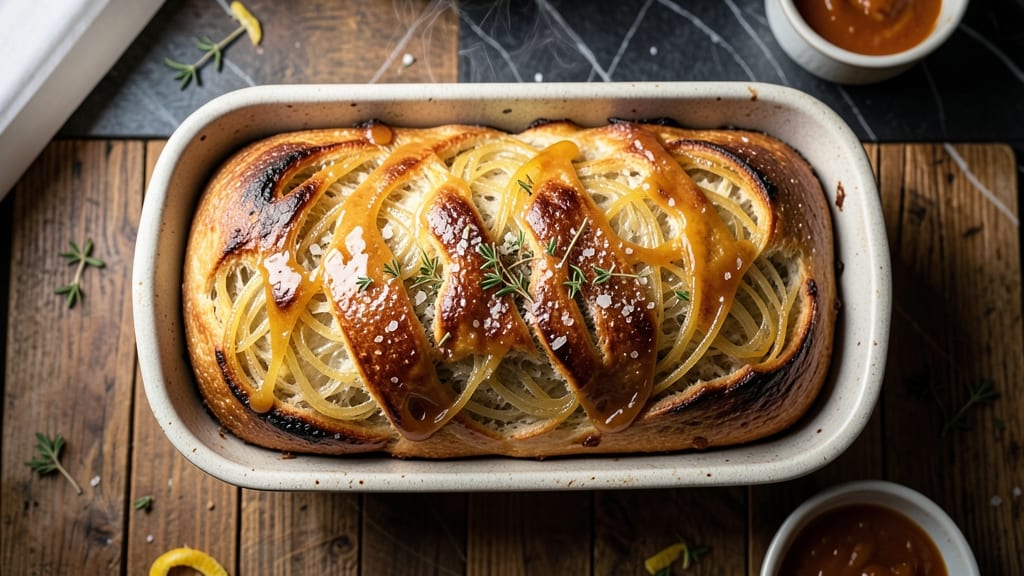
This artisan onion bread recipe delivers a golden, crackling crust with layers of caramelized onions perfectly trapped inside. The secret lies in a high-hydration dough that develops a crispy caramelized top while keeping the interior soft and airy.
I've perfected this technique over years of baking, and it never fails to impress—whether served warm with butter or sliced for sandwiches.
The dough begins with a simple yeast-based mix, but the magic happens during the shaping and baking process. You'll create a swirl of caramelized onions that gets locked into the dough before proofing, ensuring every slice reveals those sweet, savory pockets.
Baking at high heat creates that prized crispy crust while keeping the inside tender.
What you'll end up with is a loaf that looks like it came from a Parisian bakery—golden, crackling, and filled with layers of caramelized onions. The aroma alone will have everyone gathering around the table.
This bread is perfect for holidays, dinner parties, or simply enjoying with a pat of butter.
For extra flavor, consider adding a sprinkle of coarse sea salt before baking or topping with fresh herbs after it comes out of the oven. The possibilities for presentation are endless, from serving it warm with soups to slicing it for elegant charcuterie boards.
Let's get started on this showstopping loaf!
Ingredients for artisan onion bread
Simple pantry staples plus a few key ingredients for that bakery-style onion bread.
| Ingredient | Amount | Notes |
|---|---|---|
| All-Purpose Flour 🌾 | 4 cups | High-protein preferred for chewiness |
| Active Dry Yeast 🍞 | 1 tbsp | Ensure yeast is fresh |
| Granulated Sugar 🍚 | 1 tbsp | Feeds yeast for activation |
| Warm Water 💧 | 1 ¼ cups | 110°F for ideal yeast activation |
| Unsalted Butter 🧈 | ½ cup | Cold, cubed for easier mixing |
| Yellow Onions 🧅 | 2 whole | Sweet variety like Vidalia |
| Olive Oil 🫒 | 2 tbsp | Extra-virgin for caramelizing onions |
| Salt 🧂 | 1 ½ tsp | Coarse sea salt preferred |
| Garlic Cloves 🧄 | 2 cloves | Minced for onion mixture |
| Fresh Thyme Leaves 🌿 | 1 tbsp | Optional for herbaceous note |
| Milk 🥛 | ¼ cup | Warmed to enhance dough tenderness |
| Egg 🥚 | 1 whole | Room temperature for even mixing |
The onions are everything here—Vidalia or yellow sweet onions caramelize best. Whole Foods or Trader Joe's usually have the sweetest varieties, but any yellow onion works in a pinch. For the butter, grab Plugrá or Land O'Lakes unsalted—they melt beautifully. The yeast? Check the date—if it's been sitting in your pantry for months, toss it. Fresh yeast is non-negotiable for that perfect rise. Pro tip: caramelize the onions low and slow until jammy—about 30 minutes—don't rush this step.
No Vidalia onions? Sweet onions or even red onions work, though flavor will differ. Short on butter? Olive oil or coconut oil can sub at the same amount, but butter's richness is worth it. Fresh thyme too pricey? Dried thyme at one-third the amount does the trick. The milk can be swapped for water, but you'll lose that tender crumb. For a vegan version, use unsweetened almond milk and vegan butter. And if you're making this ahead, prep the onion filling first—it keeps 3 days in the fridge.
This dough is a beast—24 hours in the fridge is ideal for flavor development. Shape your loaf in a 9x5-inch loaf pan for classic presentation, or free-form for rustic appeal. Brush the top with milk before baking for that golden crust. Leftovers? Slice and toast—3 days in an airtight container. Freeze the whole loaf for up to 3 months—thaw overnight on the counter, then warm in a 350°F oven for 10 minutes to revive that bakery-fresh crunch.
Why You'll Love This Recipe
- No-Knead Magic: I swear by this dough—just mix, let it rise, and forget it. The yeast does all the work while you sip coffee or fold laundry. That’s how you make homemade bread without the fuss.
- Sweet & Savory Crunch: That caramelized onion jam folded into the dough? It’s like biting into a French dip sandwich every time. The butter melts into a golden crust, and the sugar just takes it from good to ridiculously good.
- Weeknight & Party Star: Toss a loaf in the oven while you prep dinner—it’ll be ready when you are. Or slice it for a charcuterie board, and suddenly you’re hosting a fancy gathering without the stress.
- Budget Stretch: Flour, yeast, butter—these are pantry staples that won’t break the bank. One batch feeds my family for days, and the leftovers? Perfect for toast, sandwiches, or even croutons. Zero waste, all flavor.
Step-by-step instructions for artisan onion bread
Here's how to make bread with a golden crust and caramelized onion swirls that stay put.
Activate the Yeast and Mix the Dough
In a small bowl, combine the 1.25 cups warm water (about 110°F), 1 tbsp granulated sugar, and 1 tbsp active dry yeast. Let it sit for 5-10 minutes until frothy—this means the yeast is alive and ready to work. If it doesn't bubble, your yeast might be old, and you'll need to start over.
In a large bowl, whisk together the 4 cups all-purpose flour and 1.5 tsp salt. Make a well in the center and pour in the yeast mixture along with the 1 whole egg and 0.25 cup milk. Mix with a wooden spoon until a shaggy dough forms. Then, add the 0.5 cup cold, cubed unsalted butter and knead by hand for 5 minutes until the dough comes together and is slightly sticky but not wet.
Caramelize the Onions for the Swirl
While the dough rests, heat 2 tbsp olive oil in a skillet over medium heat. Add the 2 whole yellow onions, sliced into thin half-moons, and cook for 15-20 minutes, stirring occasionally, until deeply golden and caramelized. Add the 2 minced garlic cloves and 1 tbsp fresh thyme leaves in the last 2 minutes of cooking.
Remove the skillet from heat and let the onions cool slightly. Once cool enough to handle, transfer them to a plate and spread them into a thin, even layer. This will make it easier to roll them up later for the swirl.
Knead and Shape the Dough
Turn the dough onto a lightly floured surface and knead for another 5 minutes until smooth and elastic. If it feels too sticky, add a little more flour, but don't overdo it—you want it soft enough to trap the onion swirl without tearing.
Roll the dough into a 12x16-inch rectangle (about ½-inch thick) and spread the caramelized onions evenly over the surface, leaving a ½-inch border around the edges. Starting from the long side, tightly roll the dough into a log, pinching the seam to seal. This creates the signature onion swirl that stays put during baking.
Let the Dough Rise and Shape the Loaf
Place the sealed dough log seam-side down in a greased 9x5-inch loaf pan. Cover with a clean kitchen towel and let it rise in a warm place for 1-1.5 hours, or until it has nearly doubled in size. The dough should look puffy and feel light when pressed gently with a finger.
Preheat your oven to 375°F. Once the dough has risen, use a sharp knife to score the top in a diagonal crisscross pattern (about ½-inch deep). This helps the bread expand and gives it that classic artisan look. Bake for 35-40 minutes until the top is deep golden brown and the internal temperature reaches 190°F.
Cool and Serve for Maximum Crisp
Remove the bread from the pan and let it cool on a wire rack for 10 minutes before slicing. This resting time is crucial—it allows the steam inside to escape, preventing a gummy texture. The crust should be crispy and caramelized, while the interior remains soft and chewy.
Slice the bread into ½-inch thick pieces and serve warm. The caramelized onions will be locked in their swirl, adding a sweet and savory burst with every bite. Store any leftovers in an airtight container at room temperature for up to 2 days, or freeze for up to 3 months.
Pro Tips For Making Artisan Onion Bread
- MEASURE WATER PRECISELY: The yeast needs warmth, not guesswork—use a thermometer to hit 105–110°F (40–43°C). I learned this the hard way after a batch failed because my "warm water" was lukewarm. A microwave with 30-second bursts works, but test it first.
- SOFTEN BUTTER FULLY: Cold butter pockets = dense bread. Microwave the butter in 10-second bursts until just melted, then cool it 2 minutes until it’s soft but not greasy. This keeps the dough from turning into a sticky mess while still giving that rich, tender crumb.
- LET THE DOUGH RISE TWICE: Skip the second rise, and you’ll end up with a sad, flat loaf. After the first rise (1–1.5 hours), punch it down, shape it, then let it rise another 30–45 minutes—this builds flavor and structure. (Yes, it’s tempting to rush, but your future self will notice the difference.)
- STEAM THE OVEN FIRST: Artisan bread needs a crisp crust, not a dry one. Place a baking sheet on the lower rack, pour in 1 cup hot water, then close the door for 5 minutes. The steam mimics a professional oven and locks in moisture—no sad, gummy interiors here.
Flavor customization for this artisan onion bread
Sweet vs Savory
Balance the onion flavor by adjusting sweetness or acidity. For extra sweetness, add 1 tbsp honey or 1 tbsp maple syrup to the caramelized onions before rolling them into the dough. This enhances the natural sugars in the onions and creates a deeper caramelized flavor.
If you prefer a tangier twist, stir in 1 tsp apple cider vinegar or ½ tsp Dijon mustard while caramelizing. 🌟
Herb Variations
Swap or add herbs to complement the onions. Fresh rosemary (1 tbsp) pairs beautifully with the caramelized onions and adds a piney aroma. For a Mediterranean twist, mix in 1 tsp dried oregano or 1 tbsp chopped fresh parsley after caramelizing.
If you love garlic, double the amount to 4 cloves for a stronger punch.
Spice Infusions
Add warmth with spices like ½ tsp smoked paprika or ¼ tsp cayenne pepper while caramelizing the onions. For a subtle kick, sprinkle ½ tsp crushed red pepper flakes over the dough before baking.
If you prefer earthy flavors, try ½ tsp ground coriander or ¼ tsp cinnamon—yes, cinnamon! It pairs surprisingly well with caramelized onions and adds depth.
Cheese Twist
For a savory upgrade, fold ½ cup shredded Gruyère or Parmesan cheese into the caramelized onions before rolling them into the dough. The cheese melts slightly during baking, creating pockets of gooey goodness.
If you love tangy cheese, try feta crumbles (¼ cup) for a bright contrast. Just be sure to reduce the salt in the dough by ½ tsp to balance the flavors.
Crunchy Toppings
Add texture with toppings before baking. Sprinkle coarse sea salt or crushed black pepper over the scored dough for a classic finish. For extra crunch, press toasted sesame seeds or crushed nuts (like walnuts or pecans) into the top before baking.
These toppings add a delightful contrast to the soft interior and crispy crust.
Gluten-Free Adaptation
For a gluten-free version, substitute 4 cups all-purpose flour with a 1:1 gluten-free flour blend (like Bob’s Red Mill 1-to-1). Add ½ tsp xanthan gum to improve elasticity.
The dough will be stickier, so use a bit more flour when shaping. Caramelize the onions as directed, but reduce the baking time to 30-35 minutes to prevent over-browning.
Nutrition facts
Frequently asked questions
Can I make this bread without a loaf pan?
For a free-form loaf, shape the dough into a round or oval and place it on a parchment-lined baking sheet. Brush with milk and sprinkle with coarse salt before baking at 375°F for 30-35 minutes. The crust will be thicker and more rustic, but just as delicious.
Why did my onion swirls leak out during baking?
This usually happens if the dough wasn't sealed tightly enough when rolling or if the onions weren't cool enough. Let the caramelized onions cool completely before rolling, and pinch the seam very tightly. Also, don't overproof the dough—it should rise just until it nearly doubles in size.
How do I store leftovers to keep them fresh?
Wrap the cooled bread in plastic wrap or place in an airtight container. It stays fresh at room temperature for 2 days. For longer storage, freeze slices in a single layer before transferring to a bag—this prevents freezer burn. To revive, warm frozen slices in a 350°F oven for 5-7 minutes.
Can I use frozen onions instead of fresh?
Fresh onions work best for caramelizing, but you can use frozen onions in a pinch. Thaw them first, then pat dry thoroughly to prevent excess moisture in your dough. The texture will be slightly different, but the flavor will still be delicious.
What's the best way to reheat slices?
For maximum crispiness, wrap slices in foil and warm in a 350°F oven for 5-7 minutes. For a quick option, toast in a skillet over medium heat for 1-2 minutes per side until golden. Avoid the microwave—it makes the crust soggy!