Side Dishes
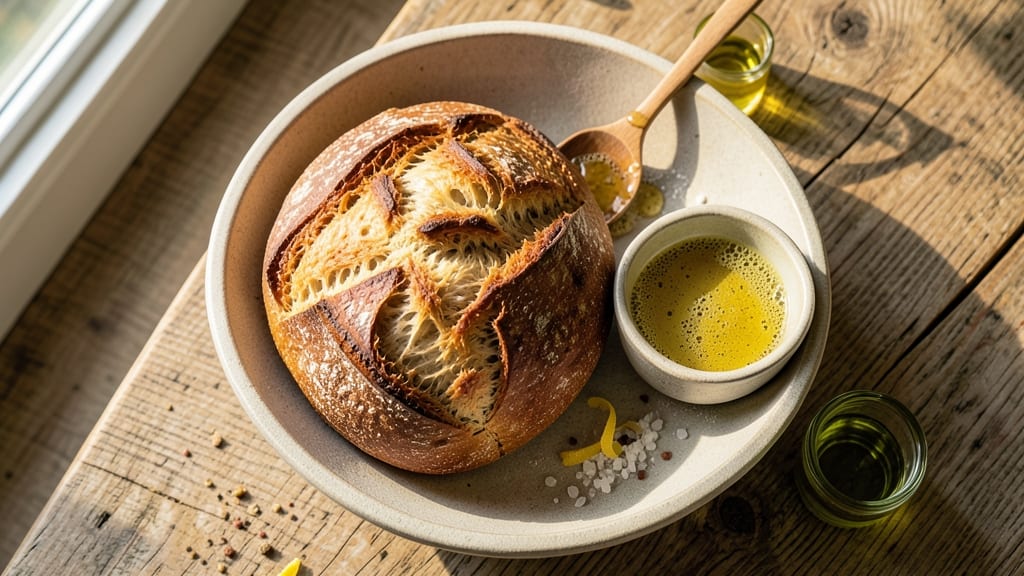
This artisan country bread recipe delivers the perfect marriage of crispy, rustic crust and an impossibly tender, pillowy interior—exactly what separates homemade loaves from store-bought. The secret lies in the Dutch oven baking technique, which traps steam for that signature open crumb while creating a golden, crackling crust.
I've perfected this method over years of baking, and it never fails to impress even skeptics who swear they can't make bread at home.
What sets this recipe apart is the attention to texture: a crispy exterior with a soft, airy interior that practically melts in your mouth.
We'll use a simple dough formula with just five ingredients—flour, water, yeast, salt, and a touch of honey—but the technique is what transforms it into something extraordinary. The dough gets a long, slow fermentation (overnight in the fridge), which develops deep flavor and improves digestibility.
By the time you pull that loaf from the oven, you'll have a beautiful rustic boule with an aromatic crust and a crumb so tender it might just make you weep with joy.
This bread pairs perfectly with butter, soups, or charcuterie boards, and it freezes beautifully for up to three months. The best part? No special equipment beyond a Dutch oven or heavy baking sheet.
Whether you're baking for a family dinner or want to impress guests, this recipe delivers professional-quality results with minimal effort. Let's get started on creating your perfect loaf!
Ingredients for artisan country bread
Five simple ingredients transform into bread with restaurant-quality texture and aroma.
| Ingredient | Amount | Notes |
|---|---|---|
| All-Purpose Flour 🌾 | 5 cups | Plus 1 tbsp for dusting |
| Warm Water 💧 | 2 ¼ cups | 110°F for activating yeast |
| Active Dry Yeast 🍞 | 2 ¼ tsp | Or 1 packet instant yeast |
| Honey 🍯 | 1 tbsp | For subtle sweetness |
| Kosher Salt 🧂 | 1 ½ tsp | Diamond Crystal preferred |
| Extra-Virgin Olive Oil 🫒 | 1 tbsp | For dough enrichment |
| Cornmeal 🌽 | ¼ cup | For dusting Dutch oven |
| Coarse Sea Salt 🧂 | ¼ tsp | For sprinkling crust |
| Ice Water ❄️ | ½ cup | For shaping dough |
The flour is your foundation—King Arthur or Bread Flour gives the best crumb, but all-purpose works in a pinch. Yeast quality matters here: grab Saf-Instant or Red Star from the baking aisle, not the bulk bins. Honey isn't just for sweetness—it feeds the yeast and adds subtle depth. Local raw honey works best, but store-bought is fine. For the olive oil, California avocado or Italian extra-virgin brands have the best flavor. Pro tip: Let your yeast sit in warm water with honey for 5 minutes before adding flour—it should get bubbly and frothy. If it doesn't, your yeast might be dead (happens more often than you'd think).
No honey? Maple syrup or agave works at the same amount. Short on olive oil? Melted coconut oil is a neutral substitute. The cornmeal isn't just for dusting—it adds a subtle crunch to the crust. For the sea salt, Maldon flakes are ideal, but any coarse salt works. Need to make this gluten-free? Swap flour for a 1:1 gluten-free blend, but expect a denser texture. The ice water is crucial for shaping—it keeps the dough from sticking while you handle it. If you don't have ice, just chill your water in the freezer for 10 minutes.
This dough keeps beautifully—up to 3 days in the fridge or 3 months frozen. For freezing, shape the dough, wrap tightly in plastic, then freeze. Thaw overnight in the fridge before baking. The baked loaf? 5 days at room temperature wrapped in a towel, or 3 months frozen. To reheat, wrap in foil and warm at 300°F for 10 minutes. Pro move: Toast slices before serving—the crust gets even crunchier. Leftovers? Perfect for croutons or breadcrumbs—just pulse in a food processor.
Why You'll Love This Recipe
- Five-Ingredient Magic: I swear by this—just flour, water, yeast, honey, and salt. That’s it. No fancy mixers or confusing ratios. The honey alone makes it taste like you spent hours kneading, but honestly? It’s foolproof.
- Crust That Cracks: Between us, that golden, shatterable crust is my favorite part. The salt and honey work together to create a texture that’s crisp on the outside but soft inside—like biting into a warm hug. (Yes, even on a Tuesday night.)
- Meal Prep MVP: I bake a loaf on Sundays, and it lasts me all week. Toast it for breakfast, pack it in lunches, or use it to soak up soup. It’s the ultimate neutral canvas—works with jam, butter, or nothing at all.
- Budget-Friendly Staple: Flour and yeast are cheap, and this recipe stretches them far. I make two loaves for the price of one store-bought baguette, and the leftovers? They’re even better the next day. My wallet and my taste buds win.
Step-by-step instructions for artisan country bread
Here's how to craft that perfect rustic crust with a tender, pillowy interior using just these simple ingredients.
Activate the Yeast and Mix the Dough
In a large bowl, combine the 2.25 cups warm water (about 110°F) with the 1 tbsp honey and 2.25 tsp active dry yeast. Let this sit for 5-10 minutes until it becomes frothy and bubbly—this tells you your yeast is alive and ready to work. If it doesn't bubble, your yeast might be dead or your water too hot.
Once bubbly, add the 5 cups all-purpose flour and 1.5 tsp kosher salt to the bowl. Mix with a wooden spoon until a shaggy dough forms. Then add the 1 tbsp extra-virgin olive oil and mix again. The dough will be sticky, but don't worry—this is normal. Use your hands to knead the dough on a lightly floured surface for about 8-10 minutes until it becomes smooth and elastic.
Let the Dough Rise Until Doubled
Place the dough back in the bowl, cover it loosely with a clean kitchen towel, and let it rise in a warm place for 1-2 hours or until it has doubled in size. You'll know it's ready when you poke it gently with a finger and the indentation remains. This rising step develops the gluten structure and gives your bread that light, airy texture.
While the dough rises, preheat your oven to 450°F. This high temperature will help create that beautiful, crispy crust we're after. I like to place a Dutch oven in the oven while it preheats—this ensures it gets hot enough for our next step.
Shape and Seal the Dough for Baking
Once the dough has risen, turn it out onto a lightly floured surface. Gently shape it into a round loaf, about 8 inches in diameter. This round shape helps create that classic country bread look. Place the dough seam-side up in a generously cornmeal-dusted Dutch oven—this prevents sticking and adds to that rustic crust.
Cover the Dutch oven tightly with a lid or foil and bake for 30 minutes. This initial baking builds steam inside the pot, creating that perfect pillowy interior. After 30 minutes, remove the lid and bake for another 15-20 minutes until the bread is golden brown and sounds hollow when tapped on the bottom.
Finish with Coarse Sea Salt for Crust Perfection
Remove the bread from the Dutch oven and transfer it to a wire rack. Immediately sprinkle the top with 0.25 tsp coarse sea salt—this enhances the crust's flavor and gives it that beautiful, textured finish. Let the bread cool completely on the rack for at least 30 minutes before slicing.
This cooling time is crucial—it allows the bread to set properly and makes slicing much easier. The contrast between the crispy, salted crust and the soft, pillowy interior is what makes this artisan country bread so special. Serve it warm with butter or use it for your favorite sandwiches!
Pro Tips For Making Artisan Country Bread
- Dissolve Yeast First: I learned this the hard way—just tossing yeast into warm water and hoping for the best leads to weak fermentation. Instead, sprinkle the yeast directly into the flour first, then add the warm water and honey. This keeps the yeast cozy and active from the start, giving you a stronger rise.
- Use a Kitchen Scale: Measuring flour by cups is a recipe for disaster, especially with country bread where hydration matters. Weigh your all-purpose flour (about 500g for a standard batch) for consistency—packing cups too tightly or scooping too loosely throws off the dough’s structure. Trust me, your crust will thank you.
- Skip the Over-Kneading: Country bread dough doesn’t need the workout you think. Knead just until the dough pulls away from the bowl—about 5-8 minutes by hand or 3-4 minutes with a mixer. Overworking it develops too much gluten, making the bread dense instead of light and airy. Less is more here.
- Score Before Baking: Don’t wait until the oven’s hot to slash that dough. Preheat your Dutch oven, then score the bread right after it goes in—while the oven’s still cold. The steam builds up under the crust, and those deep cuts open beautifully. Use a razor or sharp knife for clean lines.
Wine and beer pairings for this recipe
Crisp White Wine Pairings
For this rustic bread, I reach for Sauvignon Blanc—its bright acidity and citrus notes cut through the buttery richness perfectly. A New Zealand Sauvignon Blanc like Oyster Bay offers zesty grapefruit and herbal notes that complement the crust’s caramelized sweetness.
Chill your wine to 45-50°F to preserve those refreshing flavors. 🍷
If you prefer something with more body, try a dry Riesling from Germany’s Mosel region. The Dr. Loosen Blue Slate has crisp apple and mineral notes that balance the bread’s crusty exterior without overpowering its tender crumb. Serve slightly cooler than room temperature for the best contrast.
Crisp Lager Complements
A Belgian witbier like Hoegaarden brings effervescence and coriander notes that mirror the bread’s crusty texture while adding a refreshing contrast. The slight sweetness in the beer echoes the honey in the dough, creating a harmonious pairing. Keep your beer well-chilled (38-42°F) to enhance its crispness.
For a more robust option, try a German Pilsner such as Warsteiner. Its clean, hoppy bitterness balances the bread’s richness, while its malty backbone stands up to the crust’s caramelized depth. This pairing works especially well when serving the bread with charcuterie or sharp cheeses.
Seasonal Beer Swaps
In warmer months, a wheat beer like Blue Moon adds a light, floral note that pairs beautifully with the bread’s crust. The subtle banana and clove flavors from the yeast complement the honey in the dough. Serve it slightly chilled (45°F) to avoid muting its aromatic qualities.
For autumn, switch to a dark lager like Schneider Aventinus. Its roasted malt notes harmonize with the bread’s crusty exterior, while its smooth finish lets the bread’s tender crumb shine. This pairing feels especially cozy during cooler months.
Unexpected Pairing: Sparkling Wine
Don’t overlook Prosecco or Cava—their effervescence and light fruitiness create a delightful contrast with the bread’s dense texture. A Veneto Prosecco like La Giustina offers peach and floral notes that elevate the bread’s honeyed sweetness. Serve it ice-cold (40°F) to highlight its bubbles.
For a festive touch, pair with Champagne—its crisp acidity and brioche-like notes mirror the bread’s crust and crumb. A Brut Nature like Rupert provides the perfect balance of elegance and refreshment, making it ideal for special occasions.
Nutrition facts
Frequently asked questions
Why does my artisan bread turn out dense instead of light and airy?
Dense bread usually means the dough didn't get enough time to develop gluten or the yeast didn't activate properly. Make sure your water is 110°F (not boiling) and your yeast is fresh—it should bubble within 5-10 minutes. Also, knead for the full 8-10 minutes and let it rise until doubled (about 1-2 hours). Underproofing is the #1 cause of dense bread!
Can I make this recipe without a Dutch oven?
If you don't have a Dutch oven, use a heavy baking sheet or cast-iron skillet. For extra steam, place a metal bowl filled with boiling water on the lower oven rack while baking. The key is maintaining moisture during the first 30 minutes of baking to create that pillowy interior.
How do I know when the bread is fully baked?
Your bread is done when it's golden brown and sounds hollow when tapped on the bottom. Another trick: pull it out when the internal temperature reaches 190-200°F. If you're unsure, bake it 5 minutes longer—it's better to slightly overbake than underbake country bread.
Can I add seeds or herbs to this recipe?
Yes! Try adding 1 tbsp sesame seeds, 1 tbsp poppy seeds, or 2 tbsp chopped rosemary to the dough. For seeds, sprinkle them on top before baking. For herbs, mix them into the dough during the final kneading. Just reduce the flour by 1 tbsp to maintain proper dough consistency.
Why does my crust keep cracking instead of staying smooth?
Crust cracking happens when the dough loses moisture too quickly during baking. To prevent this, make sure your oven is fully preheated and the Dutch oven is hot before adding the dough. Also, score the dough with a sharp knife (about ¼-inch deep) before baking to control where it cracks—this actually makes it look more rustic!