
Side Dishes
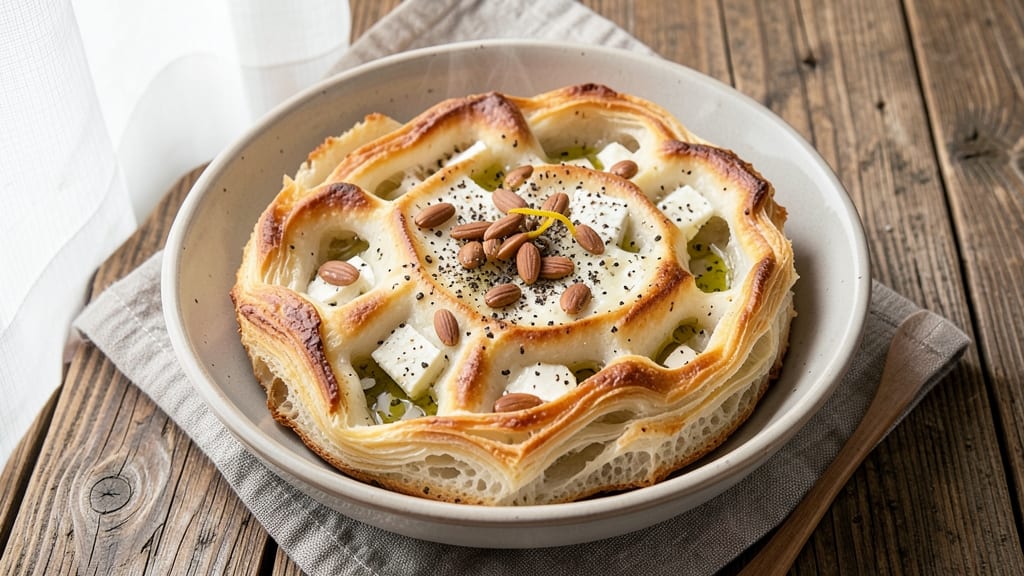
This Arabic cheese bread recipe transforms simple ingredients into a golden, za’atar-spiced crust filled with melty feta—perfect for breaking bread with family or serving alongside grilled meats. The secret lies in a no-knead dough infused with warm spices, where tender layers of cheese create that signature pull-apart texture.
I’ve perfected this version to deliver restaurant-quality results at home, using just a few pantry staples and a standard oven.
The dough starts with flour, yeast, and olive oil for a tender base, while za’atar seasoning adds earthy depth that pairs beautifully with the salty feta. The cheese is layered strategically—some melted into the dough, some baked on top—to ensure every bite delivers that gooey, tangy magic.
This method works whether you shape it into a loaf, flatbread, or even individual portions for appetizers.
What you’ll end up with is a crust that’s crisp on the outside, soft and pillowy inside, with pockets of melted feta stretching between each bite. The za’atar’s nutty aroma fills your kitchen as it bakes, creating a dish that’s as comforting as it is impressive.
It’s the kind of bread that disappears faster than you can say shukran—and leftovers reheat beautifully for days.
For extra flair, brush the baked bread with melted butter and sprinkle with sesame seeds or chopped parsley. Serve warm with hummus, labneh, or as a side to kebabs. Here’s how to make it from scratch—no experience required, just patience and a little love.
Ingredients for arabic cheese bread
Pantry staples plus a few Middle Eastern treasures for golden, cheesy magic.
| Ingredient | Amount | Notes |
|---|---|---|
| All-Purpose Flour 🌾 | 3 ½ cups | Spooning into cups for accuracy |
| Active Dry Yeast 🍞 | ¼ tsp | Or 1 packet (2.25 tsp) |
| Granulated Sugar 🍚 | 1 tbsp | Feeds the yeast |
| Extra-Virgin Olive Oil 🫒 | ½ cup | High quality, fruity |
| Warm Water 💧 | 1 cup | 110°F (43°C) ideal |
| Block Feta Cheese 🧀 | 8 oz | Salty, crumbled variety |
| Za'atar Seasoning 🌿 | 2 tbsp | Homemade or store-bought |
| Salt 🧂 | 1 ½ tsp | Kosher or sea salt |
| Melted Butter 🧈 | ¼ cup | For brushing after baking |
| Sesame Seeds 🌰 | 1 tbsp | Toasted for extra crunch |
| Fresh Parsley 🌿 | ¼ cup | Chopped, for garnish |
Za'atar is the soul of this bread. Look for the real deal—the kind with sesame seeds, sumac, and oregano—at Middle Eastern markets or the international aisle. Penzeys Spices carries a great blend if you can't find it locally. The feta matters too—skip pre-crumbled; grab a block, drain it, and crumble yourself for that perfect salty bite. If you're using store-bought za'atar, check the ingredients—some brands cut corners with fillers. The olive oil should be fruity and peppery; California Early Harvest or Colavita are solid choices. For the yeast, if your kitchen's cold, warm the water slightly to activate it faster.
No za'atar? Mix 1 tbsp sesame seeds, 1 tsp dried oregano, 1 tsp sumac, and 1/2 tsp salt as a substitute. Pre-crumbled feta? Drain it thoroughly—excess moisture makes the dough gummy. The sesame seeds can be swapped for poppy seeds if you're out, but they won't have the same nutty depth. Fresh parsley wilting? Dried parsley at 1/3 the amount works in a pinch. For the butter, if you're avoiding dairy, olive oil works beautifully—just brush it on thicker. The dough will be slightly less tender but still delicious. And if you're feeling fancy, add a pinch of smoked paprika to the dough for extra warmth.
This dough is forgiving—it can chill in the fridge for up to 24 hours if you want to prep ahead. Shape it into a loaf, flatbread, or even individual rolls for appetizers. The sesame seeds and parsley keep best in the fridge for 3 days, but the bread itself reheats like a dream—wrap it in foil and warm for 10 minutes at 350°F (175°C). For extra crispiness, bake any leftovers for 5 minutes straight from the fridge. Freeze portions for up to 3 months—thaw overnight in the fridge before reheating.
Why You'll Love This Recipe
- Foolproof Dough: I swear by this dough—just flour, yeast, sugar, olive oil, and warm water. No kneading, no fuss, and it rises while I make dinner. (Yes, even on a Tuesday night.)
- Cheesy Pull-Apart Magic: That stretchy, gooey cheese? It’s the star. The olive oil keeps it tender while the melted cheese pulls apart like a dream—no dry bites here.
- Weeknight or Party Star: Same recipe, different vibes. Toss it together for a lazy dinner or double the batch for a crowd. It’s my go-to when I need something reliable.
- Budget Bites: A loaf costs pennies but feels like a treat. The yeast and flour stretch far, and leftovers? Perfect for quick lunches or toast. (My wallet thanks me.)
Step-by-step instructions for za'atar-spiced Arabic cheese bread
This method delivers crispy crusts with melty feta centers—every bite is pure comfort.
Activate the Yeast and Mix the Dough
In a small bowl, whisk together the 1 cup warm water (about 110°F—it should feel warm but not hot to your wrist) with the 1 tablespoon granulated sugar and 0.25 teaspoon active dry yeast. Let this sit for 5-10 minutes until it becomes frothy and bubbly. This tells you your yeast is alive and ready to work.
In a large bowl, combine the 3.5 cups all-purpose flour and 1.5 teaspoons salt. Make a well in the center and pour in the yeast mixture along with the 0.5 cup extra-virgin olive oil. Using a wooden spoon or your hands, mix until a shaggy dough forms. The dough will be sticky, but that's perfect—this helps create that tender, chewy texture we're after.
Knead and Let the Dough Rise
Turn the dough out onto a lightly floured surface and knead for 8-10 minutes until smooth and elastic. You'll know it's ready when it springs back slowly when poked. If it feels too sticky, wet your hands slightly to prevent sticking. Place the dough in a lightly oiled bowl, cover with a damp towel, and let it rise in a warm place for 1-2 hours or until doubled in size.
Here's the thing—don't rush this step. The dough needs time to develop gluten and ferment properly. You'll see it puff up and collapse slightly as the yeast works its magic. When it's ready, it should feel light and airy, like a cloud you could float on.
Shape and Add the Feta
Punch down the risen dough to release air, then divide it into 4 equal portions. On a floured surface, roll each portion into a 12-inch circle, about ¼-inch thick. Using your fingers, press dimples all over the surface—this will create pockets for the feta to melt into beautifully.
Cut the 8 ounces block feta cheese into 4 equal pieces, about 2 ounces each. Place one piece of feta in the center of each dough circle. Fold the edges of the dough up and over the feta, pinching gently to seal. The feta should be completely enclosed but still visible through the dough.
Second Rise and Prep for Baking
Place the shaped dough balls on a parchment-lined baking sheet, cover with a damp towel, and let them rise again for 30-45 minutes until puffy. While they're rising, preheat your oven to 375°F. This second rise is crucial—it ensures those pockets stay open and the bread expands properly in the oven.
Once the dough has risen, brush the tops with the 0.25 cup melted butter and sprinkle evenly with the 2 tablespoons za'atar seasoning and 1 tablespoon sesame seeds. The za'atar will give you that authentic Middle Eastern flavor, while the sesame adds a delightful crunch. Save the remaining za'atar for sprinkling after baking.
Bake to Golden Perfection
Bake the bread for 25-30 minutes until the crust is deep golden brown and the internal temperature reaches 190°F. You'll know it's done when the bread sounds hollow when tapped on the bottom. The feta should be completely melted and gooey inside.
Remove from the oven and immediately sprinkle with the remaining 2 tablespoons za'atar seasoning and the 0.25 cup chopped fresh parsley. Let the bread cool for 5 minutes before serving—this gives the feta time to set slightly and makes it easier to slice. Serve warm with extra za'atar on the side for dipping.
Pro Tips For Making Arabic Cheese Bread
- Warm the Water Right: Fill your measuring cup with water straight from the tap, then microwave it for 30 seconds—just until it’s warm to the touch (around 110°F/43°C). Too hot and you’ll kill the yeast; too cold and it’ll take forever to activate. I learned this the hard way after watching my first dough rise like a sad pancake.
- Knead Until Silky: Stop when the dough springs back slowly after pressing it (about 8–10 minutes by hand). Over-kneading makes Arabic cheese bread tough—it’s supposed to be tender, not chewy. If it’s sticky but holds shape, you’re golden.
- Skip the Overproofing: Let the dough rise until it’s puffy but still has a slight dip in the center (about 1–1.5 hours). If you wait until it doubles, the cheese will ooze out during baking, leaving you with a greasy mess instead of a crispy crust.
- Brush with Olive Oil Twice: Coat the baked bread with extra-virgin olive oil before adding cheese, then again right after baking. The first layer locks in moisture; the second gives that signature glossy finish. (Yes, even if you’re impatient like me—just do it.)
Dietary considerations for these flavors
Gluten-Free Adaptation
For a gluten-free version, swap the all-purpose flour for a 1:1 gluten-free flour blend like Bob’s Red Mill or King Arthur Measure for Measure. Add 1 teaspoon xanthan gum to help bind the dough—this is crucial for that pull-apart texture.
Reduce the water slightly to ¾ cup since gluten-free flours absorb less moisture. Let the dough rest for 10 extra minutes after mixing to hydrate fully. The feta and za’atar remain the same, but expect a denser crust. 🌾
Dairy-Free Options
Skip the feta and use vegan feta like Violife or Follow Your Heart—they melt beautifully when baked. For extra richness, fold ¼ cup nutritional yeast into the dough to mimic the umami depth of traditional feta.
Brush the baked bread with olive oil instead of butter, and add a sprinkle of dairy-free parmesan for a cheesy finish. The flavor stays vibrant, just without the lactose. 🧈
Lower-Carb Version
Replace half the flour with almond flour (about 1.75 cups) for a lower-carb twist. The dough will be drier, so add 2 tablespoons extra olive oil to keep it pliable. Use reduced-fat feta (or full-fat if you prefer) to cut calories without sacrificing flavor.
Bake at 350°F for 20-25 minutes—the almond flour browns faster. Top with extra za’atar to compensate for the lighter texture. 🥑
Vegan Cheese Substitutes
For a fully plant-based bread, try cashew cheese—blend 1 cup soaked cashews, 2 tablespoons lemon juice, and 1 tablespoon nutritional yeast until smooth. Spread this mixture over the dough before the second rise.
Alternatively, use store-bought vegan mozzarella shreds like Miyoko’s—they melt into gooey pockets. The dough’s olive oil richness helps mimic dairy’s fat content. 🌱
Allergen-Friendly Tips
Check your za’atar for sesame if avoiding nuts/seeds—some blends include it. For nut-free kitchens, use poppy seeds instead. If sensitive to yeast, try a sourdough starter (replace yeast with ½ cup active starter) for a slower fermentation.
Always label your bread clearly if sharing—this bread’s magic lies in its bold flavors, not hidden allergens. ✨
Nutrition facts
Frequently asked questions
Can I make this bread without za'atar?
If you don't have za'atar, mix 1 tbsp sesame seeds, 1 tsp dried oregano, 1 tsp sumac, and ½ tsp salt as a substitute. The bread will still taste amazing—just with a slightly different flavor profile. For extra warmth, add a pinch of smoked paprika to the dough.
How do I prevent the feta from leaking out while baking?
Press the dough edges firmly around the feta when shaping, creating a tight seal. For extra security, place the dough balls seam-side down on the baking sheet. If you notice feta starting to ooze during baking, cover loosely with foil for the last 10 minutes to slow the melting.
What's the best way to reheat leftovers?
Wrap slices in foil and warm at 350°F (175°C) for 5-7 minutes to restore crispiness. For extra crunch, bake straight from the fridge for 5 minutes at 375°F (190°C). Avoid microwaving—it makes the crust soggy. Leftovers keep well for 3 days in an airtight container.
Can I make individual portions instead of one large loaf?
Yes! Divide the dough into 8-10 smaller balls (about 1.5 oz each) and shape them into flat rounds. Place a small piece of feta in each, fold the edges, and bake as directed. These make perfect appetizers—serve with hummus or labneh for dipping.
Why did my bread turn out dense instead of fluffy?
Most likely, the yeast didn't activate properly or the dough didn't rise long enough. Make sure your water is 110°F (43°C) and the yeast is fresh. Let the dough rise until doubled in size—this takes 1-2 hours. Also, avoid over-kneading, which can make the bread tough. For extra fluffiness, let the shaped bread rise for 45 minutes before baking.