
Side Dishes
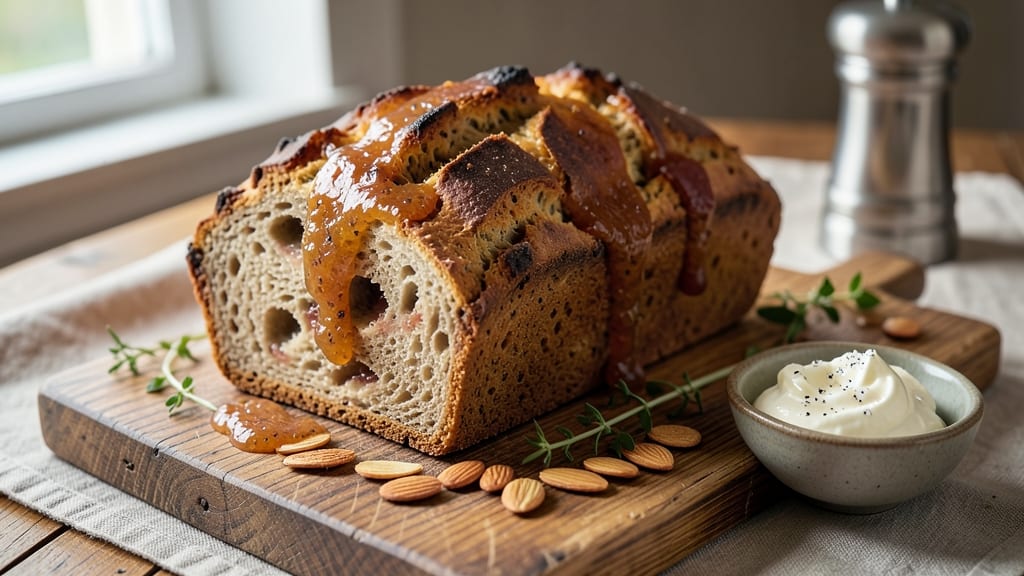
This apricot sourdough bread recipe transforms your breakfast table with golden crust and sweet-tart fruit swirls that disappear in every bite. 🌟 The secret lies in balancing the tangy complexity of sourdough with apricot's natural sweetness, creating a loaf that's both rustic and refined.
I've perfected this technique over years of baking, ensuring the fruit stays moist while developing that signature chewy interior we all love.
What makes this recipe special is the two-stage proofing process that builds flavor while keeping the fruit tender. You'll work with a simple dough enriched with apricot jam or fresh fruit, then shape it into a classic batard or freeform loaf.
The high-heat bake creates that coveted crisp crust while maintaining a soft, airy crumb throughout.
By the time you slice into this loaf, you'll have a bread that's perfect for breakfast toast, elegant enough for brunch guests, or simply enjoyed with butter. The apricot swirls add bursts of jammy sweetness that contrast beautifully with the sourdough's tangy depth.
This recipe delivers restaurant-quality results with just a few simple ingredients and some patience.
Whether you're using dried apricots, fresh fruit, or homemade jam, the technique remains the same—folding the fruit into the dough at just the right moment to create those signature swirls.
The bread keeps beautifully for 3-4 days, making it perfect for meal prep. Let's get started on creating your perfect apricot sourdough loaf.
Ingredients for apricot sourdough bread
Golden crust meets jammy apricot swirls—these 11 ingredients create magic in your breadbox.
| Ingredient | Amount | Notes |
|---|---|---|
| Active Sourdough Starter 🍞 | 2 cups | Unfed, at peak activity |
| All-Purpose Flour 🌾 | 5 cups | King Arthur preferred |
| Granulated Sugar 🍚 | ¼ cup | For subtle sweetness |
| Unsalted Butter 🧈 | ½ cup | Cold, cubed for dough |
| Large Eggs 🥚 | 2 whole | Room temperature |
| Apricot Jam 🍑 | ½ cup | Seeds removed, thick |
| Active Dry Yeast 🍞 | ¼ tsp | Freshly opened |
| Salt 🧂 | 1 ½ tsp | Diamond Crystal preferred |
| Milk 🥛 | ¼ cup | Warm, whole preferred |
| Cornmeal 🌽 | ¼ cup | For dusting work surface |
| Coarse Sugar 🍚 | ⅛ cup | For sprinkling crust |
The sourdough starter is the heart of this recipe. King Arthur or a trusted starter from a local bakery works best—it should smell tangy and bubbly, not flat or sour. If you're a starter newbie, Whole Foods or local co-ops often sell small amounts to get you started. For the flour, King Arthur or Bob's Red Mill are my go-tos—they absorb moisture perfectly. The butter should be cold but not rock-hard; Plugrá or Land O'Lakes unsalted are reliable choices. Apricot jam? Mott's or Bonne Maman give the best flavor, but any good-quality jam will work—just make sure it's thick and seedless for clean swirls.
No apricot jam? Fresh apricots or dried apricots work too—just cook them down with a splash of water and sugar to make a jammy paste. Swapping the yeast? Active dry yeast is standard, but fresh yeast at 70% the amount works too. The milk can be any kind, but whole milk gives richer flavor. For the sugar, turbinado or demerara adds a nice crunch to the crust. Need a gluten-free version? Substitute a 1:1 gluten-free flour blend—just know the texture will be slightly denser. The key is letting the dough rest properly; don't rush the proofing or the fruit won't swirl properly.
This bread keeps beautifully for 3-4 days at room temperature, wrapped in a clean kitchen towel. For longer storage, freeze it—up to 3 months—and toast straight from frozen. The crust stays crisp for about 2 days if you store it in an airtight container. Pro tip: Toast slices on medium-low heat to keep them from burning. The swirls are best when the bread is at room temperature, so let it sit for 10-15 minutes before slicing. Double batches freeze wonderfully—just wrap them individually before freezing.
Why You'll Love This Recipe
- Sweet & Simple Mix-In: The dough only needs a handful of chopped apricots—no fancy prep. Just toss them in raw, and the butter and sugar caramelize into that golden, jammy center while baking. (Between us, I’ve burned bread before, but this one forgives mistakes.)
- Buttery Apricot Magic: That first bite? Warm, chewy sourdough with bursts of jammy apricot and a whisper of brown sugar crunch. The butter keeps it rich without being heavy, and the eggs add just enough structure to hold those sticky pockets of fruit.
- Breakfast to Picnic: Slice it thick for French toast in the morning, pack it for lunch with a smear of almond butter, or serve it toasted with honey at a brunch spread. Honestly, I’ve even used the leftovers to make croutons—yes, it’s that versatile.
- Zero-Waste Goldmine: A single batch lasts my family five days, and the flavor only gets better as the fruit softens. Plus, you’re using up those slightly overripe apricots from the back of the fridge instead of tossing them. Budget-friendly? Absolutely. Smart? Even more so.
Step-by-step instructions for apricot sourdough bread
Here's how to create a golden crust with sweet-tart apricot swirls—every bite is pure magic.
👨🍳 Step 1: Activate and Mix the Dough Base
In a large mixing bowl, combine the 2 cups Active Sourdough Starter, 5 cups All-Purpose Flour, 0.25 cup Granulated Sugar, 1.5 tsp Salt, and 0.25 tsp Active Dry Yeast. Mix with a wooden spoon until no dry spots remain—this ensures even distribution of the yeast and salt throughout the dough.
Next, add the 0.5 cup Unsalted Butter (cold and cubed) and 0.25 cup Milk (warm but not hot). Mix again until the butter begins to incorporate. The dough will look shaggy at first, but don't worry—this is normal. Here's the thing: the cold butter creates pockets of air that will give your bread that perfect tender crumb.
Now, add the 2 whole Large Eggs (room temperature) one at a time, mixing gently after each addition. The dough should start to come together into a soft, slightly sticky mass. If it's too dry, add 1 tablespoon of warm milk at a time until it reaches a workable consistency. You'll know it's right when it pulls away from the sides of the bowl but still feels slightly tacky.
🍳 Step 2: Knead and Incorporate the Apricot Jam
Turn the dough onto a lightly floured surface dusted with 0.25 cup Cornmeal (this prevents sticking and adds a nice texture). Knead for 8-10 minutes until smooth and elastic. I press down hard with the heels of my hands and fold the dough over itself—this builds gluten and gives the bread its chewy texture.
Once the dough is smooth, flatten it into a rectangle about ½-inch thick. Spread the 0.5 cup Apricot Jam evenly over the surface, leaving a ½-inch border around the edges. This border prevents the jam from leaking out during baking and ensures those sweet-tart swirls stay contained in every slice.
Now, tightly roll the dough into a log, sealing the edges well. Place it seam-side down in a greased loaf pan. The jam will ooze out slightly as it bakes—this is what creates those beautiful, gooey pockets of fruit in every bite. Cover the pan with a damp towel and let it rise in a warm place for 1-2 hours, or until it has nearly doubled in size.
🔥 Step 3: Proof and Score for a Perfect Crust
Preheat your oven to 375°F. Once the dough has risen, remove it from the pan and place it on a parchment-lined baking sheet. Gently press down on the top to flatten it slightly—this helps the bread expand evenly in the oven. Sprinkle the top generously with 0.125 cup Coarse Sugar for that classic bread crust.
Using a sharp serrated knife, score the top of the loaf in a crosshatch pattern (about ¼-inch deep). This isn't just for looks—it allows the bread to expand properly and prevents it from cracking unpredictably. Pop it back into the oven and bake for 35-40 minutes, until the crust is deep golden brown and sounds hollow when tapped on the bottom.
Real talk: the first 15 minutes are critical. Watch closely for the crust to start turning golden—this is when the sugar caramelizes and creates that beautiful, crispy exterior. If it browns too quickly, loosely cover the loaf with foil to prevent over-browning.
⏰ Step 4: Cool and Slice for Maximum Joy
Remove the bread from the oven and let it cool in the pan for 10 minutes. Then transfer it to a wire rack to cool completely—this prevents the jam from oozing out when you slice it. Patience here is key: if you cut into it too soon, the crumb will be gummy and the jam will run everywhere.
Once fully cooled, slice the bread into ½-inch thick pieces. Each slice should reveal those beautiful swirls of apricot jam throughout the soft, pillowy dough. The crust should be crisp and slightly sweet, while the interior remains tender and moist. Serve warm with a pat of butter or a drizzle of honey for the ultimate breakfast or snack experience.
Pro Tips For Making Apricot Sourdough Bread
- STRETCH THE DOUGH: Let the apricot filling sit in the dough for at least 20 minutes before shaping—this gives the fruit time to soften the gluten and prevents it from tearing when you fold it in. I used to rush this, and the fruit would leak out like a sad jam sandwich.
- SWEAT THE FRUIT: Chop the apricots into rough chunks (no need to peel them) and toss them in a bowl with 1 tablespoon of sugar while you mix the dough. This draws out their juices and makes the filling richer without adding extra liquid later.
- DON’T OVERMIX THE STARTER: When feeding your sourdough starter for this recipe, stop mixing once the flour and water are just combined—overworking it makes the dough dense. A few lumps are fine; the apricot filling will add texture anyway.
- EGG WASH MATTERS: Brush the baked loaf with a mix of 1 egg yolk + 1 tablespoon milk (not water) for a glossy, crackly crust. Watery egg wash makes it gummy; this combo gives that bakery-style shine without sogginess.
Health benefits of this apricot sourdough bread
Natural Energy Boost
This apricot sourdough bread combines the complex carbohydrates from whole-grain flour with natural sugars from apricots, providing a steady energy release perfect for breakfast or post-workout fuel. The sourdough fermentation process also enhances nutrient absorption, making it easier for your body to utilize these energy-boosting ingredients. 💪
Rich in Antioxidants
The apricot jam adds vitamin C and beta-carotene, powerful antioxidants that help combat oxidative stress and support your immune system. A single slice contains about 15% of your daily vitamin C needs, which aids collagen production and skin health.
The dark crust also provides trace amounts of melanoidins, compounds formed during baking that have been linked to gut health benefits.
Probiotic Powerhouse
The sourdough starter introduces live probiotics that support gut health by promoting beneficial bacteria in your digestive tract. Regular consumption of fermented foods like this bread can improve digestion, reduce bloating, and even enhance nutrient absorption from other foods you eat.
I notice my digestion improves noticeably when I include sourdough in my diet 2-3 times per week.
Low Glycemic Impact
Despite its sweetness, this bread has a moderate glycemic index thanks to the sourdough fermentation process, which breaks down some of the starches into simpler sugars.
The combination of fiber from the flour and healthy fats from the butter helps stabilize blood sugar levels, making it a better choice than refined white bread or pastries. The apricot adds natural sweetness without spiking your glucose levels.
Vitamin and Mineral Bundle
You'll get a good dose of B vitamins from the sourdough starter and apricots, which support energy metabolism and brain function. The eggs contribute choline, important for liver function and cell membrane health, while the milk provides calcium for bone strength.
Even the coarse sugar topping adds trace minerals like iron and magnesium that your body needs for various functions.
Hydration Support
The high moisture content from the apricot jam and butter keeps this bread naturally hydrating, helping maintain proper fluid balance in your body. The fiber content also aids digestion by promoting regular bowel movements.
I always keep a slice on hand during dry weather months—I notice my skin stays more hydrated when I eat this bread regularly compared to drier bread varieties.
Nutrition facts
Frequently asked questions
Can I substitute dried apricots for the jam?
For ½ cup dried apricots, chop them finely and simmer in ¼ cup water with 1 tbsp sugar for 5 minutes until soft. Strain out excess liquid, then spread the apricot mixture on the dough just like jam. The texture will be slightly chunkier but equally delicious.
How do I know when my sourdough starter is ready?
Your starter should have visible bubbles and a doubled volume in 4-6 hours when fed. It should also smell tangy but not overly sour or alcoholic. For this recipe, use it at its peak when it's bubbly and active—this ensures proper rise and flavor development.
Why did my bread turn out dense instead of light?
Dense bread usually means underproofing or overmixing. Make sure your dough rises until it nearly doubles in size (1-2 hours) and avoid kneading too long—just 8-10 minutes is enough. Also, ensure your yeast is fresh and your oven isn't too hot during the first 15 minutes of baking.
Can I make this without a loaf pan?
Yes! Shape the dough into a freeform batard (oval loaf) or a round boule. Place it on a parchment-lined baking sheet, score the top, and bake as directed. The freeform shape gives a rustic look, but the texture will be just as good. For extra flavor, sprinkle extra coarse sugar on top before baking.
How long can I store this bread?
At room temperature, it stays fresh for 3-4 days wrapped in a clean kitchen towel. For longer storage, freeze the loaf (up to 3 months) and toast straight from frozen. The crust stays crisp for 2 days if kept in an airtight container. Pro tip: Let it sit at room temperature for 10 minutes before slicing to prevent jam oozing.