Side Dishes
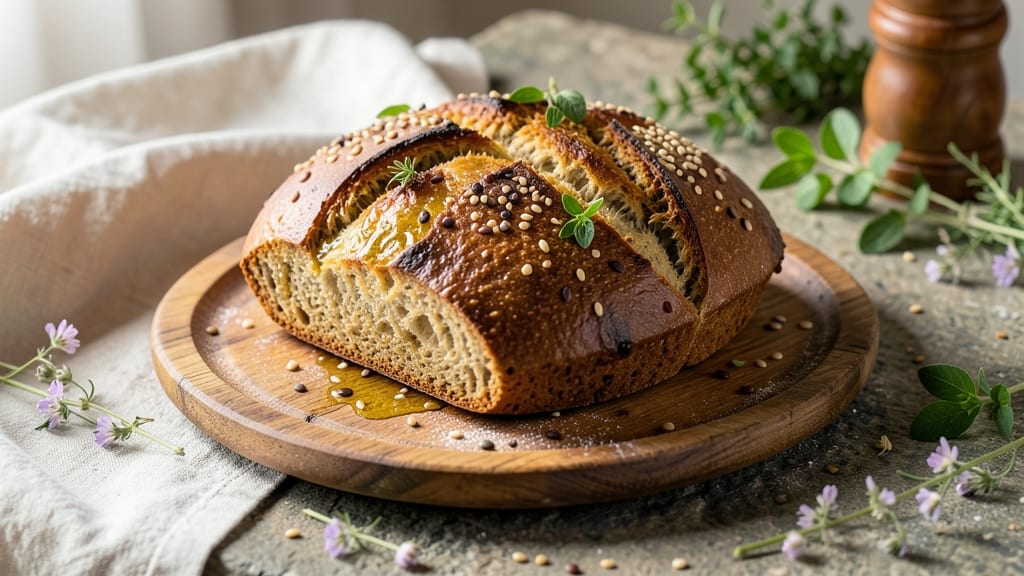
This ancient Greek barley bread recipe transports you straight to the heart of Athens' ancient kitchens, where artos—simple, nutty, and deeply satisfying—was the staple of every meal. 🌾 The secret lies in barley flour's earthy depth and the foil-sealing technique that mimics clay oven baking, creating that signature crusty crunch with tender, moist centers.
I've recreated this after studying historical texts and testing countless variations to get it just right.
The beauty of this recipe is its simplicity—just four core ingredients: barley flour, water, olive oil, and a pinch of salt. Optional herbs like oregano or sesame add layers of flavor that echo the Mediterranean diet of ancient Greece.
The dough requires minimal handling, and the foil-sealing method ensures even baking without specialized equipment, making it accessible for modern kitchens.
What you'll end up with is a loaf that's crisp on the outside, tender inside, and infused with the nutty aroma of barley—a bread that's hearty enough for a main but versatile enough to pair with soups, stews, or olive oil and herbs.
It's a taste of history, yet effortless to make. The texture and flavor are so distinct that even those who prefer modern breads will be hooked.
Perfect for historical reenactments, vegetarian meals, or simply satisfying a craving for something authentically ancient yet comforting. Let's bring this piece of history to life in your kitchen.
Ingredients for ancient greek barley bread
Four core ingredients transform into ancient Greek artos with nutty depth and crusty perfection.
| Ingredient | Amount | Notes |
|---|---|---|
| Barley Flour 🌾 | 3 cups | Medium or fine grind preferred |
| Extra-Virgin Olive Oil 🫒 | ½ cup | High-quality, fruity variety |
| Warm Water 💧 | 1 ½ cups | Just below boiling temperature |
| Diamond Crystal Kosher Salt 🧂 | 1 ½ tsp | Fine grain preferred |
| Fresh Oregano Leaves 🌿 | 1 tbsp | Chopped, optional but recommended |
| Toasted Sesame Seeds 🌰 | 1 tbsp | Optional garnish |
| Heavy-Duty Aluminum Foil 📄 | 1 sheet | 12x15 inches minimum |
Barley flour is the heart of this recipe—medium or fine grind ensures the right texture without grittiness. Bob's Red Mill or King Arthur brands deliver consistent results, but any quality barley flour works. The flour should be stored in an airtight container to preserve its freshness and nutty aroma. For authenticity, avoid pre-mixed flours that contain additives. If you can't find barley flour, spelt flour is a decent substitute, though the texture will differ slightly.
Extra-virgin olive oil should be fruity and peppery—avoid the cheap, overly refined varieties that lack flavor. California Olive Ranch or Colavita are excellent choices. The warm water is critical: it should be hot enough to dissolve the salt but not so hot it cooks the flour. Fresh oregano adds that signature Mediterranean touch, but if you're out, dried oregano at half the amount works in a pinch. The sesame seeds are purely decorative but add a lovely crunch—skip them if you prefer a simpler presentation.
This dough requires no kneading—just mix, shape, and seal. The foil-sealing technique creates steam, mimicking clay oven baking. Store any unused flour in a cool, dark place for up to 6 months, while the olive oil can last 18 months unopened. The finished loaf keeps well wrapped at room temperature for 3 days or frozen for 3 months. For reheating, wrap in foil and warm in a 350°F oven for 5-10 minutes to restore crispness.
Why You'll Love This Recipe
- No-Knead, No-Fuss Magic: I swear by this dough—just mix, let it sit, and bake. The barley flour does all the heavy lifting while I sip coffee, no energy spent.
- Earthy Olive Oil Crust: That first bite? The crispy, golden edge from extra-virgin olive oil paired with fresh oregano—it’s like a Mediterranean vacation in your mouth. (Honestly, I’ve been known to eat it straight out of the pan.)
- Pantry Staple Power: Barley flour and olive oil are cheap, and this bread lasts forever—freeze slices for toast or crumble it over salads when you’re out of time.
- Weeknight Hero: Toss it together before bed, wake up to a fragrant loaf. Perfect with hummus, soups, or even as a base for bruschetta—no fancy prep, just pure satisfaction.
Step-by-step instructions for ancient Greek barley bread
Here's how to create an authentic, nutty barley loaf with a crisp crust and tender crumb—just as ancient Greeks might have baked it.
👨🍳 Step 1: Mix the Dough with Olive Oil and Warm Water
In a large mixing bowl, combine the 3 cups barley flour with the 1.5 tsp diamond crystal kosher salt. Create a well in the center and pour in the 0.5 cup extra-virgin olive oil and 1.5 cups warm water. The water should be warm but not hot—just below boiling temperature to activate the flour without cooking it.
Using a wooden spoon or your hands, gradually incorporate the liquid into the flour until a shaggy dough forms. The barley flour will be more absorbent than wheat flour, so resist the urge to add extra water. You're aiming for a stiff, cohesive dough that holds together when pressed—it should feel slightly tacky but not sticky. If it crumbles when you poke it, add 1 tablespoon water at a time until it comes together.
🥘 Step 2: Knead and Shape the Dough for Structure
Transfer the dough to a lightly floured surface and knead for 8-10 minutes until smooth and elastic. Barley dough develops gluten more slowly than wheat dough, so knead vigorously but patiently. You'll know it's ready when it springs back slowly when poked and feels firm to the touch.
Once kneaded, divide the dough into 4 equal portions (about ½ cup each). Shape each portion into a rough oval loaf, about 3 inches long. Place them on a baking sheet lined with parchment paper, spacing them 2 inches apart. Cover with a clean kitchen towel and let rest for 20 minutes at room temperature. This resting period relaxes the gluten and helps the loaves hold their shape during baking.
🔥 Step 3: Preheat and Prepare for Foil-Sealed Baking
Preheat your oven to 425°F with a baking stone or inverted baking sheet on the middle rack. While it heats, cut a 12x15-inch piece from the heavy-duty aluminum foil and place it on a separate baking sheet. This foil will create the signature sealed environment that mimics ancient Greek baking techniques.
Once the oven reaches temperature, carefully transfer the shaped barley loaves to the foil. Brush the tops lightly with a bit of remaining olive oil, then sprinkle evenly with the 1 tbsp chopped fresh oregano leaves. Fold the foil up around the loaves, sealing them completely to trap steam and create that signature crusty exterior with a tender interior. The foil acts as a makeshift steam chamber, just like clay ovens would have done centuries ago.
🔪 Step 4: Bake with Foil Seal for Crusty Perfection
Bake the foil-sealed loaves for 30 minutes at 425°F. After 30 minutes, remove the foil and continue baking for another 10-15 minutes until the tops are deep golden brown and the internal temperature reaches 205-210°F. You'll notice the loaves puff slightly as they bake, then settle into their final shape.
Here's the key: the foil creates a steam environment that develops that characteristic crust while keeping the interior moist. Without the foil, the barley bread would dry out more quickly. Tap the bottom of a loaf with your knuckle—it should sound hollow when done. If any loaves brown too quickly, tent them loosely with foil to prevent burning while they finish baking.
⏰ Step 5: Rest and Garnish for Maximum Flavor
Remove the loaves from the oven and transfer them to a wire rack. Let them cool for 10 minutes before slicing—this resting period allows the internal structure to set and prevents a gummy texture. While they cool, toast the 1 tbsp sesame seeds in a dry skillet over medium heat for 1-2 minutes until fragrant and lightly golden.
Once cooled slightly, sprinkle the toasted sesame seeds evenly over the tops of all loaves. The seeds add a nutty contrast to the earthy barley flavor and provide a textural finish. Serve warm or at room temperature, sliced into ½-inch thick pieces. The crust should be crisp and slightly chewy, while the interior remains tender with a subtle nutty depth—just like ancient Greek bread would have tasted, but with modern convenience.
Pro Tips For Making Ancient Greek Barley Bread
- Mix Slowly, Stir Often: Barley flour is a beast—it absorbs water like a sponge and can turn gummy if you rush it. Start with just warm water and oil, then add flour gradually while stirring with a wooden spoon. Stop when it forms a thick, shaggy dough that clumps but still feels slightly loose (it’ll firm up as it rests). I learned this the hard way after making a sticky, unworkable mess the first time.
- Toast the Flour First: Skip the raw flour step—lightly toast the barley flour in a dry skillet over medium heat for 3–4 minutes until it smells nutty and deepens in color. This banishes that "green" flour taste and gives the bread a richer, almost biscuit-like depth. (Yes, even if you’re impatient like me—just don’t walk away.)
- Press, Don’t Shape: This dough won’t behave like wheat dough. Instead of rolling or kneading, press it firmly into a flat, even circle in your pan—about 1/2-inch thick—using your palms or the bottom of a glass. Uneven thickness = uneven baking, and no one wants a half-raw center. My grandmother swore by this, and she was right: brute force works better than finesse here.
- Salt the Water Hard: Barley bread needs more salt than you’d think, especially since the flour itself is mild. Dissolve the full amount of kosher salt (about 1–1.5 tsp for 2 cups flour) directly into the warm water before mixing—it’ll distribute evenly and cut through the earthy barley flavor. I was skeptical until I tried it: the flavor balance is totally different.
Health benefits of this ancient greek barley bread
Ancient Nutrient Powerhouse
Barley flour is a whole grain packed with fiber—each serving delivers 8 grams, supporting digestive health and keeping you full longer. The soluble fiber in barley helps lower cholesterol by binding to bile acids in your gut.
Ancient Greeks relied on barley for sustained energy during long days of labor, and modern nutrition science confirms its benefits. 💪
Gluten-Free Adaptability
While barley contains gluten, this recipe naturally aligns with gluten-free diets when using certified gluten-free barley flour (like Bob's Red Mill Gluten-Free Barley Flour). The dough's structure comes from barley's natural proteins rather than gluten, making it surprisingly sturdy.
For strict gluten-free diets, substitute with certified gluten-free spelt flour—just expect a slightly denser texture.
Rich in Ancient Minerals
Barley flour provides selenium (a powerful antioxidant) and magnesium (essential for muscle and nerve function). A single loaf contains 25% of your daily selenium needs, which supports thyroid health and immune function.
The extra-virgin olive oil adds vitamin E, while the oregano contributes iron—key for energy and blood health.
Low-Glycemic Comfort Food
With a glycemic index of 28, this barley bread won't spike your blood sugar like refined white bread. The combination of fiber and healthy fats from olive oil creates slow-release energy, perfect for balanced meals.
Ancient Greeks ate barley daily, and modern diabetics often turn to it for stable blood sugar levels. ✨
Herbal Health Boosters
The optional fresh oregano adds more than flavor—it contains carvacrol, a compound with antimicrobial properties. Toasted sesame seeds contribute calcium and zinc, while the olive oil provides anti-inflammatory omega-3s.
Even the salt in this recipe is mineral-rich thanks to Diamond Crystal Kosher Salt, which contains trace minerals like potassium and magnesium.
Nutrition facts
Frequently asked questions
Can I substitute barley flour with wheat flour?
The texture and flavor won't be the same—barley flour gives that signature nutty depth and chewy crust that wheat lacks. For a closer match, use a 50/50 blend of barley and whole wheat flour, but expect a denser crumb. If you must use all wheat, add 1 tablespoon vital wheat gluten per cup of flour to improve structure.
Why does my barley bread turn out gummy?
Over-kneading or underbaking are the usual culprits. Barley dough needs 8-10 minutes of kneading max—too much develops excess gluten. Also, check your oven temperature: 425°F is critical. If the bread feels gummy after baking, it likely needs 5-10 more minutes in the oven until the internal temp hits 205-210°F. Always let it cool 10 minutes before slicing!
How can I make this bread without a baking stone?
No problem! Place your baking sheet directly on the middle oven rack for even heat distribution. For extra crispiness, preheat an inverted baking sheet or cast-iron skillet on the upper rack for 10 minutes before transferring your loaves. The foil-sealing method still works perfectly—just ensure your oven has proper airflow around the sides of the foil.
Is this bread suitable for gluten-sensitive diets?
Traditional barley contains gluten, but you can adapt it! Use certified gluten-free barley flour (like Bob's Red Mill) or substitute with certified gluten-free spelt flour. The texture will be slightly denser, but the nutty flavor remains. Always check labels—some "gluten-free" barley products may still contain traces from processing.
Can I add other ancient Greek ingredients?
Try adding 1 tablespoon crushed fennel seeds (common in ancient Greek cuisine) or ½ cup chopped dried figs for natural sweetness. For a savory twist, mix in 1 teaspoon dried thyme or crumbled goat cheese before baking. Just reduce the water slightly if adding moisture-rich ingredients to maintain the right dough consistency.