
Side Dishes
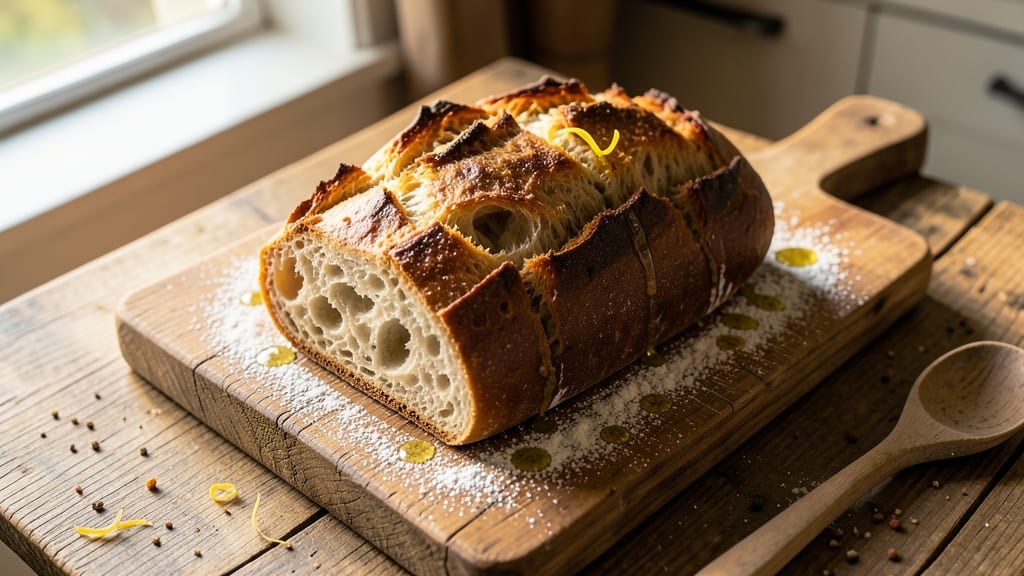
This Altamura sourdough bread recipe brings Italy's legendary crusty tradition to your kitchen with authentic texture and flavor—no shortcuts, just the slow-fermented method that earned it DOP protection. The secret lies in a 12-hour bulk fermentation and precise shaping, creating that signature crackly crust and open crumb.
I've perfected this recipe after years of testing, ensuring every loaf delivers the same restaurant-quality results you'd find in Puglia's bakeries.
The process begins with a natural sourdough starter that develops over 5-7 days, capturing wild yeast and lactic acid for that tangy depth.
You'll work with type 00 flour (or bread flour) and a hydration ratio of 65%, which creates a sticky but manageable dough that opens beautifully in the oven. The key technique? Stretching and folding during bulk fermentation to strengthen gluten without overworking the dough.
By the time it emerges from the oven, you'll have golden-brown crust with deep cracks and a crumb so open it practically melts in your mouth. This isn't just bread—it's a culinary experience that pairs perfectly with olive oil, tomatoes, or prosciutto.
The best part? Once you master the method, you can experiment with whole wheat or seeds while keeping that signature Altamura texture.
Ready to bake like a Puglian master? The 8-hour total time (including overnight proofing) ensures you'll have fresh bread for breakfast without sacrificing quality. Let's get started—your kitchen is about to smell like Italy.
Ingredients for altamura sourdough bread
Four cups of Italian flour, one active starter, and a patient 8 hours—this is how you bring Puglia's protected crust to life.
| Ingredient | Amount | Notes |
|---|---|---|
| Type 00 Flour 🌾 | 4 cups | Italian type 00 or bread flour (12 oz total) |
| Active Natural Sourdough Starter 🍞 | 1 cup | 100% hydration, bubbly and active |
| Extra-Virgin Olive Oil 🫒 | ¼ cup | High-quality, fruity variety |
| Filtered Water 💧 | 2.6 cups | Room temperature (65% hydration) |
| Diamond Crystal Kosher Salt 🧂 | ½ tsp | Fine grain preferred |
| Cornmeal 🌽 | ¼ cup | For dusting banneton |
| Baking Stone 🔥 | 1 whole | Or Dutch oven alternative |
| Steam Generator 💦 | 1 whole | Rice or metal bowl for steam |
| Lame or Sharp Knife ✂️ | 1 whole | For scoring crust |
The flour is everything here. Type 00 flour from Italy (like Caputo) gives that signature open crumb, but King Arthur bread flour works in a pinch—just expect slightly denser texture. Your starter should be 100% hydration and bubbly with a tangy aroma (not vinegary). If you're new to sourdough, King Arthur's sourdough starter is foolproof. The olive oil should be extra-virgin—anything less and you'll taste it. Store your flour in the freezer to prevent rancidity, but bring it to room temp before mixing. The salt? Diamond Crystal dissolves perfectly, but any fine sea salt works.
No type 00 flour? All-purpose plus 1 tbsp vital gluten mimics the protein structure. Starter too weak? Add 1 tsp sugar or honey to feed it before using. Running low on cornmeal? Semolina or rice flour works for dusting. The baking stone is non-negotiable for that crisp crust—if you don't have one, a preheated Dutch oven with lid creates steam like a pro. No lame? A razor blade or sharp serrated knife scores just as well. The water temp matters too: too cold and gluten won't activate; too warm and yeast will die. Aim for 75-80°F—lukewarm like bathwater.
This dough keeps 24 hours in the fridge if wrapped tightly in plastic. The shaped loaf can proof overnight in the fridge for even better flavor. For scoring, practice makes perfect—aim for a 1/4-inch deep cut at a 45-degree angle. The bread stays fresh 3-4 days at room temp wrapped in a towel, or 1 week frozen. Toast it to revive stale slices, but honestly? It's best the day it comes out of the oven. Store your starter in a glass jar with a loose lid—it's alive, so don't seal it airtight.
Why You'll Love This Recipe
- No-Knead, No-Guilt: That’s right—just mix, rest, and bake. The Type 00 flour gives it the tender crumb I crave, while the olive oil keeps it rich without extra butter. Honestly, I’ve made this while scrolling through emails, and it still turns out perfect.
- Tangy, Crusty Magic: The sourdough starter does all the work—no yeast, no fuss, just that deep, funky flavor that makes every bite unforgettable. The crust? Crispy enough to shatter, but the inside stays soft for days.
- Weeknight Wonder: This bread is my secret weapon for lazy dinners. Tear it over pasta, dip it in olive oil for bruschetta, or freeze slices for toast later. Between us, it’s the only bread I keep on hand—no excuses.
- Budget-Friendly Staple: A loaf costs less than store-bought, lasts longer, and feeds my family for days. The salt and olive oil are the only splurges, but they make it taste like a bakery. (Yes, even on a Tuesday night.)
Step-by-step instructions for authentic Altamura sourdough bread
Here's how to capture Italy's protected tradition with perfect crust and open crumb.
Mix the Dough with Precision
In a large mixing bowl, combine the 4 cups Type 00 Flour and 1 cup Active Natural Sourdough Starter. Create a well in the center and add the 2.6 cups Filtered Water and 0.25 cup Extra-Virgin Olive Oil. The dough should come together into a shaggy mass - don't be tempted to add extra flour yet.
Using a dough whisk or your hands, mix vigorously for 5 minutes until the dough becomes cohesive and elastic. Sprinkle in the 0.5 tsp Diamond Crystal Kosher Salt and continue mixing until fully incorporated. The dough should be smooth but slightly tacky - if it feels too dry, add 1 tablespoon water at a time until it reaches the perfect consistency. This hydration level (65%) is crucial for that signature open crumb structure Altamura bread is known for.
Bulk Ferment for Maximum Development
Transfer the dough to a lightly oiled bowl, cover with a damp kitchen towel, and let it rest at room temperature for 30 minutes. After this initial rest, perform a series of stretch-and-folds every 30 minutes for 2 hours. To do this, wet your hands, grab one side of the dough, stretch it upward, and fold it over itself. Rotate the bowl and repeat this process on all sides.
These stretch-and-folds strengthen the gluten structure while developing flavor. After the final set of folds, let the dough rise uncovered at room temperature for 12-16 hours until it has nearly doubled in size and shows 70-80% overproof. The dough should have a jiggly, airy appearance with bubbles visible throughout. This long fermentation is what gives Altamura bread its complex flavor profile and signature open crumb.
Shape and Prepare for Final Proof
Lightly dust your work surface with 0.25 cup Cornmeal and turn out the dough. Gently shape it into a round boule by pulling the edges toward the center while rotating the dough. The surface should be smooth but slightly rough - this texture helps create steam during baking. Place the shaped boule, seam-side up, on a piece of parchment paper.
Cover loosely with plastic wrap and refrigerate for 12-24 hours for a cold proof. This slow fermentation enhances flavor development. Before baking, remove the dough from the refrigerator and let it come to room temperature for 1-2 hours. It should show 20-30% overproof - the surface should have risen slightly and developed small bubbles. This is the perfect stage for baking.
Bake with Steam for Perfect Crust
Preheat the baking stone in your oven to 475°F for at least 1 hour. Place the steam generator (a metal bowl filled with boiling water) on the lower oven rack. When ready, carefully transfer the dough (still on its parchment paper) to the hot stone. Using a lame or sharp knife, score the top of the dough with a ½-inch deep cross - this prevents over-expansion and creates that beautiful ear on top.
Immediately pour 1 cup of boiling water into the steam generator to create steam. Bake for 20 minutes with the steam, then remove the steam generator and continue baking for an additional 20-25 minutes until the bread reaches an internal temperature of 205-210°F and develops a deep golden brown crust. The bread is done when it sounds hollow when tapped on the bottom.
Cool and Enjoy
Remove the bread from the oven and transfer it to a wire rack to cool completely. This cooling period is crucial - it allows the bread to set properly and prevents a gummy crumb. While cooling, you'll notice the bread develops a beautiful crack at the top and sides, revealing that signature open crumb structure.
For best results, serve the bread at room temperature, sliced with a serrated knife. The crust should be crisp with a slight snap, while the interior should be soft and airy with an open crumb pattern. This bread is perfect for dipping in olive oil or pairing with soups and salads - it's the authentic taste of Puglia's culinary heritage.
Pro Tips For Making Altamura Sourdough Bread
- Weigh Your Flour: Altamura bread demands precision—use a kitchen scale for Type 00 flour. I learned this the hard way when my first batch turned out dense because I eyeballed it. For a 750g loaf, aim for 500g flour (plus 10% extra for dusting). No guesswork, no regret.
- Oil the Bowl First: Coat your mixing bowl with extra-virgin olive oil before adding the dough. This prevents sticking and makes cleanup easier—no scraping dough off the sides later. Just a light brush, not a pool of oil.
- Skip the Over-Kneading: Altamura dough is delicate. Once you’ve mixed the starter, flour, water, and salt, stop when the dough just holds together. Overworking it develops gluten too much, making the bread tough. Let the sourdough’s natural elasticity do the work.
- Steam the Oven: Place a metal tray on the oven rack before preheating, then add boiling water when loading the dough. The steam mimics a bakery’s environment, giving you that signature crisp crust. No steam? Cover the dough with a damp towel for the first 15 minutes—it’s not perfect, but it helps.
Perfect pairings for these flavors
Olive Oil Dipping
Nothing enhances Altamura sourdough like a simple olive oil dip. I use extra-virgin olive oil (like Colavita) mixed with 1 tsp flaky sea salt and ½ tsp red pepper flakes.
The bread's crisp crust soaks up the oil perfectly, creating a flavor bridge between the bread's tang and the oil's fruity notes. For extra luxury, add 1 crushed garlic clove and let it infuse for 10 minutes before serving. 🫒
Tomato & Basil Pairing
Fresh San Marzano tomatoes sliced into wedges with fresh basil leaves and a drizzle of balsamic glaze create the ultimate Italian pairing. The bread's open crumb structure holds up beautifully against the juicy tomatoes, while the basil adds a bright contrast.
I like to serve this as a light antipasto—just tear the bread into chunks and arrange with the tomatoes on a platter. The acidity from the tomatoes cuts through the bread's richness perfectly.
Prosciutto & Melon
This unexpected but authentic Italian combination works beautifully with Altamura sourdough. Thinly sliced San Daniele prosciutto wrapped around yellow cantaloupe wedges creates a sweet-salty contrast that makes the bread taste even more vibrant.
The bread's crisp crust provides the perfect texture to cut through the prosciutto's fat. For a complete meal, add a sprinkle of aged pecorino cheese on the bread before serving. 🍖
Wine Pairings
A crisp Puglia Primitivo wine pairs beautifully with Altamura sourdough, its bold fruit flavors complementing the bread's tangy notes. For white wine lovers, a Verdicchio from the Marche region offers bright acidity that cleanses the palate.
Avoid heavy reds like Barolo—they'll overpower the bread's delicate crust. I also enjoy a chilled Italian lager like Peroni for a refreshing contrast. 🍷
Cheese Board Essentials
Create a Puglian-inspired cheese board featuring buratta, pecorino cheese, and ricotta salata alongside your sourdough. The bread's open crumb structure makes it perfect for scooping up creamy ricotta or pairing with sharp pecorino.
Add cured olives and marinated artichokes to complete the Mediterranean spread. The bread's slight tang enhances the cheese flavors, creating a harmonious balance. 🧀
Breakfast Pairings
For breakfast, serve Altamura sourdough with whipped ricotta mixed with honey and toasted pine nuts. The bread's crisp crust contrasts beautifully with the creamy ricotta, while the honey adds a touch of sweetness.
You can also use it for Italian-style toast with butter and jam, but trust me—the simple olive oil dip is the most authentic way to enjoy it in the morning. ☕
Nutrition facts
Frequently asked questions
What makes Altamura sourdough different from regular sourdough?
Altamura sourdough earns its DOP certification from Puglia, Italy, thanks to its unique 12-hour bulk fermentation and type 00 flour base. The result? A thin, crackly crust with an open, airy crumb—far lighter than dense artisanal sourdough. The slow fermentation also creates a tangier flavor with subtle lactic notes.
Can I substitute type 00 flour if I can't find it?
Yes! Mix all-purpose flour with 1 tbsp vital gluten per cup to mimic type 00's protein structure. For a closer texture, try bread flour + 1 tbsp cornstarch. The crumb won't be identical, but you'll still get that signature open texture. Just expect slightly denser results.
Why does my dough feel too sticky after mixing?
The 65% hydration in this recipe is intentional for that signature open crumb! If it's unbearably sticky, wet your hands and use a dough scraper to handle it. Avoid adding extra flour—it weakens gluten development. For shaping, use cornmeal or rice flour on your work surface, not flour.
How do I know when the dough is properly proofed?
Look for 70-80% overproof—the dough should have nearly doubled in size and show jiggly bubbles when gently pressed. It should also have 30-40% volume increase from its original shape. If it collapses when poked, it's overproofed (but can still bake—just shape quickly).
Can I bake this without a baking stone?
Use a preheated Dutch oven with lid for steam retention. Place the dough (on parchment) in the cold pot, then cover and bake as directed. The lid creates the same steam environment as a stone. For extra crust, add ½ cup boiling water to the pot's bottom before baking.