
Side Dishes
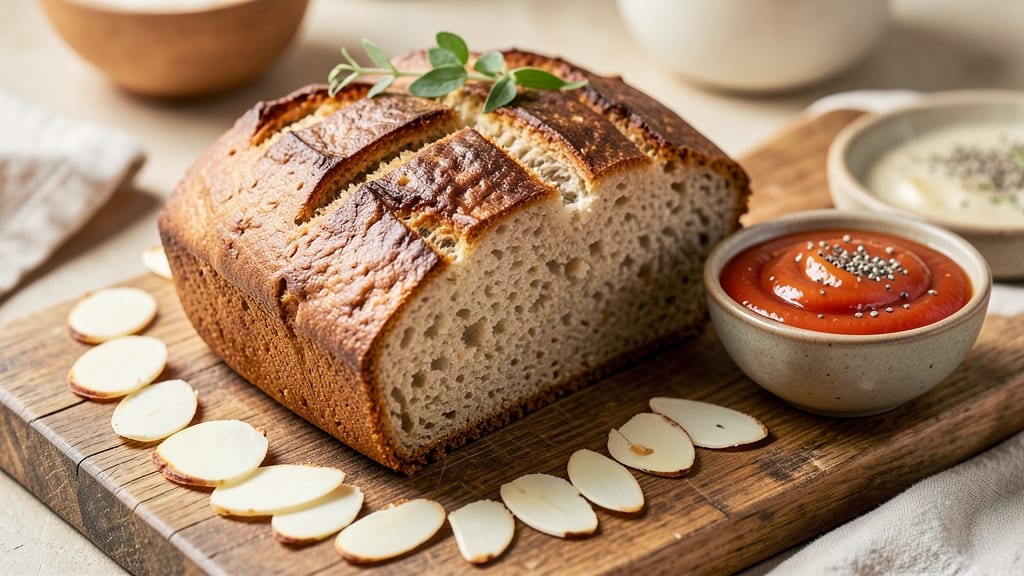
This almond flour bread recipe without eggs proves you don’t need traditional binders for a light, airy loaf. 🌟 The secret lies in flaxseed meal and aquafaba—a plant-based powerhouse that mimics egg functionality while keeping the texture tender and the rise impressive.
After years of perfecting vegan baking, I’ve developed a method that delivers a bread with a delicate crumb and subtle nutty flavor, perfect for sandwiches or toast.
The recipe begins with properly hydrating the almond flour and flaxseed mixture to create a cohesive dough that’s easy to handle. Unlike traditional bread, this version requires no kneading—just gentle folding to develop gluten-free structure.
The baking process focuses on gradual heat to ensure even rising, with a final broil for a golden crust that seals in moisture.
What you’ll end up with is a loaf that’s surprisingly light for almond flour, with a tender crumb and just enough chew. The absence of eggs doesn’t compromise texture—instead, it creates a bread that’s naturally lower in fat while still satisfyingly rich.
This recipe works equally well as a side for soups or as the star of a vegan charcuterie board.
For added nutrition, consider incorporating chia seeds or sunflower seeds into the dough. The bread stores well at room temperature for 2 days or frozen for up to 3 months, making it ideal for meal prep. Let’s get started on this game-changing vegan loaf.
Ingredients for almond flour bread recipe without eggs
The foundation for a light, airy almond flour loaf that rivals traditional breads.
| Ingredient | Amount | Notes |
|---|---|---|
| Almond Flour 🌰 | 3 cups | Finely ground, unsweetened |
| Flaxseed Meal 🌾 | ½ cup | Ground flaxseeds, not whole |
| Aquafaba 🥫 | ½ cup | Liquid from canned chickpeas |
| Water 💧 | ¾ cup | Room temperature preferred |
| Applesauce 🍎 | ¼ cup | Unsweetened, for moisture |
| Baking Powder 🌶️ | 1 ½ tsp | Aluminum-free preferred |
| Salt 🧂 | ½ tsp | Fine sea salt preferred |
| Maple Syrup 🍯 | 2 tbsp | For subtle sweetness |
| Olive Oil 🫒 | ¼ cup | Extra-virgin for richness |
| Chia Seeds 🌱 | 2 tbsp | Optional for extra nutrition |
| Sunflower Seeds 🌻 | ¼ cup | Optional for texture |
Almond flour is the star here, so Bob’s Red Mill or Anthony’s Goods are my go-tos for consistent texture. The finer the grind, the better the crumb—look for labels that specify 'blanched almond flour' for a lighter result. Flaxseed meal needs to be freshly ground; pre-ground meal loses potency quickly, so grind your own if possible. Aquafaba is the magic binder—save the liquid from a can of chickpeas (like Great Northern or Garbanzo beans) and refrigerate it for up to 5 days. For the seeds, Bob’s Red Mill chia and sunflower seeds work perfectly.
No aquafaba? Vegan yogurt or mashed banana can substitute at the same quantity, though texture may vary slightly. Short on almond flour? Oat flour or coconut flour can replace up to half, but increase the water by 10% to compensate for dryness. The maple syrup adds subtle sweetness—agave or date syrup work equally well. For extra nutrition, add hemp seeds or pumpkin seeds instead of sunflower seeds. The baking powder must be fresh; if it's older than 6 months, test it first by mixing with water—it should fizz vigorously.
This bread keeps best in an airtight container at room temperature for 2-3 days, though it’s best enjoyed fresh. For longer storage, wrap tightly in plastic and freeze for up to 3 months. To reheat, wrap slices in a damp paper towel and warm in a 200°F oven for 5-10 minutes—this restores the bread’s softness. The loaf is perfect for slicing thinly for sandwiches or toasting lightly for a crispy finish.
Why You'll Love This Recipe
- No Mixer Needed: The flaxseed meal and aquafaba do all the binding—just stir, shape, and bake. I’m talking five minutes of active work, and honestly? That’s a win on days when I’d rather scroll TikTok than knead dough.
- Nutty Comfort: Almond flour gives it that buttery, toasty depth, while the applesauce keeps it tender. It’s not sweet—just rich, like a hug from a bakery, but with zero guilt (and zero eggs).
- Leftover Hero: This bread stays fresh for days, and it’s perfect for quick toast or sandwiches. I’ve sent slices to work in my lunchbox, frozen portions for toast, and even used it for garlic bread—zero waste, all flavor.
- Budget-Friendly Staples: You’re using pantry basics—no specialty eggs or pricey binders. Between us, almond flour is cheaper than buying pre-made egg substitutes, and aquafaba? That’s just canned chickpea juice you’d toss otherwise. Smart savings.
Step-by-step instructions for almond flour bread without eggs
Here's how to create a light, airy loaf using only plant-based binders.
👨🍳 Step 1: Whisk Wet Ingredients for Perfect Texture
In a medium bowl, combine the 0.5 cup aquafaba, 0.75 cup water, and 2 tbsp maple syrup. Whisk vigorously for 3-4 minutes until the mixture forms stiff peaks—this mimics egg whites' ability to trap air. You'll know it's ready when you lift the whisk and the peaks hold their shape for a few seconds.
Next, stir in the 0.25 cup applesauce and 0.25 cup olive oil until fully incorporated. The applesauce adds moisture while keeping the bread tender, and the olive oil contributes richness. This wet mixture acts as both a binder and leavening agent in our egg-free formula.
👨🍳 Step 2: Mix Dry Ingredients and Combine
In a separate large bowl, sift together the 3 cups almond flour, 0.5 cup flaxseed meal, 1.5 tsp baking powder, and 0.5 tsp salt. The flaxseed meal will act as our egg substitute, providing structure and binding properties when hydrated. Use a whisk to break up any lumps in the almond flour for an even texture.
Gradually pour the wet mixture into the dry ingredients while gently folding with a spatula. Mix just until combined—overmixing develops gluten and can make the bread dense. The batter should be thick but pourable. If it appears too dry, add 1-2 tablespoons of water to reach proper consistency.
🥘 Step 3: Prepare the Loaf Pan and Add Seeds
Preheat your oven to 350°F and lightly grease a 9x5-inch loaf pan with olive oil or line it with parchment paper. The seeds we're adding next will create beautiful texture contrast and add nutritional value. In a small bowl, combine the 2 tbsp chia seeds and 0.25 cup sunflower seeds, then sprinkle half of this mixture into the prepared pan.
Pour the batter evenly over the seeds in the pan, then sprinkle the remaining seed mixture on top. Gently press down lightly to ensure the seeds are embedded in the batter rather than floating. This distribution creates pockets of crunch throughout each slice.
🔥 Step 4: Bake Until Golden and Internal Temp Reaches 200°F
Bake the bread for 45-50 minutes until the top is golden brown and a toothpick inserted in the center comes out clean. The bread should spring back slightly when pressed gently with your finger—this indicates proper doneness. I like to tent the pan loosely with aluminum foil after 30 minutes to prevent over-browning while allowing steam to escape.
For best results, avoid opening the oven door during the baking process. Each time you peek, you risk losing heat and steam, which can affect the bread's rise. The internal temperature should reach 200°F for perfect texture—this ensures the center is fully baked without being dry.
⏰ Step 5: Cool and Slice for Maximum Freshness
Remove the bread from the oven and let it cool in the pan for 10 minutes before transferring to a wire rack. This resting period allows the internal structure to set properly. I find that slicing too soon often results in crumbly texture, as the bread continues to firm up as it cools.
Once completely cooled, slice the bread into ¼-inch thick pieces using a serrated knife. The exterior should be lightly golden with visible seed speckles, while the interior reveals a tender, slightly crumbly crumb with pockets of moisture. Store any leftovers in an airtight container at room temperature for up to 3 days or freeze for longer storage.
Pro Tips For Making Almond Flour Bread Recipe Without Eggs
- Mix the Aquafaba First: I learned this the hard way—whisking the aquafaba last means you’ll end up with lumpy bread. Beat it with a hand mixer until stiff peaks form before adding anything else, like you’re making meringue. This binds the almond flour better than any other step.
- Toast the Almond Flour: Skip the raw flour—toss it in a dry skillet over medium heat for 3-4 minutes until it smells nutty and golden. The extra flavor makes a real difference, and it absorbs moisture better, so your bread won’t turn out dense. (Yes, even if you’re impatient like me.)
- Don’t Overmix the Dough: After adding the flaxseed meal and applesauce, stir just until combined—maybe 10-12 strokes max. Overworking it turns the texture gummy, and almond flour bread is already delicate. Think "fold in gently," not "knead like pizza dough."
- Bake with a Metal Bowl: Place your loaf pan inside a larger metal bowl before baking. Fill the outer bowl with boiling water and bake covered for the first 20 minutes. This traps steam, helping the bread rise higher and stay moist. (Your future self will thank you.)
Wine and beer pairings for this recipe
Crisp White Wine
A dry Riesling from Germany or Alsace is my go-to pairing for this almond flour bread. The wine's bright acidity and subtle mineral notes cut through the bread's nutty richness while complementing its tender crumb.
Look for a Kabinett or Spätlese with 8-10% alcohol—just enough body to stand up to the bread's delicate texture without overpowering it. Serve slightly chilled at 50-52°F for optimal contrast. 🍷
Hoppy Pale Ale
For beer lovers, a crisp American pale ale with citrusy hops (like Dogfish Head 60 Minute IPA or Sierra Nevada Pale Ale) creates a delightful balance. The beer's effervescence cleanses your palate between bites, while its piney or floral hop notes echo the bread's seed textures.
Opt for a 4.5-5.5% ABV version to avoid overwhelming the bread's subtle sweetness. Serve at 45-50°F for a refreshing pairing. 🍺
Sparkling Cider
Non-alcoholic or prefer something lighter? A dry sparkling apple cider (such as Martinelli's Brut or Woodchuck Hard Cider) works beautifully. The effervescence enhances the bread's airy texture, while the tart apple notes provide a bright contrast to the nutty almond flour.
Chill to 40-45°F for a crisp, refreshing sip that complements every bite. This pairing is especially refreshing during warm weather. ✨
Herbal Tea Pairing
For a caffeine-free option, hibiscus tea (like Tazo Hibiscus Tea) adds a tangy, floral dimension that pairs surprisingly well. Brew it hot but not boiling (around 195°F) to preserve its delicate flavors.
The tea's bright acidity mirrors the bread's subtle sweetness, while its earthy undertones complement the almond and seeds. Serve slightly chilled for an unexpected but harmonious match. 🌿
Nutrition facts
Frequently asked questions
Can I substitute flaxseed meal with chia seeds?
Yes, you can use chia seeds as a 1:1 replacement for flaxseed meal, but you'll need to adjust the liquid. Mix 1 tbsp chia seeds with 3 tbsp water and let it sit for 5 minutes to thicken before using. This creates a gel similar to flaxseed's binding properties. The texture will be slightly different but still effective for structure.
Why did my bread turn out dense instead of light?
Overmixing the batter or skipping the 10-minute cooling period before slicing are common culprits. Also, ensure your aquafaba was whisked to stiff peaks—this traps air for a lighter texture. If your oven runs hot, reduce the temperature by 25°F or tent with foil after 30 minutes to prevent over-browning.
How do I make this bread sweeter?
Add 1-2 tbsp maple syrup or honey to the wet ingredients, or sprinkle 1 tbsp cinnamon and 1 tbsp brown sugar on top before baking. For a richer flavor, replace 2 tbsp olive oil with 2 tbsp melted coconut oil. These adjustments will enhance sweetness without altering the bread's structure.
Can I use this recipe for gluten-free bread?
This recipe is already gluten-free since it relies on almond flour. For extra moisture, add 1 tbsp psyllium husk powder to the dry ingredients. It improves texture and helps the bread hold together better. The result will be a tender, crumbly loaf perfect for gluten-free diets.
What’s the best way to reheat sliced bread?
Wrap slices in a damp paper towel and warm in a 200°F oven for 5-7 minutes to restore softness. For a crispy toast, use a toaster or skillet over medium-low heat for 1-2 minutes per side. Avoid microwaving—it makes the bread gummy instead of crisp.