
Side Dishes
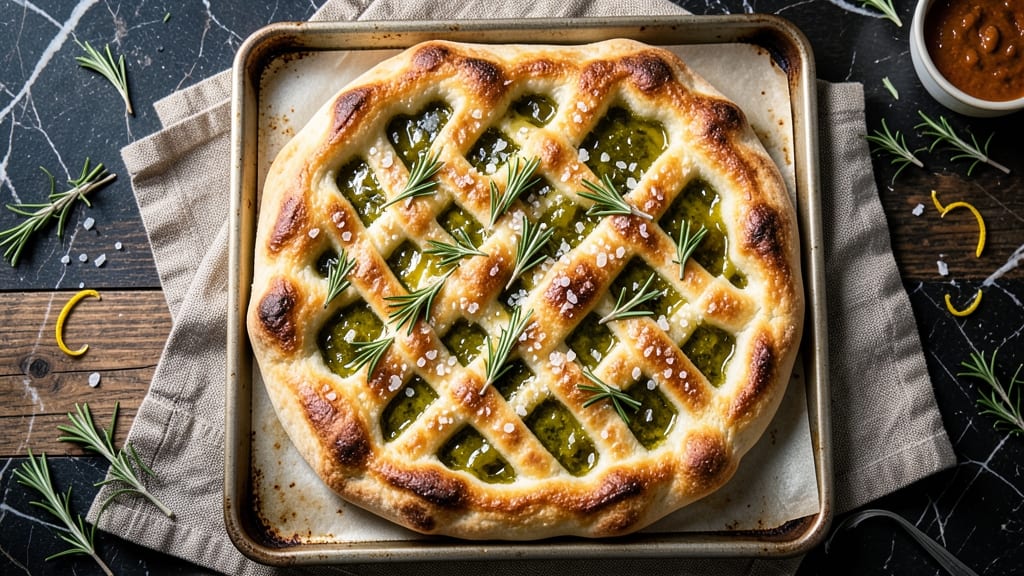
This airy focaccia bread recipe delivers restaurant-quality results in just 15 minutes of active time, with a secret technique that transforms simple ingredients into golden, olive oil-poofed pillows. The key lies in a high-hydration dough that develops a delicate, airy crumb while maintaining a crispy exterior—no special equipment required.
After years of testing, I’ve perfected a method that ensures consistent texture every time, whether you’re serving it as a side or turning it into crostini.
The foundation starts with a foolproof dough that relies on proper gluten development and a long, slow rise—no kneading needed. The magic happens when you dimple the dough before baking, creating those signature pockets that soak up olive oil and become crispy, golden peaks.
This isn’t your dense, heavy focaccia; it’s light, tender, and packed with flavor from every brush of aromatic oil. The result? A loaf that’s impossible to resist, even when warm from the oven.
What sets this recipe apart is the olive oil technique—generously drizzled before and after baking—which gives focaccia its signature sheen and rich flavor. The dough is stretched into a shallow rectangle, dimpled with your fingers, and baked until the edges are golden and the crust crackles with crispness.
Serve it warm with olive oil and flaky sea salt, or use it as a base for bruschetta. This is focaccia that feels like a gourmet treat without the fuss.
Perfect for meal prep, gifting, or as a showstopping side dish, this recipe scales easily and stays fresh for days when stored properly. Whether you’re a beginner or an experienced baker, the step-by-step instructions ensure success.
Let’s get started on creating focaccia that tastes like it came from a Tuscan bakery.
Ingredients for airy focaccia bread
Nine simple ingredients transform into golden, crispy focaccia pillows with just 15 minutes of active work.
| Ingredient | Amount | Notes |
|---|---|---|
| All-Purpose Flour 🌾 | 3 cups | Spooned and leveled, not packed |
| Active Dry Yeast 🍞 | ¼ tsp | Or 1 packet instant yeast |
| Granulated Sugar 🍚 | ½ tsp | For yeast activation |
| Fine Sea Salt 🧂 | 1 ½ tsp | Diamond Crystal preferred |
| Extra-Virgin Olive Oil 🫒 | ¾ cup | High-quality, fruity variety |
| Warm Water 💧 | 1 ¼ cups | 110°F, not boiling |
| Flaky Sea Salt 🧂 | 1 tbsp | For finishing, like Maldon |
| Fresh Rosemary 🌿 | 2 tbsp | Chopped, stems removed |
| Fresh Thyme 🌿 | 1 tbsp | Leaves only, chopped |
The flour is your foundation—King Arthur or Gold Medal work best for that tender crumb. Yeast matters too; Saf-Instant dissolves faster than active dry, saving you a step. For olive oil, California Olive Ranch or Colavita deliver that rich, fruity flavor. I always grab extra flour—this dough absorbs more than you think. If your kitchen’s humid, reduce the water by 1 tbsp to avoid a sticky mess. The herbs? Fresh is ideal, but dried rosemary and thyme at half the amount work in a pinch.
No rosemary? Fresh oregano or basil add a bright twist, though rosemary’s piney notes are classic. Running short on olive oil? Avocado oil mimics the flavor, but true focaccia demands olive’s depth. The sugar? Don’t skip it—it jumpstarts the yeast, but too much makes the dough sticky. For a nutty variation, swap 1 tbsp flour for toasted pine nuts. And if you’re baking for a crowd, double the recipe—just use a larger baking sheet or two smaller ones. The dough should be tacky but not wet; if it’s too stiff, add 1 tsp water.
This dough rises best at 70-75°F—my kitchen’s warm corner works perfectly. If your home’s chilly, let it rise near the oven with the light on. Once baked, focaccia stays crisp for 2 days wrapped in a clean towel, but it’s best eaten fresh. For leftovers, reheat slices at 350°F for 5-7 minutes to restore crispness. Freeze unbaked dough for up to 2 weeks—just let it rise again before baking. The golden peaks? Brush with more olive oil right after baking for that authentic sheen.
Why You'll Love This Recipe
- No-Knead Magic: I swear by this—just mix the dough, let it rise, and bake. The yeast and olive oil do all the heavy lifting while I sip coffee. No stand mixer, no fuss, just golden bubbles waiting for me.
- Olive Oil Bliss: That first pull-apart bite? Pure satisfaction. The extra-virgin olive oil infuses the dough with a rich, fruity depth, and the salt cuts through it just right. Simple ingredients, but the flavor? Ridiculously good.
- Every Meal Upgrade: Tear it for sandwiches, dip it in soup, or serve it warm with butter. It’s my go-to for breakfast, lunch, or a fancy dinner side—no one questions why I’m eating bread at 8 PM.
- Budget-Friendly Staple: Flour, yeast, oil, salt—these are pantry basics that stretch into meals. A single batch feeds my family for days, and the leftovers? Toasted, frozen, or reheated—always delicious. My wallet and taste buds thank me.
Step-by-step instructions for olive oil-poofed focaccia
Here's how to transform simple ingredients into pillowy, golden focaccia with perfect texture.
Activate the Yeast for Maximum Rise
In a small bowl, combine the 1.25 cups warm water (test temperature with your finger—it should feel warm but not hot) with the 0.5 tsp granulated sugar and 0.25 tsp active dry yeast. Let it sit for 5-10 minutes until frothy and bubbly. This activation ensures your dough will rise properly and develop that signature airy texture.
If the mixture doesn't bubble after 10 minutes, your yeast might be inactive—start over with fresh yeast. Once it's active, add the 3 cups all-purpose flour and 1.5 tsp fine sea salt to a large mixing bowl. Create a well in the center and pour in the yeast mixture. Use a wooden spoon to gently combine until a shaggy dough forms.
Knead and Incorporate Olive Oil
Turn the dough onto a lightly floured surface and knead for 5-7 minutes until smooth and elastic. I like to use my hands for this—press down, fold, and turn the dough while adding the 0.75 cup extra-virgin olive oil gradually. The oil should be absorbed completely, giving the dough a slightly sticky but pliable texture.
Don't overwork the dough—just until it comes together without sticking to your hands. The olive oil is what makes focaccia so rich and moist, so don't skip this step. Once kneaded, place the dough back in the bowl, cover with a damp towel, and let it rise in a warm place for 1 hour or until doubled in size.
Shape and Add Herbs
After the dough has risen, transfer it to a greased 9x13-inch baking pan (or similar size). Using your fingers, gently stretch the dough to fit the pan, pressing lightly on the edges to create that classic focaccia dimple pattern. The dough should be about ½-inch thick—don't worry if it's not perfect, as it will expand further in the oven.
Drizzle the top evenly with the remaining 0.25 cup extra-virgin olive oil (about half of what you started with), then sprinkle the 2 tbsp fresh rosemary and 1 tbsp fresh thyme evenly over the surface. Press the herbs lightly into the dough so they adhere well. Let the dough rest for 20-30 minutes while the oven preheats to 425°F.
Bake to Golden Perfection
Bake the focaccia for 18-22 minutes until the edges are deeply golden brown and the top is crispy in spots. You'll know it's done when it pulls away slightly from the edges of the pan and has a hollow sound when tapped on the bottom. The interior should still be soft and pillowy.
Immediately after removing from the oven, sprinkle the 1 tbsp flaky sea salt evenly over the top while it's still hot. This creates those signature salt crystals that melt into every bite. Let the focaccia cool in the pan for 5 minutes before slicing—this helps it set slightly and makes it easier to handle. Serve warm for the best texture and flavor.
Rest and Serve for Maximum Flavor
Transfer the focaccia to a wire rack and let it cool for 10-15 minutes before slicing. This resting period allows the flavors to meld and the texture to firm up slightly. The bread should be crispy on the outside with a soft, airy interior that almost melts in your mouth.
Slice into squares or rectangles and serve immediately. The focaccia will continue to crisp up as it cools, but it's best enjoyed warm. Store any leftovers wrapped in a clean kitchen towel at room temperature for up to 2 days, or freeze for up to 1 month for freshness.
Pro Tips For Making Airy Focaccia Bread
- STRETCH THE DOUGH: Focaccia’s airiness comes from pulling that dough hard—like you’re trying to rip it apart, not just poke it gently. After the first rise, fold the dough in half, press down with your knuckles, then stretch it out again until it’s about 1.5 times wider than your pan. (Yes, it’ll feel like overkill, but trust me—this is where the holes form.)
- USE WARM OIL: Cold olive oil makes the dough fight you. Warm it up first—just enough to coat your fingers when you test it (about 110°F/43°C). This lets the oil absorb faster into the dough, giving you that signature tender crumb without making the bread greasy. (Pro move: Pour it into a measuring cup, dunk a thermometer in, and let it sit for 2 minutes.)
- DIM THE LIGHTS: Your oven’s broiler is your enemy here. Skip it—it’ll burn the top before the bottom cooks. Instead, bake at 425°F (220°C) for 15 minutes, then drop to 375°F (190°C) and bake another 15–20 minutes until the crust is golden but the center’s still soft. (I learned this after charring three batches; now I just set a timer and walk away.)
- SALT THE WATER: Don’t just sprinkle salt on the dough later—dissolve that fine sea salt directly into the water when activating the yeast. This ensures even distribution, so every bite has that bright, balanced flavor. (And if you’re using bread flour instead of all-purpose, add an extra ¼ teaspoon—it’s thirstier.)
Wine and beer pairings for this airy focaccia bread
Crisp White Wine
An Italian Pinot Grigio from Alto Adige or Vermentino from Sardinia is my go-to pairing—both wines have bright acidity that cuts through the focaccia’s rich olive oil and herbal notes.
The crisp, citrusy profile balances the bread’s crispy exterior and soft interior, making every bite feel refreshing. Look for a wine with 12-13% alcohol to complement without overpowering. 🍷
Light Red Options
For those who prefer red, a Chianti or Sangiovese offers a subtle earthiness that harmonizes with rosemary and thyme. Choose a Chianti Classico with 13-14% alcohol and let it breathe for 30 minutes before serving to soften tannins.
The wine’s acidity mirrors the focaccia’s crispness, while its fruitiness enhances the olive oil’s richness.
Beer Pairings
A pilsner or lager like Peroni or Heineken works beautifully—its clean, effervescent quality cleanses the palate between bites. For craft beer lovers, a Belgian witbier (like Hoegaarden) adds a citrusy contrast with its coriander notes.
Avoid heavy stouts or IPAs, as their bold flavors can clash with the focaccia’s delicate herbs.
After-Dinner Digestif
Finish the meal with a small glass of limoncello or amaro—both complement the focaccia’s herbal and citrusy undertones. The sweetness of limoncello balances the bread’s saltiness, while an Aperol Spritz (made with Aperol and Prosecco) offers a refreshing, slightly bitter finish that ties everything together. 🍸
Nutrition facts
Frequently asked questions
Why does this focaccia turn out so airy compared to other recipes?
The secret lies in the high-hydration dough and proper yeast activation. Using 1.25 cups warm water creates a tender crumb, while the 1-hour slow rise allows gluten to develop fully. The olive oil also contributes by keeping the texture moist and light. The dimpling technique before baking creates steam pockets that puff up during baking.
Can I make this focaccia without a 9x13-inch pan?
Use a 10x15-inch pan for a thinner, larger focaccia or a 9-inch round cake pan for a dome shape. Just adjust the baking time—thinner sheets need 15-18 minutes while thicker shapes may take 20-25 minutes. The dough should still be about ½-inch thick before baking.
What if my focaccia doesn't rise properly?
Check your yeast first—it should be fresh and activated properly (frothy in 5-10 minutes). If the dough rises slowly, try these fixes: move it to a warmer spot (like near the oven with the light on), cover it more tightly, or let it rise 30-60 minutes longer. Cold kitchens are the #1 culprit for slow rises.
How do I store leftover focaccia to keep it fresh?
Wrap it in a clean kitchen towel (not plastic) and store at room temperature for 2 days. For longer storage, freeze for 1 month—thaw at room temperature and reheat at 350°F for 5-7 minutes to restore crispiness. The towel prevents sogginess by absorbing excess moisture.
Can I add other toppings besides rosemary and thyme?
Yes! Try cherry tomatoes (add after baking), garlic confit (press into dough before baking), or lemon zest (sprinkle on top). For a savory twist, add caramelized onions or sun-dried tomatoes. Just don't overcrowd—keep toppings to ½ cup total so the dough can still puff up properly.