
Side Dishes
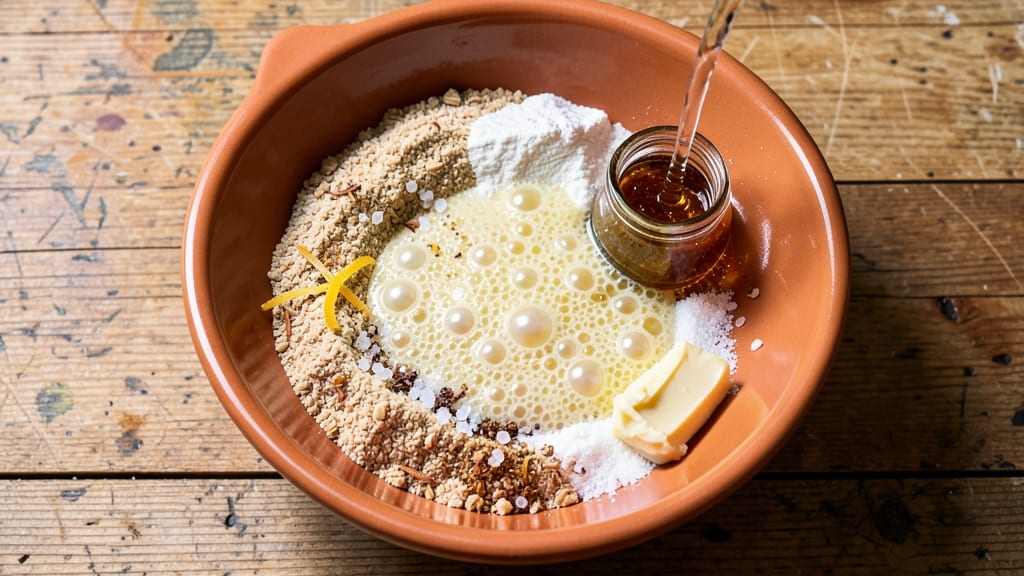
Transforming this bread recipe by adding sourdough discard isn’t just sustainable—it’s a game-changer for home bakers. This recipe turns what would otherwise be waste into a golden-brown, flavorful loaf with a crispy crust and airy crumb, all while reducing food waste.
The key lies in balancing hydration and fermentation to achieve the perfect texture, even with discard’s extra moisture. What makes this recipe work is the discard-to-flour ratio, which we’ll adjust for optimal rise and structure.
Unlike traditional bread, this version relies on the discard’s natural acidity for depth, while a touch of sugar and salt enhances fermentation. The Dutch oven method ensures a restaurant-quality crust without requiring specialized equipment.
By the end, you’ll have a no-waste loaf that’s perfect for sandwiches, toast, or serving alongside soups. The tangy notes from the discard elevate every bite, making it a standout addition to any meal. Let’s get started—your discard won’t go to waste!
This recipe is designed for foolproof results, even if you’re new to sourdough. The process is straightforward: mix, ferment, shape, and bake, with clear guidance on each step. We’ll focus on hydration control—critical for preventing a gummy texture—while maximizing the discard’s flavor.
No kneading required; just a few minutes of mixing and patience during proofing. The fermentation time is flexible, allowing you to adapt based on your kitchen’s temperature. A longer ferment deepens the tang, while a shorter one keeps the bread lighter.
The Dutch oven creates steam, which is essential for that cracked, crusty exterior that’s so satisfying to break open. Every element is intentional to ensure success.
What sets this bread apart is its versatility and sustainability. Use it for grilled cheese, French toast, or simply toasted with butter. The discard’s tang pairs beautifully with rich cheeses, sweet jams, or savory toppings.
Plus, this method ensures you’re repurposing something that would otherwise be discarded, making it a win for both your taste buds and the planet. Ready in about 3 hours (including fermentation), this recipe delivers restaurant-quality bread with minimal effort. The secret?
Paying attention to the discard’s freshness and adjusting the flour slightly for the perfect balance. Let’s bake!
Ingredients for add sourdough discard to bread
Eight simple ingredients transform discard into a restaurant-quality loaf with golden crust and tangy depth.
| Ingredient | Amount | Notes |
|---|---|---|
| Unbleached All-Purpose Flour 🌾 | 4 cups | Plus 2 tbsp for dusting |
| Active Sourdough Discard 🍞 | 1 cup | Fresh, bubbly discard (100% hydration) |
| Filtered Water 💧 | 1 ½ cups | Lukewarm (105°F) |
| Granulated Sugar 🍚 | ½ tsp | Enhances fermentation |
| Fine Sea Salt 🧂 | 1 ½ tsp | Diamond Crystal preferred |
| Vegan Butter 🧈 | ½ cup | Miyoko's or Earth Balance |
| Ground Flaxseed 🌱 | 1 tbsp | For egg replacement |
| Cornmeal 🌽 | ¼ cup | For Dutch oven base |
| Olive Oil 🫒 | 1 tbsp | For greasing Dutch oven |
| Active Dry Yeast 🍞 | ¼ tsp | Optional for extra rise |
The sourdough discard is the star—fresh, bubbly discard (not stale) with active bubbles is non-negotiable. King Arthur Flour or Bob's Red Mill are great for high-quality flour, but any unbleached all-purpose works. For the discard, aim for 100% hydration—thicker discard needs more flour to balance hydration. The vegan butter adds richness; Miyoko's or Earth Balance melt beautifully. If your discard is too wet, add 1-2 tbsp more flour to prevent a gummy loaf. The flaxseed acts as a binder, replacing eggs while adding subtle nuttiness.
No sourdough starter? Store-bought vegan bread (like Dave's Killer or Ezekiel) can be mixed with warm water and a pinch of sugar to create a quick discard substitute. Short on flaxseed? Chia seeds work at the same ratio, or mashed banana adds moisture and sweetness. The yeast is optional—this recipe relies on the discard's natural leavening, but adding it ensures a more predictable rise in cooler kitchens. For the Dutch oven, Lodge is the gold standard, but any heavy pot with a lid works. If you don't have one, bake on a baking sheet and brush with water for a slightly less crispy but still delicious crust.
Store discard in a sealed jar in the fridge for up to 1 week, or freeze for 3 months. This bread keeps well wrapped at room temperature for 2 days, or in the fridge for 5 days. For longer storage, freeze slices wrapped in parchment—toast straight from frozen for crispy results. The tang intensifies slightly over time, making it even more flavorful the next day. If the crust cools too fast, tent loosely with foil to retain moisture while keeping that perfect crack.
Why You'll Love This Recipe
- I’ll be real: my sourdough starter was sitting there, ready to be tossed—or worse, fed more flour just to keep it alive. Instead, I dump it into this dough, and suddenly that tangy, funky depth turns ordinary bread into something actually worth baking. The discard doesn’t just disappear—it elevates.
- No Waste, All Flavor: I’ll be real: my sourdough starter was sitting there, ready to be tossed—or worse, fed more flour just to keep it alive. Instead, I dump it into this dough, and suddenly that tangy, funky depth turns ordinary bread into something actually worth baking. The discard doesn’t just disappear—it elevates.
- Foolproof Dough: Honestly, this recipe is the kind of thing I make when I’m distracted. Mix the flour, discard, water, and a pinch of sugar—that’s it. No kneading, no waiting for yeast to bloom, no stress. The salt balances the sourdough’s sharpness, and the texture? Crusty outside, pillowy inside, every single time.
- Budget Breakfast Hero: Between us, this bread is my go-to for toast, French toast, or even a quick sandwich. The sugar keeps it from being too sour, while the discard adds just enough complexity to make it feel special—without costing a fortune. I’ve fed a crowd with one batch, and no one’s ever complained about dry toast.
Step-by-step instructions for crafting a tangy sourdough-infused loaf
Transforming discard into golden, crusty bread is easier than you think—just follow these precise steps.
Activate the Sourdough Discard with Precision
In a medium bowl, combine the 1 cup active sourdough discard with the 1.5 cups lukewarm filtered water (about 105°F) and 0.5 tsp granulated sugar. Stir gently until fully incorporated—this sugar jumpstarts fermentation. Let the mixture sit at room temperature for 1-2 hours until it becomes bubbly and nearly doubles in volume. This activation ensures your discard is lively and ready to work with the flour.
Here's the thing—if your discard smells tangy but isn't bubbly, don't panic. Gently warm the mixture in a 100°F water bath for 5-10 minutes to encourage activity. You'll know it's ready when it smells fresh (like tangy yogurt) and has visible bubbles throughout. This step is where the magic begins—skipping it risks a dense loaf.
Build the Dough with Wet and Dry Ingredients
In a stand mixer fitted with the dough hook, combine the 4 cups unbleached all-purpose flour, 1.5 tsp fine sea salt, and 0.25 tsp active dry yeast (if using). Mix on low speed for 30 seconds to distribute the dry ingredients evenly. In a separate bowl, whisk together the 0.5 cup vegan butter, 1 tbsp ground flaxseed, and 1 tbsp olive oil until smooth—this butter-flaxseed blend replaces eggs and adds richness.
With the mixer running on low, gradually pour in the activated sourdough mixture and wet ingredients. Increase speed to medium and knead for 5-7 minutes until the dough forms a smooth, elastic ball that cleans the sides of the bowl. If it's too sticky, add 1 tablespoon flour at a time—but don't overdo it, or your bread will turn out dry. The dough should be soft but manageable, with a slight sheen on the surface.
First Rise and Shape for Structure
Lightly grease a large bowl with olive oil and transfer the dough inside. Cover with a damp kitchen towel and let it rise at room temperature for 1.5-2 hours, or until it has puffed to about 50% larger in volume. Gently press two fingers into the dough—if the indentation stays, it's ready. This first rise develops gluten, giving your bread that satisfying chew.
Turn the dough onto a lightly floured surface and divide it into 4 equal portions (about 8 ounces each). Shape each portion into a smooth, round ball by pulling the edges toward the center and tucking them under. This technique, called bouling, creates surface tension that helps maintain the loaf's shape during baking. Place the shaped dough balls on a parchment-lined baking sheet, cover with the towel, and let them rest for 15 minutes—this short rest prevents them from losing shape when baked.
Dutch Oven Bake for Crusty Perfection
Preheat your oven to 450°F with a Dutch oven inside for 30 minutes. While it heats, sprinkle 0.25 cup cornmeal evenly on the bottom of the Dutch oven—this creates a crispy, golden crust. Carefully transfer one dough ball to the Dutch oven, seam-side up, and cover with the lid. Bake for 25 minutes, then remove the lid and bake for an additional 10-15 minutes until the loaf is deep golden brown and sounds hollow when tapped on the bottom.
Here's where it gets exciting—the steam from the Dutch oven creates that iconic oven spring, while the cornmeal base locks in moisture for a tender crumb. If the top browns too quickly, tent loosely with foil to prevent burning. The internal temperature should reach 190-195°F when done. Let the loaf cool on a wire rack for at least 30 minutes before slicing—this ensures clean cuts and prevents a gummy texture.
Repeat and Enjoy Your Tangy Creation
Remove the baked loaf from the Dutch oven and repeat the process with the remaining dough balls, spacing them 2 inches apart on the baking sheet if not using the Dutch oven. Once all loaves are baked and cooled, slice into thick pieces to reveal the open crumb structure and that unmistakable sourdough tang. The crust should be shatteringly crisp, while the interior remains soft and airy—proof that discard can be just as impressive as a fresh starter.
This bread keeps well for 3-4 days at room temperature or can be frozen for up to 3 months. For extra flavor, brush the warm loaves with melted vegan butter and sprinkle with flaky sea salt. Every bite delivers that complex, tangy depth you'd expect from a well-fed sourdough starter—without any waste!
Pro Tips For Making Add Sourdough Discard To Bread
- Test Your Discard: Stick your finger in that discard—if it springs back slowly (like Jell-O), it’s ready. If it flops like overcooked mashed potatoes, give it another 12 hours. I learned this the hard way after baking a dense brick because I assumed "active" meant always active.
- Weigh Your Flour: Scooping flour from the bag packs in air, and your bread will turn out dry. Use a kitchen scale for 1:1.5:1.5 ratios (discard:flour:water) by weight—no guesswork. I skipped this for years until my bread crumbled like stale crackers.
- Autolyse First: Mix flour and water alone for 20–30 minutes before adding discard and salt. This hydrates the flour better, giving you a smoother dough and less gluten overdevelopment. Sounds weird, but it works—my bread now has that professional, airy crumb instead of a chewy brick.
- Salt the Water: Dissolve the salt in the water before mixing—it distributes evenly and prevents clumpy dough. I used to sprinkle it in later, and half the time, I’d forget to incorporate it properly. Now my bread tastes consistently seasoned, not randomly salty.
Serving suggestions for leftovers
Toasted Perfection
This sourdough discard bread becomes even more irresistible when toasted to a golden-brown finish. Brush warm slices with melted vegan butter and sprinkle with flaky sea salt before toasting in a cast-iron skillet over medium heat for 2-3 minutes per side.
The discard’s tang pairs beautifully with avocado mash or smashed white beans for a hearty breakfast. For extra crunch, toast until you hear that satisfying crackle—it’s the sign of a perfectly baked loaf. 🔥
Sandwich Game-Changer
Use this bread as the base for vegan grilled cheese with sharp cheddar-style vegan cheese and caramelized onions. The discard’s tang cuts through the richness, creating a sandwich with depth.
For a lighter option, layer with hummus, sliced cucumber, and roasted red peppers—the crispy crust holds up perfectly to all the toppings. I love making these sandwiches in advance and reheating them in a toaster oven for that melty, gooey texture. ✨
Soup Sidekick
Serve thick slices alongside creamy tomato soup or lentil stew to soak up every last bit of flavor. The bread’s crusty exterior contrasts perfectly with the softness of the soup, while the tangy interior balances rich sauces.
For a rustic touch, tear the bread into irregular pieces and toss them into the soup before serving—it becomes a delicious, edible garnish. This is especially effective with vegan minestrone or butternut squash soup. 💫
French Toast Twist
Turn your discard bread into vegan French toast by dipping slices in a mixture of 2 eggs (or flax eggs: 2 tbsp ground flaxseed + 6 tbsp water), 1 cup plant-based milk, 1 tsp vanilla extract, and 1 tsp cinnamon.
Cook in a buttered skillet over medium-low heat for 2-3 minutes per side until golden. Top with maple syrup, fresh berries, or powdered sugar for a decadent breakfast. The discard’s tang adds a unique depth to this classic dish. 🍓
Garnish and Serve
Enhance your bread’s presentation with simple garnishes. Drizzle warm slices with olive oil and sprinkle with everything bagel seasoning or smoked paprika for a savory touch. For a sweet finish, dust with powdered sugar or cinnamon sugar.
The bread’s crispy crust makes it perfect for charcuterie boards—pair it with olives, nuts, and dried fruit for a balanced bite. The tangy flavor makes it a standout centerpiece. 🌟
Freezer-Friendly Slices
For quick meals, freeze individual slices wrapped in parchment paper and store in a ziplock bag. Toast straight from frozen in a toaster oven at 375°F for 4-5 minutes until crispy. These prepped slices are perfect for quick sandwiches, toasted snacks, or soup dippers.
The bread reheats beautifully without losing its texture, making it ideal for meal prep. This trick saves time while keeping your bread fresh-tasting for weeks. ❄️
Nutrition facts
Frequently asked questions
Can I use old sourdough discard for this recipe?
Fresh, bubbly discard works best, but you can revive older discard by mixing 1 cup discard with 0.5 cup warm water and 0.5 tsp sugar, then letting it sit for 1-2 hours until active. Avoid discard with a strong vinegar smell or mold—it won’t ferment properly.
How do I adjust the recipe if my discard is too wet or too dry?
For wet discard, add 1-2 tablespoons flour at a time until the dough holds its shape. For dry discard, mix in 1-2 tablespoons water to restore moisture. Test by pinching the dough—it should feel slightly tacky but not sticky. Too much flour makes bread dry; too much water makes it gummy.
Why did my bread turn out dense instead of crusty?
Dense bread often results from underproofing (not enough rise time) or overmixing the dough. Let the dough rise until it’s 50% larger and gently press to check for springiness. For extra rise, add 0.25 tsp yeast or extend proofing to 2-3 hours in a warm spot. The Dutch oven helps create steam for a better crust.
Can I make this bread without a Dutch oven?
Yes! Preheat a baking sheet with a parchment-lined tray for 30 minutes at 450°F. Brush the dough with water before baking for steam, and tent with foil if the top browns too fast. The crust won’t be as crispy, but the bread will still be flavorful and soft inside. For extra crunch, bake on a cast-iron skillet instead.
How can I use up extra discard if I don’t have enough for this recipe?
Freeze discard in 1-cup portions for later use. You can also make discard pancakes (mix 1 cup discard, 1 cup flour, and 1 tbsp sugar), or sourdough crackers by rolling thin and baking at 350°F for 10-12 minutes. These are great ways to reduce waste without baking a whole loaf.